What Goes Wrong With Stored Water
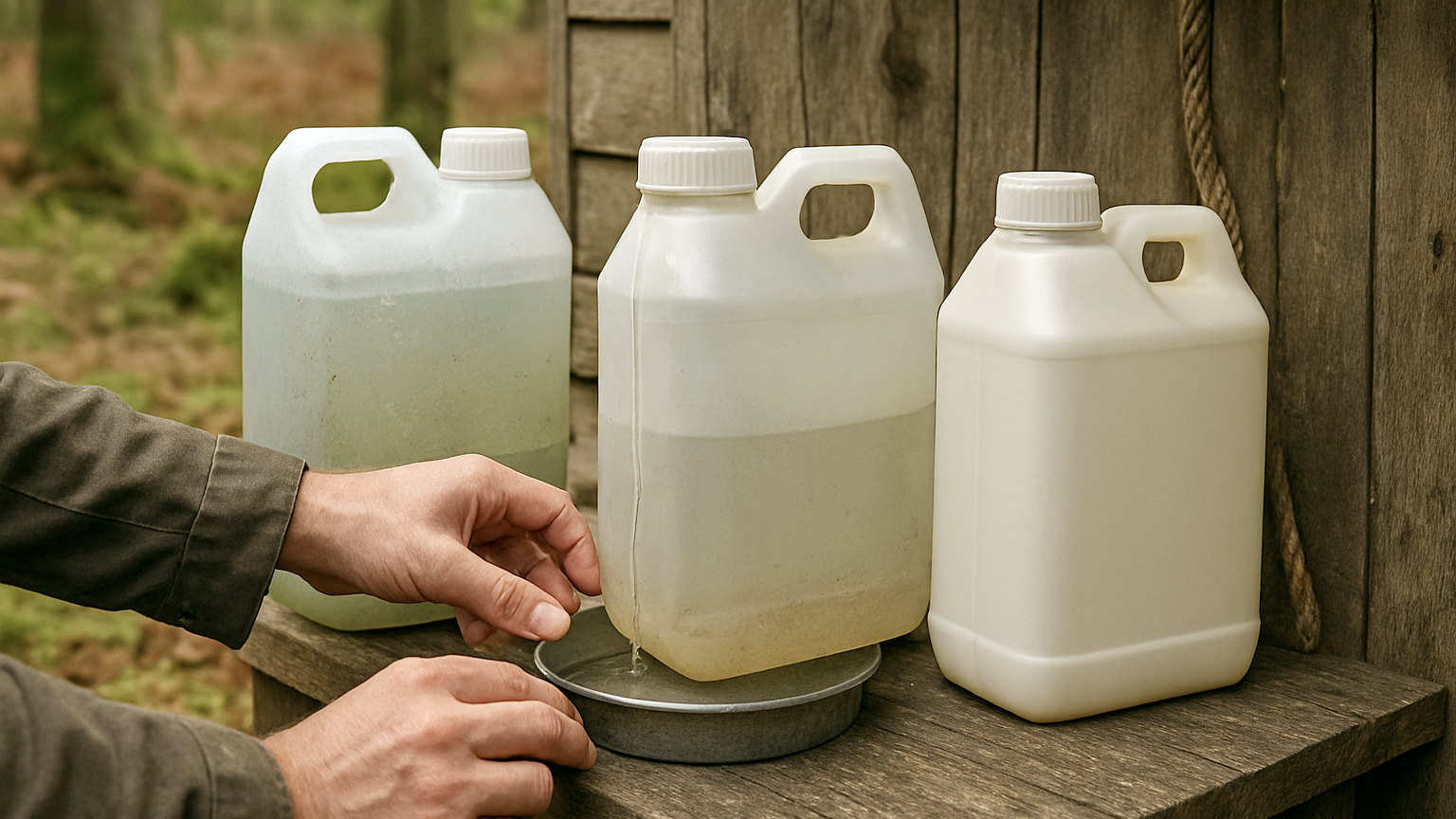
Algae, biofilm, absorbed vapours and split containers. Each has a visible sign and each is prevented by where and how the water is kept.
By Survival Basics Team
8 Aug 2026

Water is heavier, bulkier and more urgent than people expect, and it is the supply that runs out first in nearly every scenario. These guides cover how much to keep per person per day, suitable containers, how long stored water actually keeps, and how to fill baths and butts the moment a warning is issued.
Algae, biofilm, absorbed vapours and split containers. Each has a visible sign and each is prevented by where and how the water is kept.
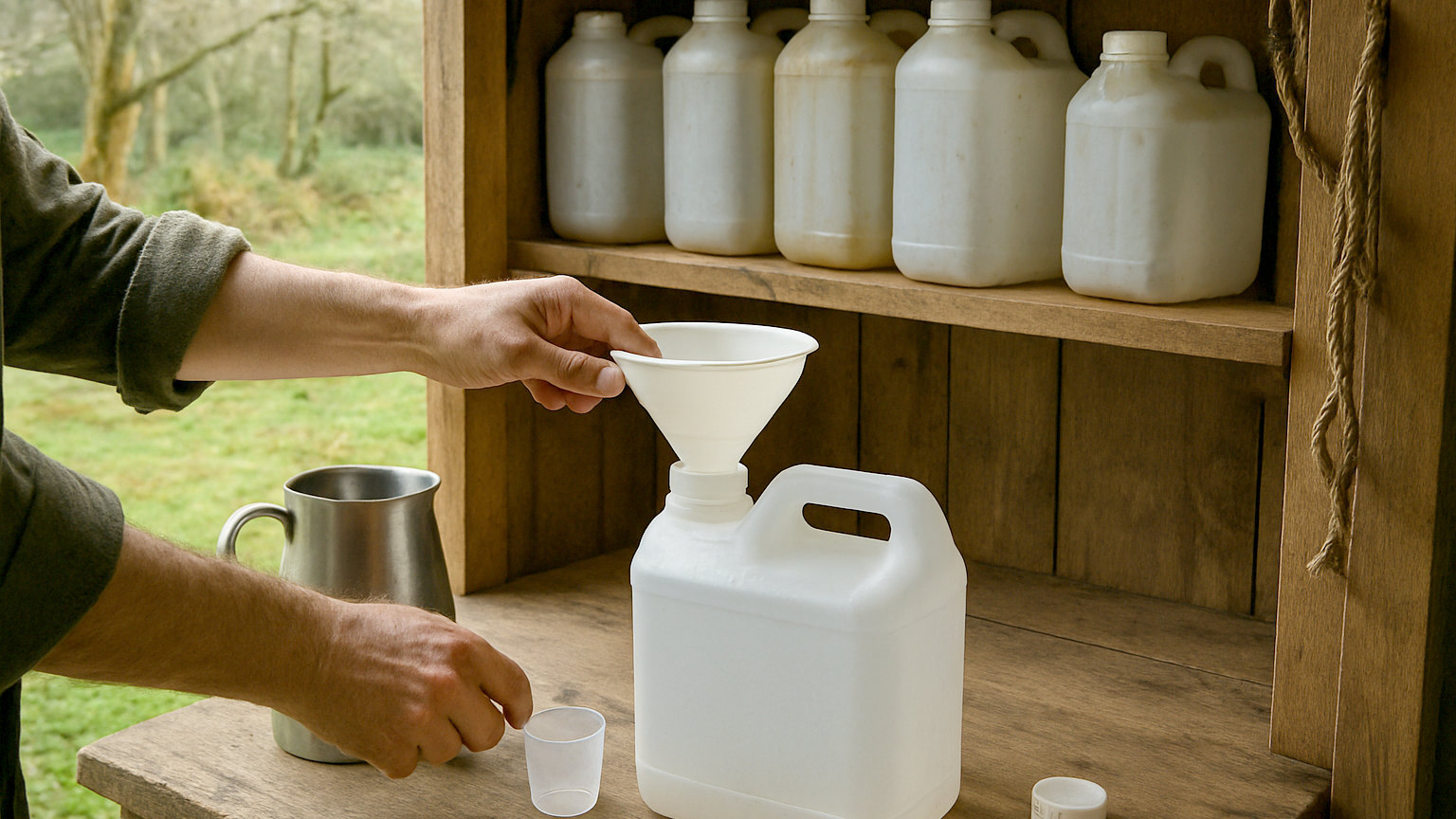
Label the fill date, replace once a year, and put the old water on the garden. Twenty minutes annually keeps a household store permanently current.
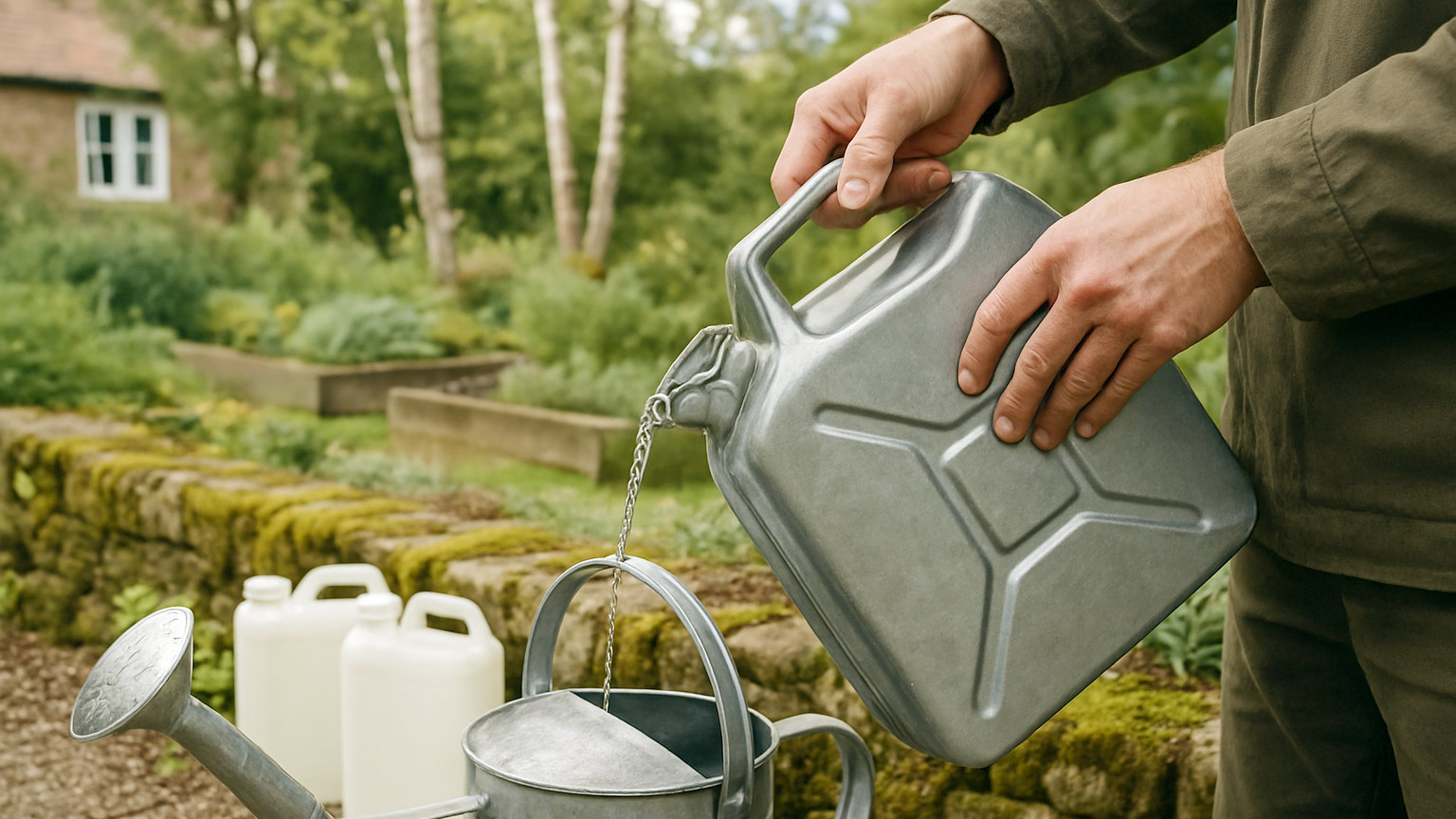
For non drinking water, yes. For drinking water it is the worst common choice, because of freezing, heat, sunlight and the fuel stored alongside it.
Pressure usually degrades before it stops. The first ten minutes after a warning are worth more than any amount of permanent storage.
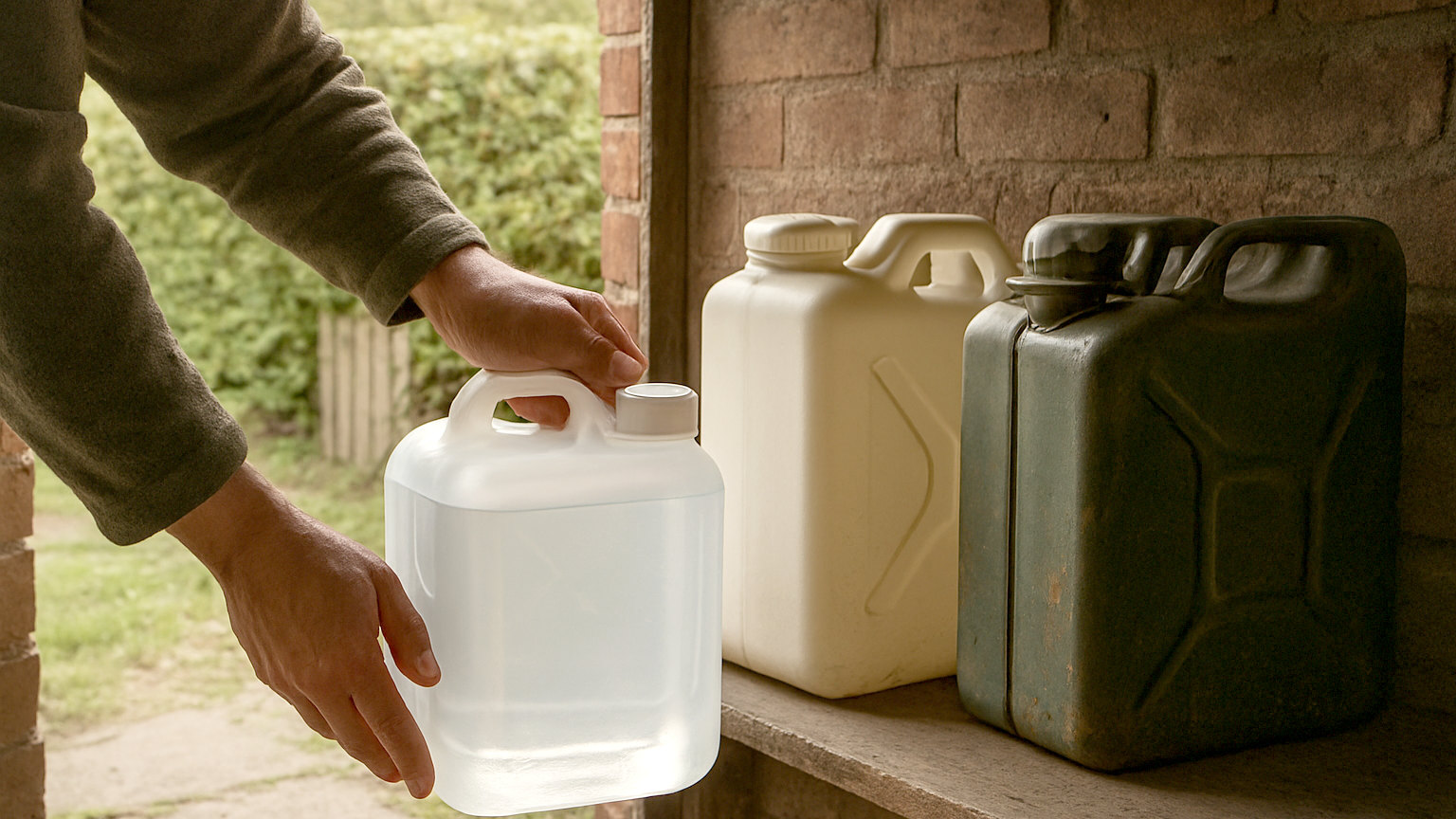
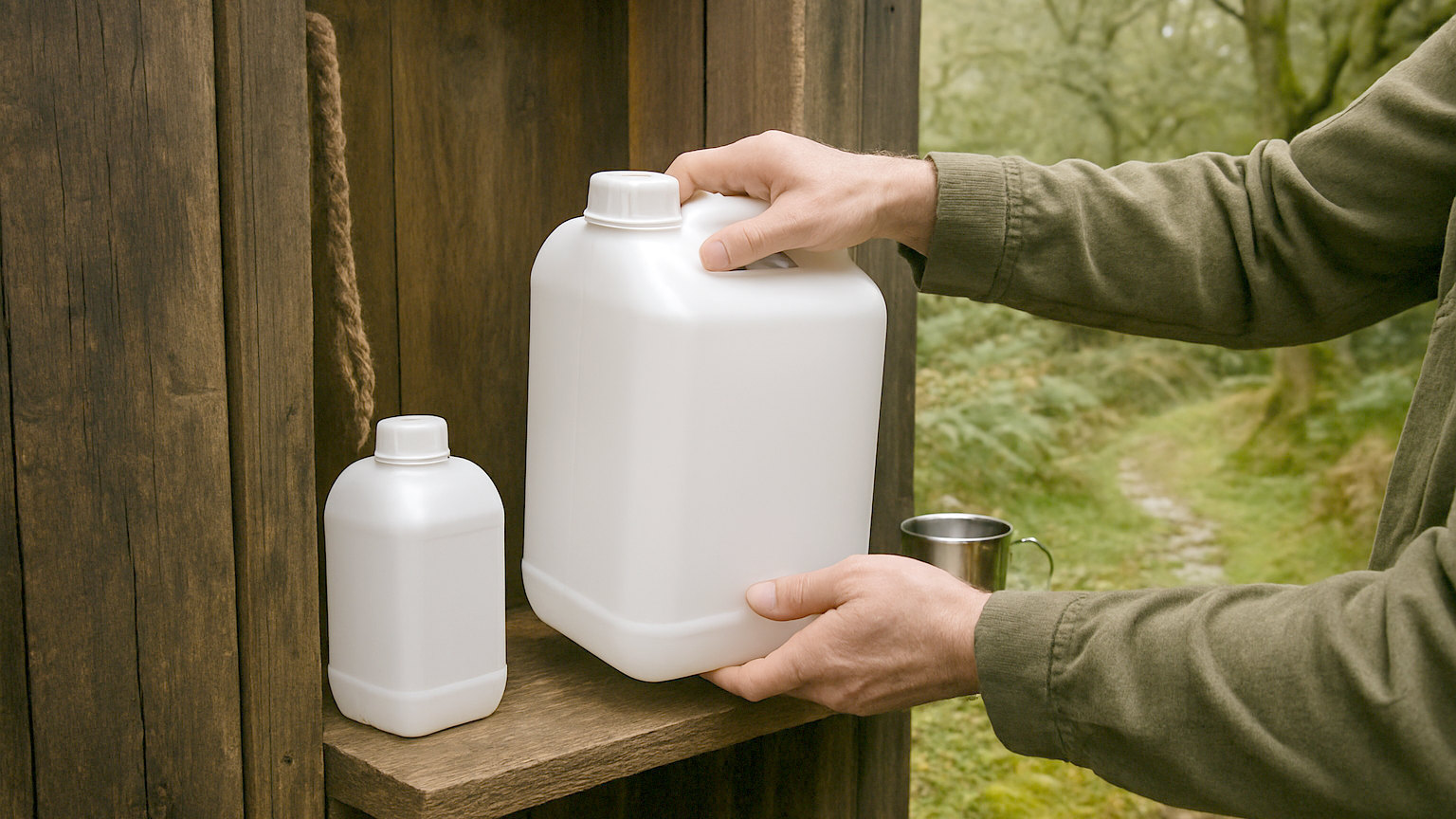
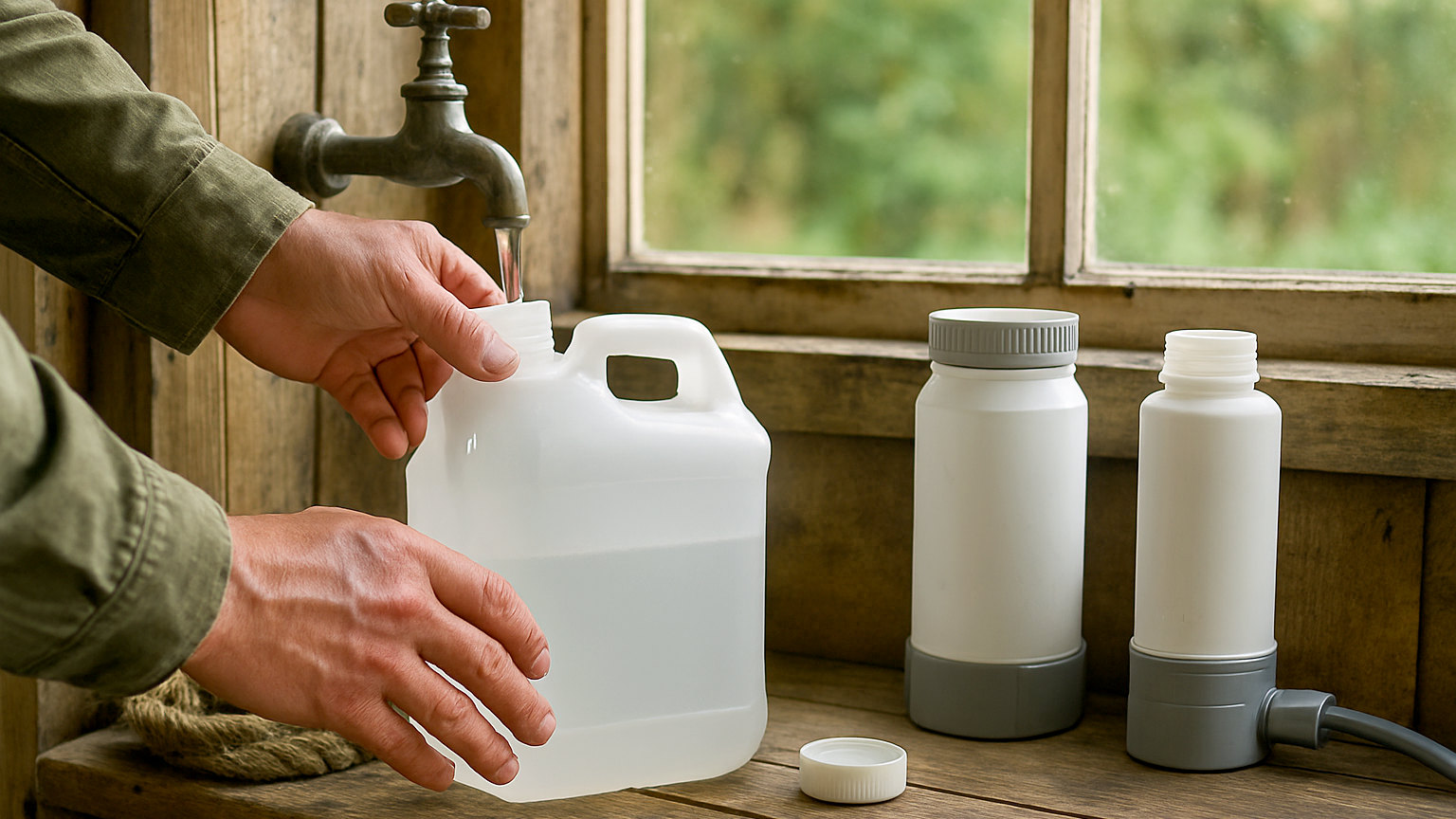
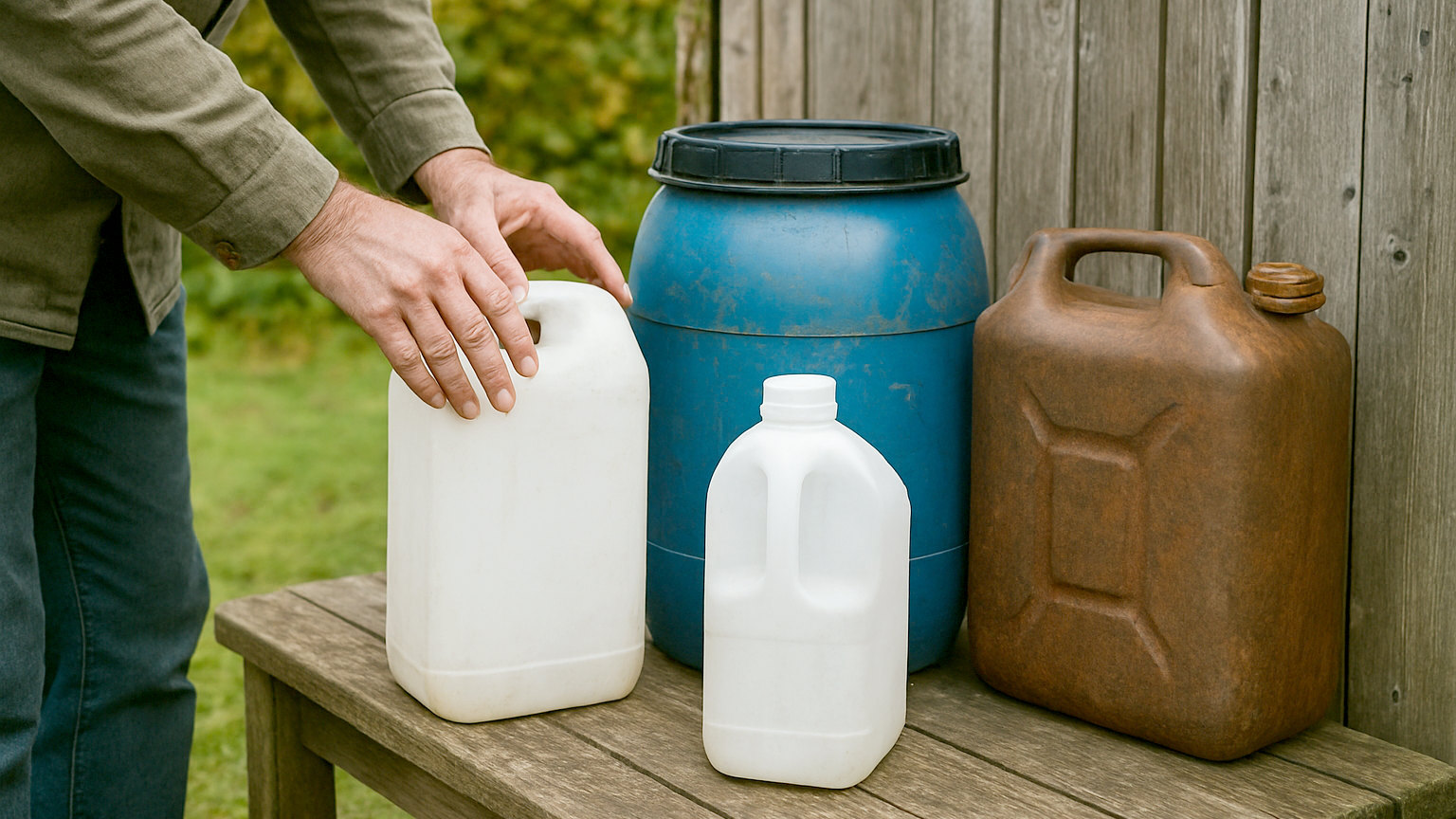
Food grade plastic, sealed, opaque and a size you can actually lift. Container choice determines whether a store is usable or simply present.
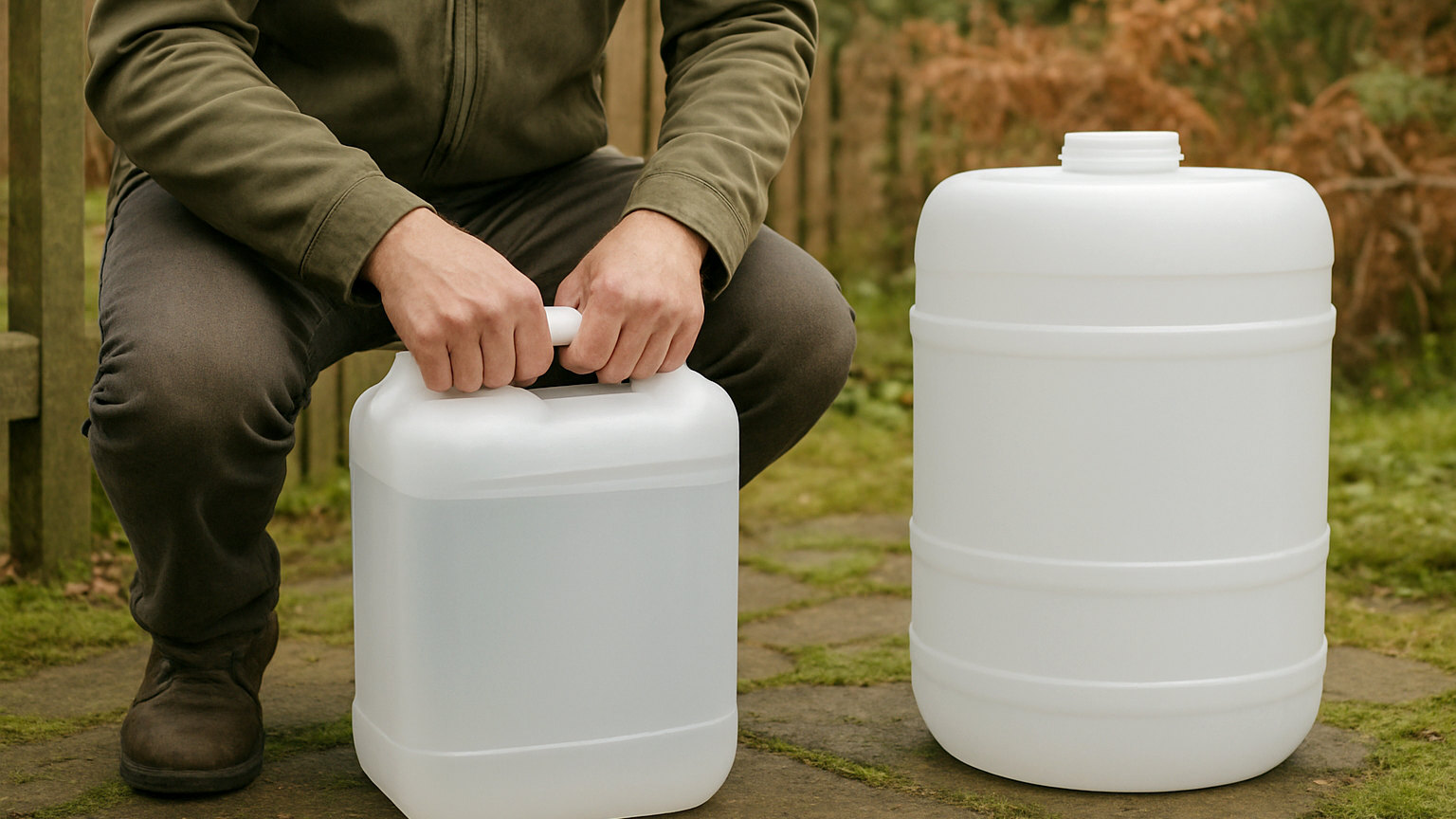
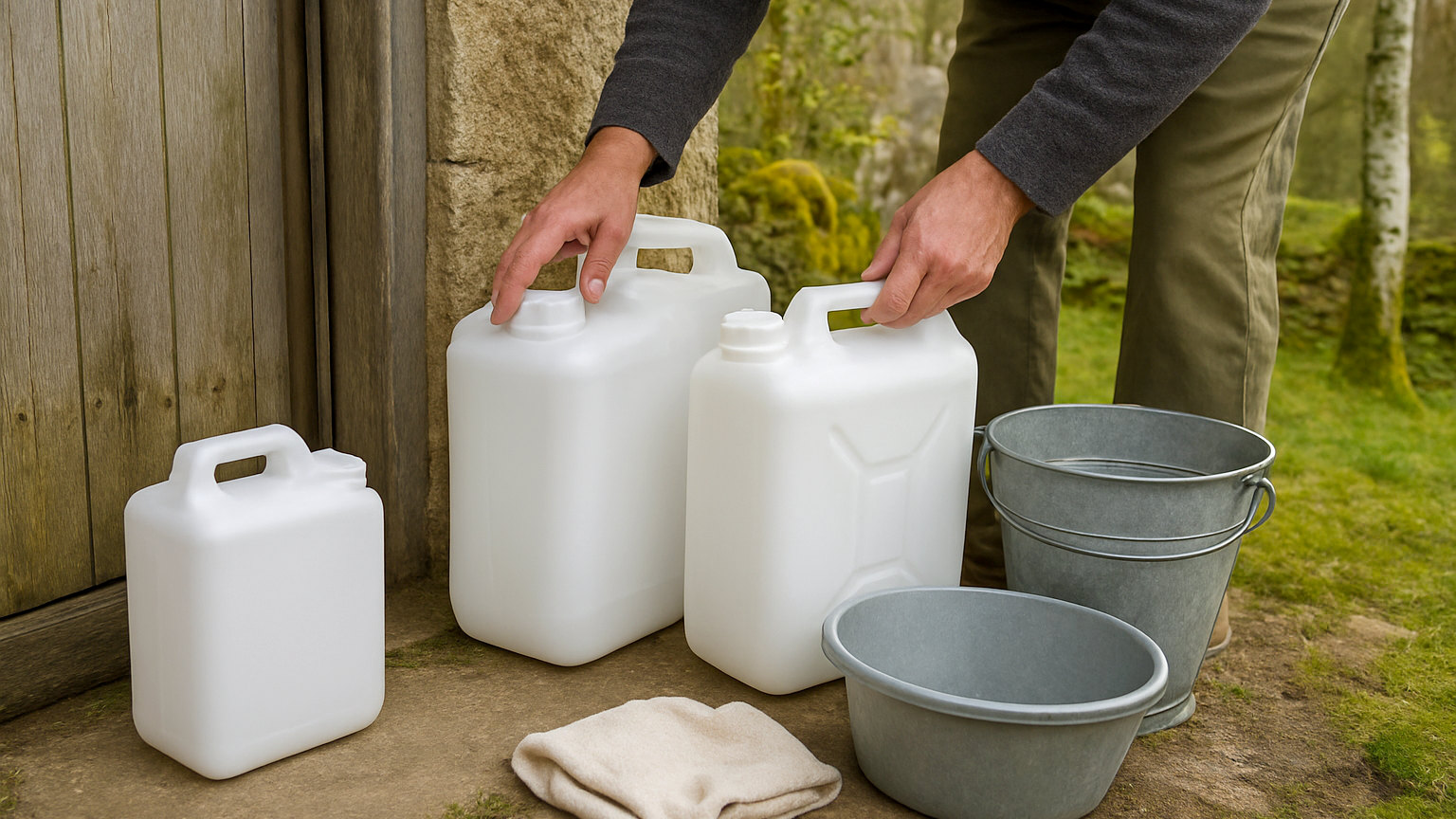
A litre weighs a kilogram, which makes a twenty five litre drum immovable for many people. Container size should be decided by who has to lift it.
Mains water in Britain arrives already treated. Clean containers and annual rotation do more than adding anything, and treating at the point of use is safer.
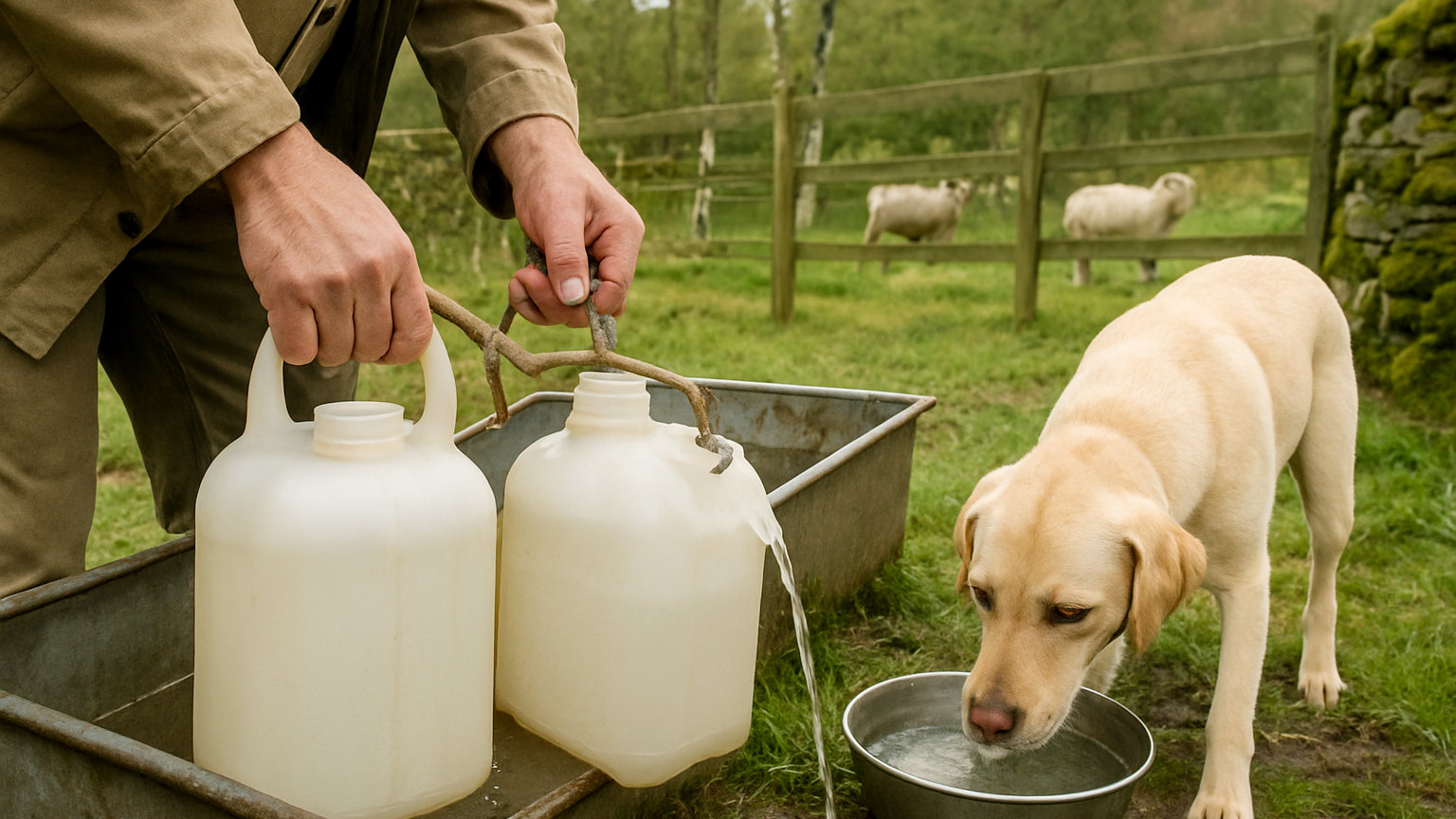
Routinely left out of household calculations. A large dog can drink as much as a person, and livestock requirements dwarf everything else in the plan.
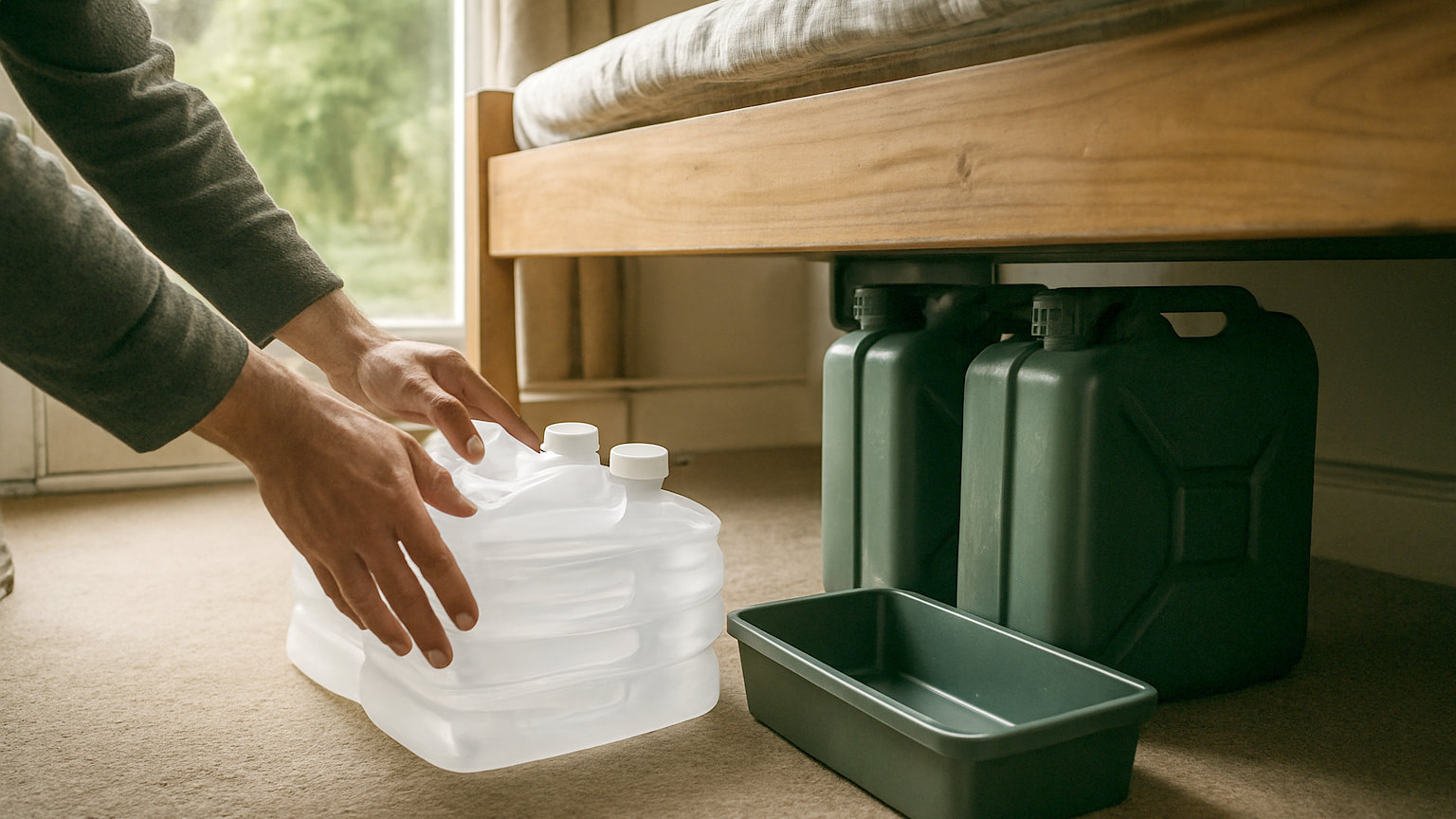
Under the bed takes more than people think, and collapsible containers store flat until a warning arrives. Space is rarely the real obstacle.
Flushing and washing consume far more than drinking does. Planning only for drinking water leaves a household with a rapidly deteriorating problem.
Milk bottles, chemical drums and anything not sold for food. Some of the worst options are the ones most readily to hand and free.
Larger containers, proper preparation and a rotation schedule you will actually keep. Beyond a few hundred litres it becomes a system rather than a shelf.