
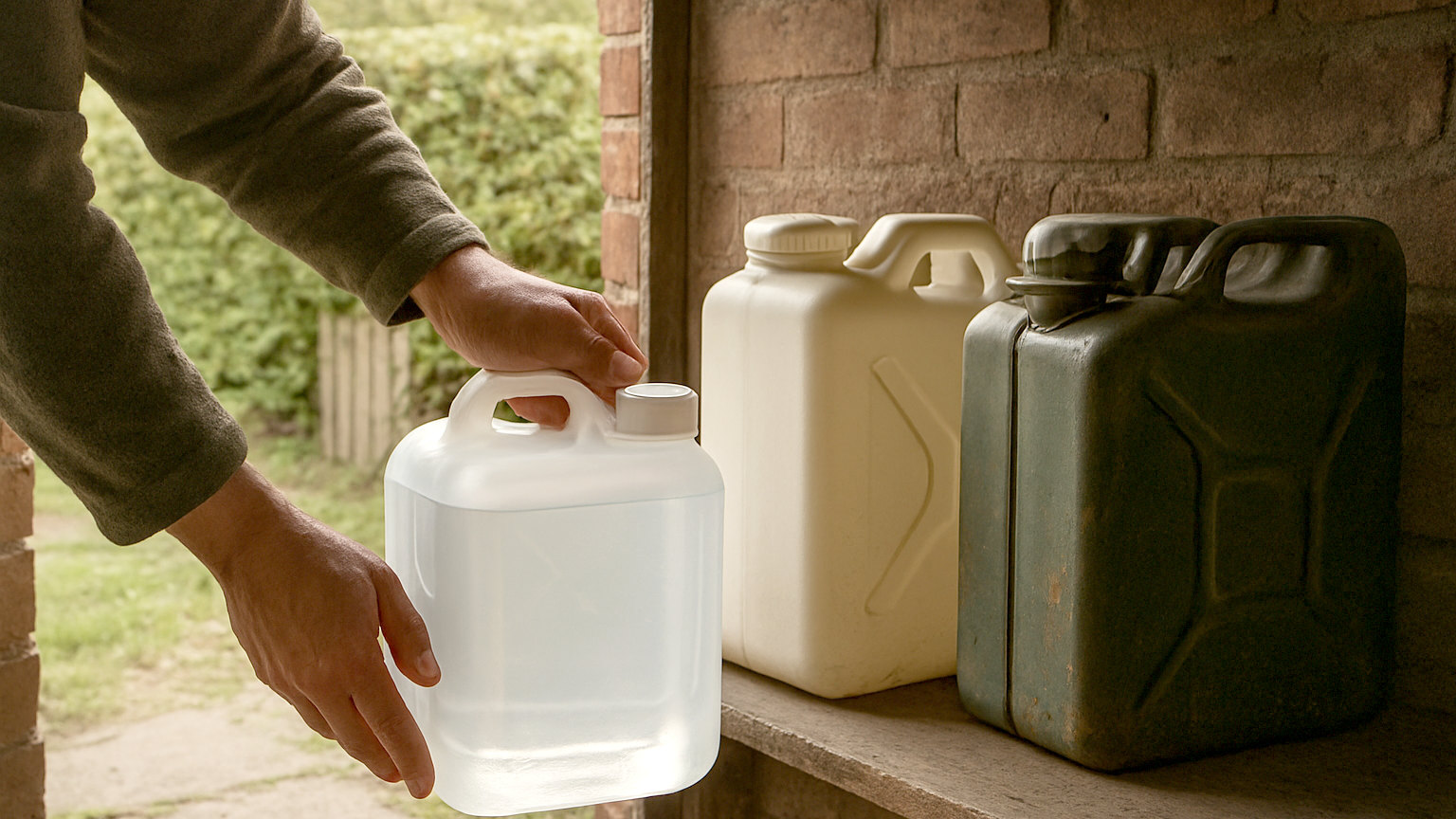
Outdoor and garage storage is tempting because water is bulky and space indoors is limited. For drinking water it introduces four problems at once, and for everything else it is perfectly sensible.
What is the freezing problem?
Water expands by around nine percent as it freezes, which splits containers filled to the brim. A garage or shed in a British winter reaches freezing regularly, so a store filled full and sealed will leak when it thaws. Leaving several centimetres of headspace prevents it, at the cost of introducing more air. Frozen water is also unavailable when you need it, which rather defeats the purpose.
What is the heat problem?
Summer temperatures in a garage or shed regularly exceed twenty five degrees and can go considerably higher, which accelerates both microbial growth and the migration of compounds from plastic. Combined with winter freezing, the annual cycling stresses containers and shortens the usable life of the water dramatically compared with an interior cupboard.
- Freezing splits full sealed containers
- Summer heat accelerates growth and plastic migration
- Sunlight drives algae and makes plastic brittle
- Fuel, paint and garden chemicals taint water through the plastic
- Fine for flushing, washing and garden water
- Raise everything off the concrete floor
What is the tainting problem?
The most serious and the least understood. Plastic containers are permeable to vapours, so water stored near petrol, paint, white spirit, creosote, pesticides or strong cleaning products absorbs those compounds through the container wall and tastes of them within months. Since a garage or shed is exactly where those things live, this is close to unavoidable in practice.
So what can you store outside?
Non drinking water, without difficulty. A water butt is outdoor storage by definition and is excellent for flushing, washing and the garden. Containers of water for cleaning, flushing and animals can live in a shed perfectly well. The distinction is between water you will drink and water you will not, and the second category is far larger.
Can you make outdoor drinking storage work?
With effort and compromise. Opaque containers, insulated or buried, with headspace for freezing, kept well away from anything with a smell, and rotated on a shorter cycle. That is achievable and it is more work than simply putting bottles under a bed. If space indoors genuinely does not exist, it is better than not storing water at all, provided the water is treated before drinking.
What about burying a tank?
It solves the temperature problem elegantly, since ground temperature is stable and above freezing below a certain depth. Buried rainwater harvesting tanks work on this principle. It is an installation rather than a purchase, requires excavation and proper food grade materials, and makes sense as part of a wider harvesting system rather than as a way of storing bottled water.
Does the concrete floor matter?
Yes, for the same reasons as with food. Concrete transfers cold and moisture, and a garage floor is where water from a leak or flood arrives first. Raise everything onto a wooden board, a pallet or a low shelf, which costs nothing and removes both problems along with making the containers easier to move.
What is the sensible split?
Drinking water indoors, everything else outdoors. Bottles under a bed for drinking and cooking, a water butt and shed containers for flushing, washing and the garden. That arrangement puts each type of water where it belongs and avoids the compromises entirely.
What about security?
Worth a thought for anything outdoors. Water butts and containers in an open garden are accessible to anyone, and during a genuine supply interruption a visible store may attract attention. A locked shed, a gated side passage or simply keeping containers out of sight from the road addresses it. The same applies to the tap on a butt, which is easily opened by children and by anyone passing.
Keep drinking water indoors, use outdoor space for flushing and washing water, leave headspace against freezing, and never store beside fuel or paint.


