
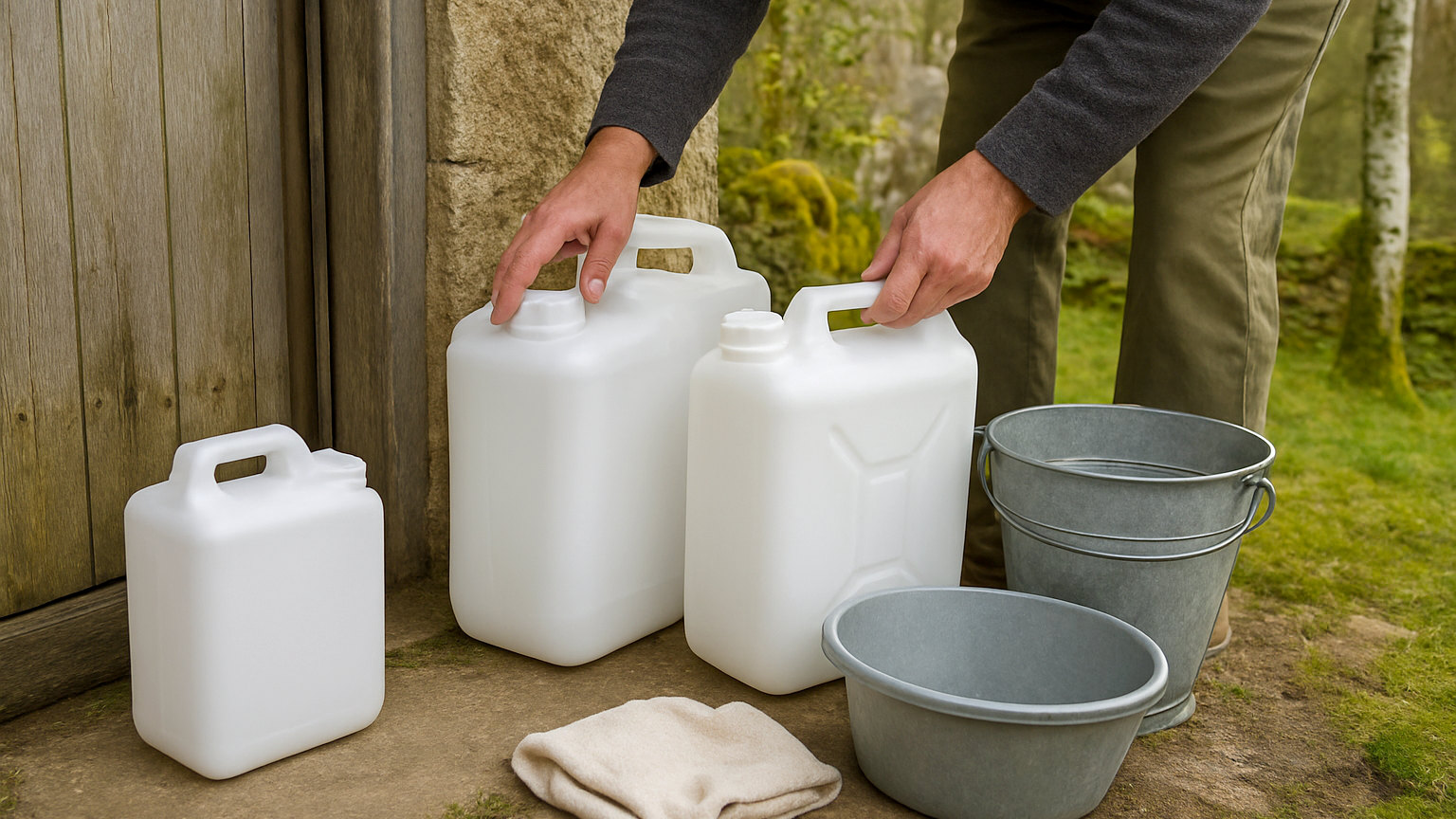
Drinking water is the requirement that cannot be substituted, and it is a small fraction of what a household actually uses. Planning for it alone leaves the other needs unaddressed, and those become unpleasant quickly.
What does a household actually use?
Far more than people estimate. Average domestic consumption in Britain runs to well over a hundred litres per person per day, of which drinking is a couple of litres. Lavatory flushing is typically the largest single use, followed by showering and bathing, then laundry, then washing up. In an interruption, all of that has to come from somewhere or stop.
How much does flushing use?
Between four and thirteen litres per flush depending on the age of the cistern. Modern dual flush units use around four or six, and older single flush cisterns can use nine or more. A household of four flushing a dozen times a day gets through a substantial volume, which is why the bath and the water butt matter so much. Water poured directly into the pan will flush it without using the cistern at all.
- Flushing, four to thirteen litres per use
- Washing and basic hygiene, several litres per person per day
- Washing up, which can be minimised substantially
- Laundry, which can generally wait
- Bath water and butt water cover all of these
- Wet wipes and hand sanitiser reduce the requirement
How do you reduce hygiene use?
With wipes, sanitiser and discipline. Hand sanitiser covers most hand cleaning between proper washes, though soap and water is necessary after using the lavatory and before handling food, particularly where anyone has a stomach upset. Wet wipes handle body washing adequately for several days. A flannel and a bowl uses a fraction of what a shower does.
What can you stop doing?
Laundry, mostly, which can wait several days without real consequence. Washing up can be minimised by eating from tins and pouches, wiping pans with kitchen paper before washing, and using one pot meals. Watering the garden and washing the car obviously stop. Between them these reduce demand dramatically without affecting anyone health.
Can you reuse water?
Yes, in a sensible order. Water used for washing up or rinsing can go into a bucket and then flush the lavatory. Water used for boiling vegetables can be used for washing up once cooled. Working down from cleanest to dirtiest, a given quantity of water can do two or three jobs before being poured into the pan. This roughly doubles the useful life of a stored supply.
What about the lavatory if water runs out entirely?
Line the pan with a heavy duty bag, use it, and seal and dispose of it in the general waste. Adding cat litter, sawdust or shredded paper controls smell and moisture. It is unpleasant and it is far better than a blocked and unusable lavatory, and it is standard advice for prolonged interruptions. Keep bags and a supply of something absorbent with the water store.
How much should you plan for?
Three litres per person per day for drinking, one to two for cooking and basic hygiene, and as much again as you can hold for flushing and washing. The drinking requirement is the one that must be met from clean stored water. The rest can come from the bath, a water butt or any container filled when the warning arrived.
What is the practical arrangement?
Clean stored bottles for drinking and cooking, the bath and a butt for everything else, and a bucket beside the lavatory. That combination covers a household comfortably for several days and costs almost nothing beyond the bottles.
What about washing clothes?
It can generally wait, and where it cannot, hand washing a few essentials uses a fraction of a machine cycle. Underwear and socks are the items that matter, and a bowl of water with a little detergent handles several days worth. Rinse water can then be reused for flushing. A washing machine uses fifty litres or more per cycle, which is not a reasonable draw on a stored supply.
Plan four litres per person per day of clean water, fill the bath for flushing, reuse water down a cleanliness order, and keep bags for the lavatory.


