
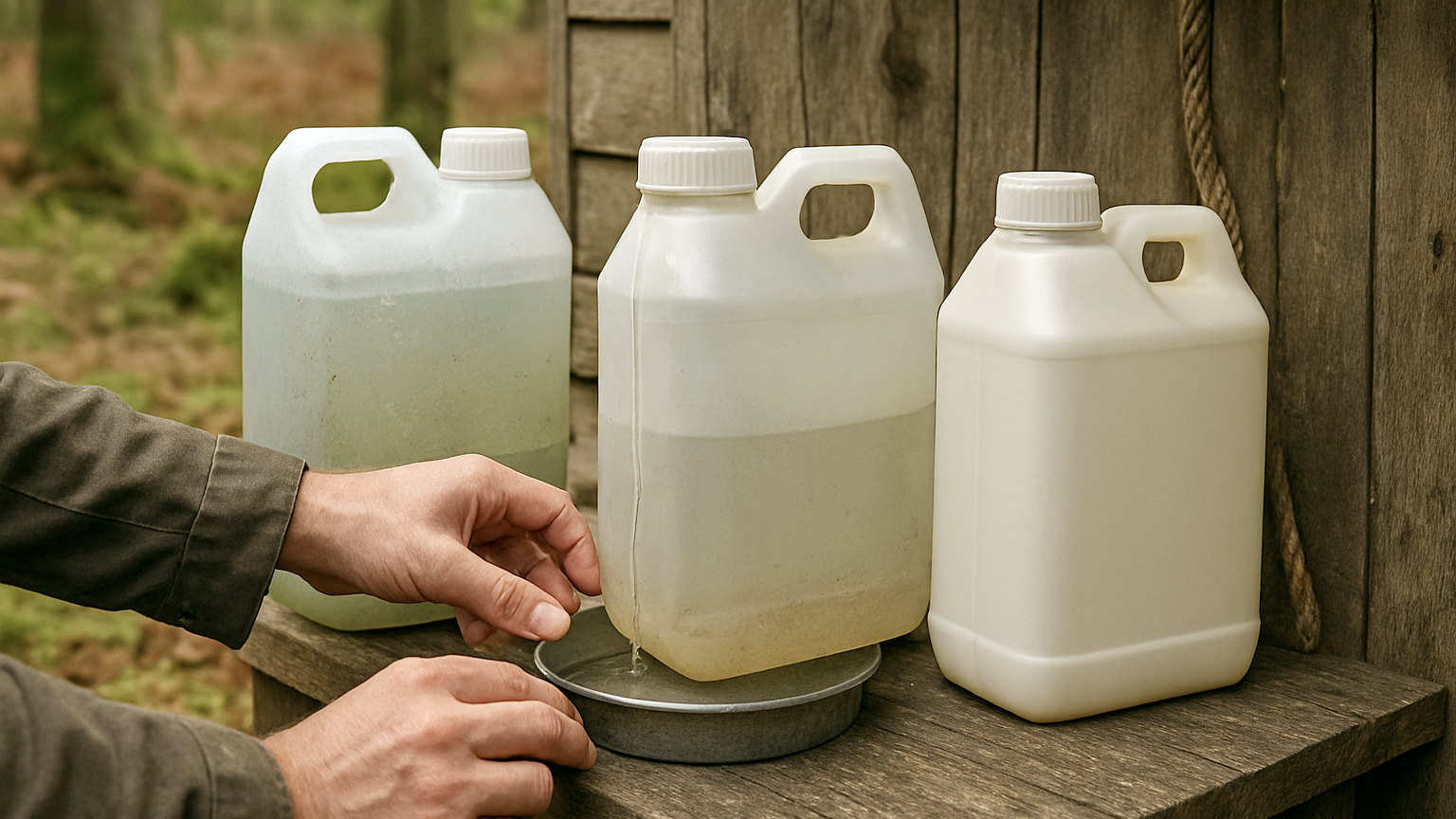
Water stored badly fails in a small number of predictable ways. Each has a visible or detectable sign, and each is prevented by decisions made when the store is set up rather than by anything done afterwards.
What causes algae?
Light. Algae need light to grow, so a clear container in daylight will turn green within weeks while the same water in a dark cupboard stays clear for a year. The result is unpleasant rather than immediately dangerous and makes the water unusable in practice. The fix is entirely preventative: opaque containers, or clear ones stored in the dark.
What is biofilm?
A slippery layer of bacteria that forms on the inside surface of any container holding water for a long period. It feels slimy to the touch and is the reason a bottle can smell stale even when the water looks clear. It develops faster in warmth, in the light and where any residue was left from previous contents. Washing with a sterilising solution and rinsing thoroughly removes it.
- Algae: green growth from light exposure
- Biofilm: slippery layer inside, from time and warmth
- Tainting: fuel or chemical taste from absorbed vapours
- Splitting: from freezing a full sealed container
- Brittleness: from sunlight degrading the plastic
- Leaking taps and seals on larger containers
Why does water taste of fuel?
Because plastic is permeable to vapours. Containers stored in a garage or shed alongside petrol, paint, solvents, creosote or pesticides absorb those compounds through the container wall, and the water tastes of them within months. Nothing has leaked and nothing has been spilled. This is not treatable and the water should be discarded, which is why storage location matters so much.
What happens if it freezes?
Water expands as it freezes and will split a container filled to the brim, which then leaks when it thaws. If there is any chance of freezing, leave a few centimetres of headspace, or accept that containers in an unheated space may be lost. This is a specific argument against garages, sheds and lofts, all of which reach freezing in a British winter.
Why do containers become brittle?
Ultraviolet light degrades plastic over time, so containers stored in direct sunlight or in a conservatory become fragile and crack, often at the neck or the base. A container that has faded, feels chalky or has developed fine surface crazing should be replaced. Storing in the dark prevents this alongside preventing algae.
What about leaks?
Taps and seals on larger containers are the usual culprits, and a slow leak can empty a container over months without anyone noticing until they check. Test any tap fitting with water before relying on it, keep containers off carpet and off anything that would be damaged, and check the store at each rotation rather than assuming it is intact.
How do you tell if water is still good?
Look, smell and consider the container. Clear, odourless water from a sealed, undamaged container stored cool and dark is almost certainly fine, and boiling removes any doubt about organisms. Cloudiness, green tinge, visible particles, a musty or chemical smell, or a slimy container interior all mean it should not be drunk. Water that smells of fuel or solvent should be discarded rather than treated.
What can you still use doubtful water for?
Flushing, cleaning and the garden. Water that has gone green or stale is perfectly adequate for a lavatory and for washing floors, so it need not be poured away as waste. Keep it labelled clearly as non drinking so nobody uses it by mistake, particularly in a household with children.
What happens to water in the pipes?
It becomes a small reserve and needs care. A domestic system holds a useful quantity in the pipework and the hot water cylinder, which can be drained from the lowest tap in the house once the mains has failed. Water from a cylinder has been sitting warm and may contain sediment and dissolved metals, so it should be boiled or treated before drinking. Turn off the immersion or boiler first so it does not heat an empty cylinder.
Store dark, cool and away from anything with a smell, leave headspace where freezing is possible, and check for leaks and brittleness at each rotation.


