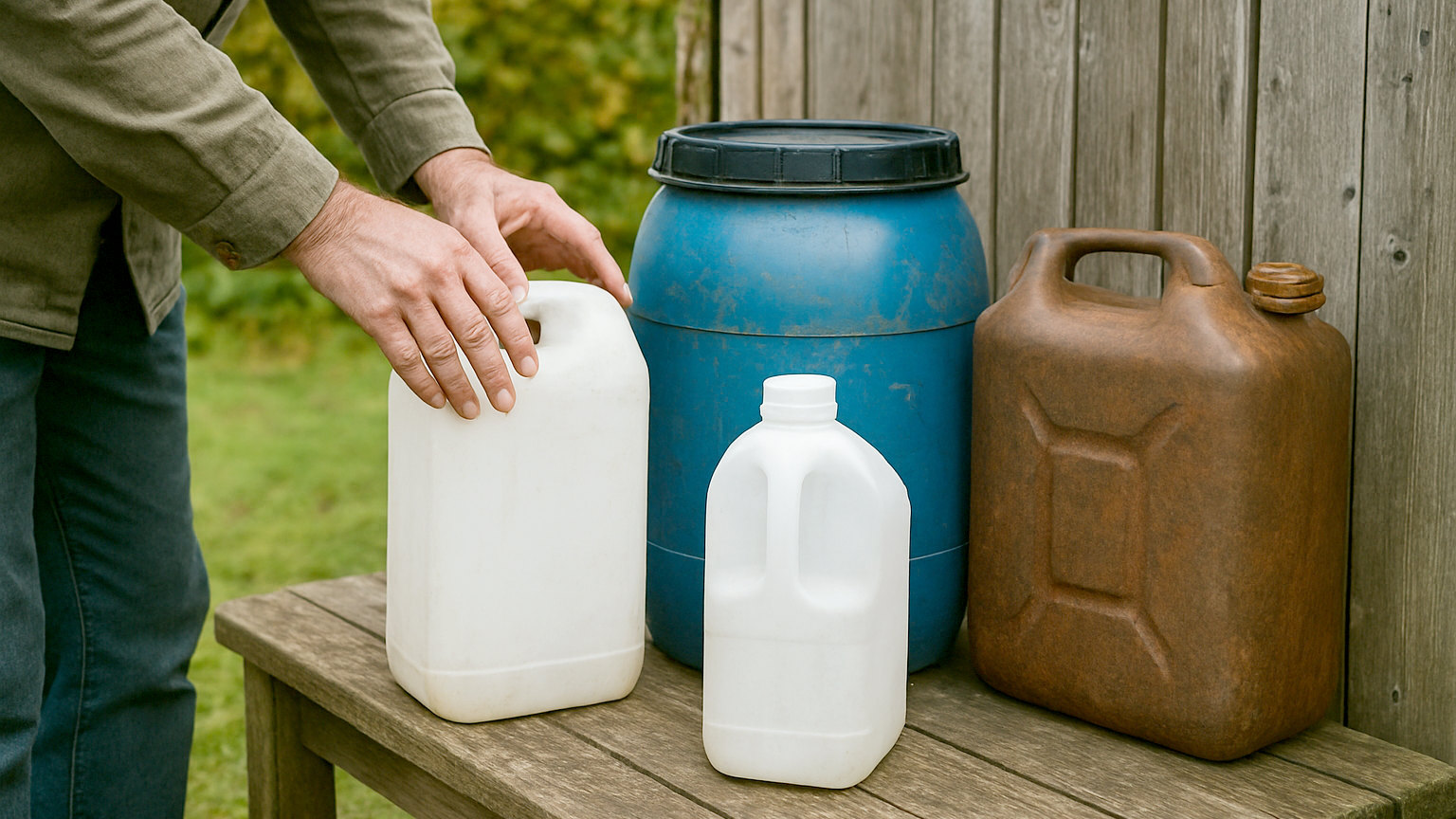
The instinct to reuse whatever is available is sound in most of preparedness and a poor one here. Several common choices actively spoil the water or leave residues that cannot be washed out.
Why not milk bottles?
Because milk protein and fat cling to the plastic surface and survive ordinary washing. The residue supports bacterial growth, so water stored in a rinsed milk bottle can develop a substantial population within days and will smell sour. Milk bottles are also made from a thinner plastic intended for short term use and become brittle over time. They are the single most commonly recommended and least suitable option.
What about containers that held chemicals?
Never, regardless of how thoroughly they have been cleaned. Plastics absorb and retain compounds from their contents, and drums that held detergent, fuel, antifreeze, pesticide, paint or industrial products will leach those back into water over time. This applies even to food safe plastic types, since the problem is what soaked into the material rather than the material itself. No amount of washing makes them safe.
- Milk bottles, which retain protein residue and go brittle
- Any container that held chemicals, fuel or cleaning products
- Containers with no food safe marking or unknown history
- Fruit juice bottles, which retain sugars and encourage growth
- Metal containers not designed for water, which corrode
- Anything cracked, crazed or with a damaged neck or lid
What about juice and squash bottles?
Better than milk and still not ideal. Sugars remain in the plastic and in the neck threads, encouraging growth, and the bottles are frequently thin. If you use them, wash thoroughly with hot soapy water, rinse very well, and rotate the contents on a shorter cycle. For a serious store, purpose made containers or fresh bottled water are worth the modest cost.
Are fizzy drink bottles acceptable?
Among the better improvised options. Carbonated drink bottles are made from PET designed to hold pressure, so they are robust, and the contents leave less residue than milk or juice. Washed properly and rotated annually, they serve reasonably well. Still bottles are thinner and less durable. Neither is as good as a purpose made container, and both are far better than nothing.
What about metal?
Only if designed for water. Stainless steel water containers are excellent, being inert, durable and easy to sterilise. Ordinary steel drums, jerry cans intended for fuel, and galvanised containers all either corrode or leach metals into the contents. A fuel jerry can, even a new one, is not suitable for drinking water and should not be pressed into service.
Does damage matter?
Yes. Cracks and crazing in plastic harbour bacteria that cannot be cleaned out, and a damaged neck or a warped lid will not seal. Containers that have been dropped, frozen with no headspace, or left in strong sunlight for a long period should be checked carefully and replaced if they show any deterioration. Sunlight degrades plastic and makes it brittle.
What if you have nothing suitable?
Fill the bath, saucepans, kettles, jugs and any clean sealed container you have, and treat the water before drinking. In an emergency the priority is having water at all, and something in an imperfect container is far better than nothing. The point of this article is what to plan around, not what to refuse in the moment.
How should you prepare a container before use?
Wash with hot soapy water, rinse very thoroughly, and allow to drain. For anything you are uncertain about, a sterilising solution of the type sold for baby bottles is straightforward and designed for exactly this purpose. Rinse thoroughly afterwards, fill promptly and seal, and label with the date.
How can you tell what a container is made of?
By the recycling symbol moulded into the base, which gives the plastic type as a number. Code one is PET and code two is high density polyethylene, both of which are used for food and drink. Codes three, six and seven cover materials generally unsuitable for long term water contact. The symbol tells you the material and not the history, so an unmarked container or one of unknown origin should be left alone regardless.
Buy purpose made containers or use fizzy drink bottles, never use milk bottles or anything that held chemicals, and replace damaged plastic.