A great deal of preparedness content recommends adding chemicals to stored water. In the British context, where mains water arrives treated and rotation is straightforward, the case for it is weaker than it appears.
What is already in mains water?
Treatment and a residual disinfectant. Water supplied to British homes is filtered, disinfected and tested to standards set in law, and it carries a small residual of chlorine or chloramine specifically to keep it safe through the distribution network. Water leaving your tap is therefore already suitable for storage without anything being added to it.
What happens to the chlorine?
It dissipates, over days to weeks depending on the container and conditions. Once it has gone, nothing is actively suppressing microbial growth, which is why stored water is not indefinitely stable and why rotation matters. Chloramine, used by some suppliers, persists longer than free chlorine. Neither lasts long enough to be relied upon over a year.
- Mains water is already treated and needs nothing added
- Clean containers matter more than any additive
- Fill to the top to minimise trapped air
- Seal properly and store cool and dark
- Rotate every six to twelve months
- Treat at the point of use if there is any doubt
What about adding bleach?
It is the classic advice and it carries real drawbacks. The correct dose is small and easy to get wrong, many household bleach products contain fragrances, thickeners or additives making them unsuitable, concentrations vary between products, and the protection fades over months in any case. Given that rotation is easy and free, adding a chemical you may dose incorrectly is a poor trade for a household store.
What is the better approach?
Clean containers, full fill, good seal, cool dark storage and annual rotation. Then treat at the point of use if anything is in doubt: boiling for a minute, or purification tablets, both of which are applied when you know the water is about to be drunk and when the dose can be measured properly. This puts the treatment where the uncertainty is.
Why does filling to the top help?
Because it minimises trapped air, and air carries oxygen and organisms. A container filled to the brim and sealed has less headspace for anything to develop in, and less oxygen to support what is there. The exception is if there is any chance of freezing, since water expands as it freezes and will split a full sealed container.
Does it matter which water you store?
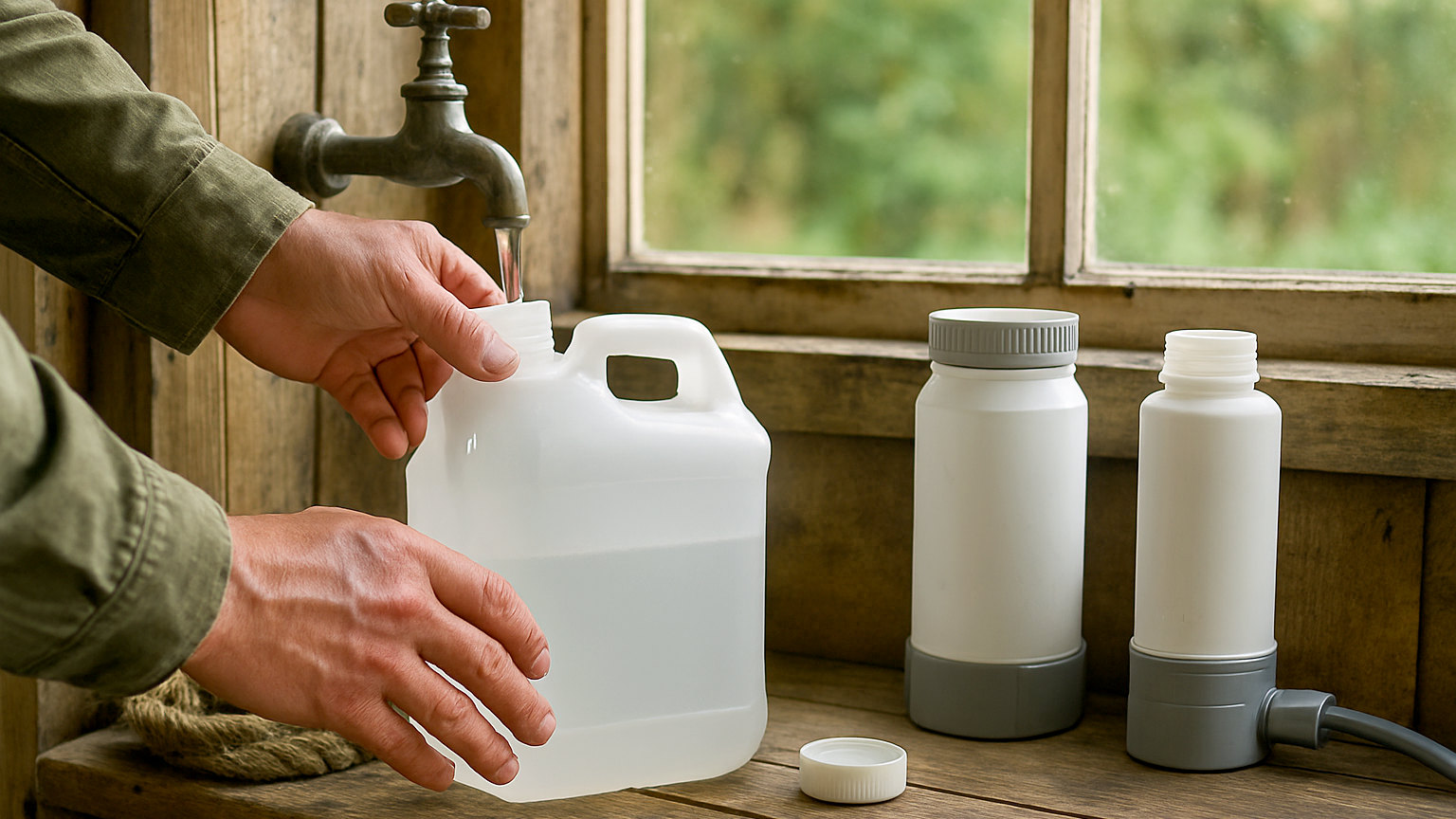
Use cold water straight from the mains tap, which in most homes is the kitchen tap. Water from a hot tap has been sitting in a cylinder and may have picked up metals and sediment. Water from a bathroom tap in older properties may be fed from a storage tank rather than the mains, which is not intended for drinking. Run the tap briefly before filling.
What about filtered water?
Store unfiltered. Jug filters remove chlorine, which is exactly the residual keeping stored water stable, so filtered water spoils faster than water straight from the tap. Filter at the point of use if you prefer the taste, and store the plain tap water.
When does pre treatment make sense?
Where the source is not mains water. A private supply, a borehole, a spring or collected rainwater should be treated before storage and again before drinking, since none of them arrive with any disinfection. In those cases the calculation is different and proper treatment is genuinely necessary rather than optional.
What about water filters and jugs?
They belong at the point of use rather than in the storage chain. A jug filter improves taste and removes chlorine, which is the residual keeping stored water stable, so filtering before storage actively shortens its life. Filter cartridges themselves also become a breeding ground if left damp and unused for long periods, so a filter that has sat in a cupboard for a year should have a fresh cartridge before being relied upon.
Store cold mains water in clean sealed containers, fill to the top, rotate annually, and treat when you drink it rather than when you store it.