Being caught by weather while out is a common situation with a small number of correct responses, and the instinct to press on toward the car or the summit is usually the wrong one.
What is the first decision?
Whether to continue, turn back or stop. Continuing is right only if the destination is close, the route is straightforward and conditions are not deteriorating. Turning back is right when the route behind is known and safer. Stopping and sheltering is right when conditions are worsening faster than you can move, or when anyone in the group is struggling.
Why is pressing on so common?
Because turning back feels like failure and the car feels close. People continue into worsening conditions because they have invested effort, because the group does not want to be the one to suggest stopping, and because the destination is a fixed idea. Recognising that pattern in yourself is what allows the better decision.
- Stop and shelter rather than pressing on into worsening weather
- Get out of the wind, which strips heat faster than cold air does
- Put on every layer before you get cold, not after
- Use a group shelter or survival bag immediately
- Eat and drink, since heat production needs fuel
- Call 999 and ask for the police, then mountain rescue
How do you shelter effectively?
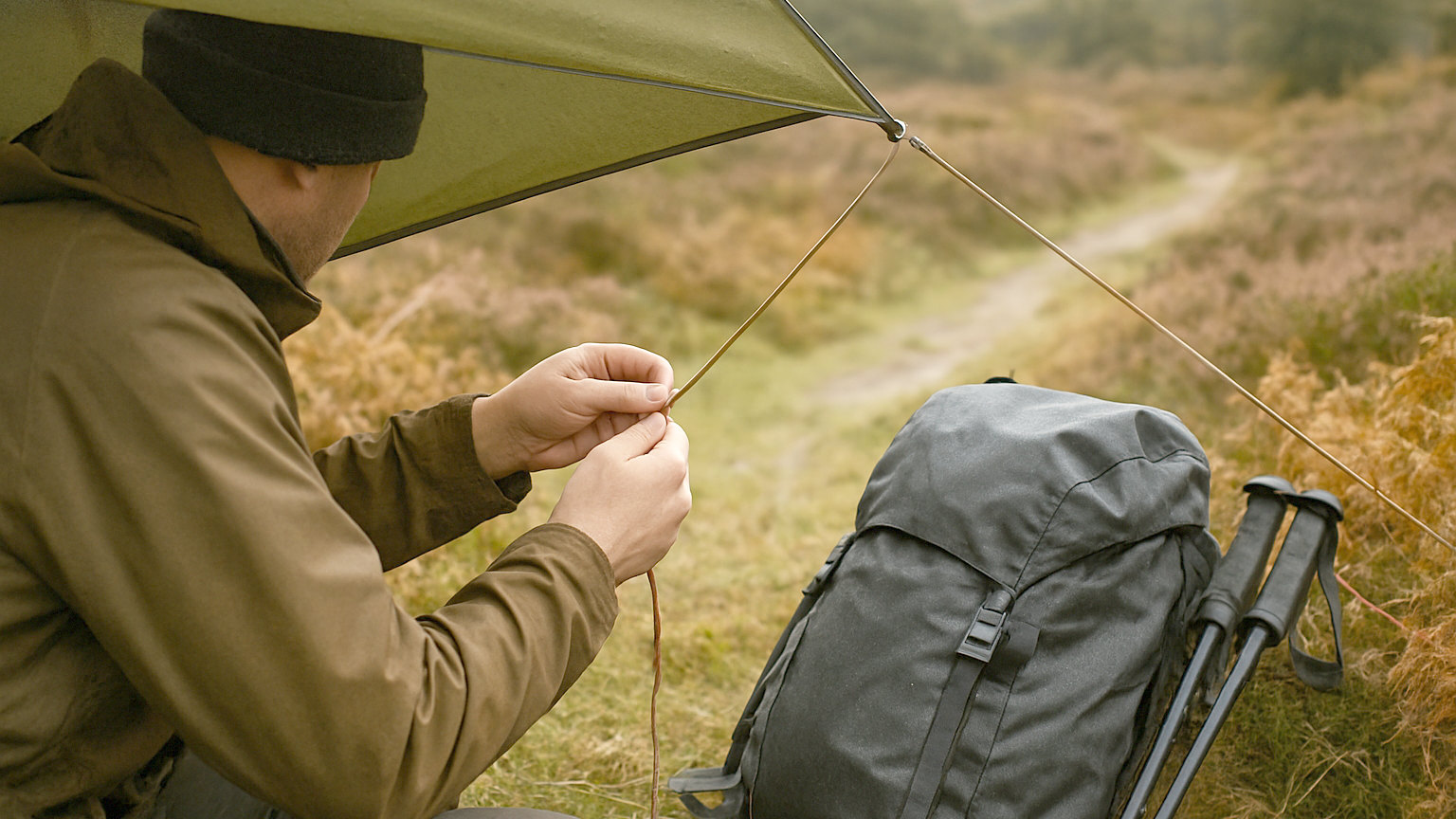
Out of the wind and off the ground. Find a lee slope, a wall, a boulder or a hollow, avoiding anything that could channel water or accumulate snow. Get insulation underneath you, since the ground takes heat faster than the air. A group shelter deployed over a huddled group raises the internal temperature within minutes and is the single most valuable item for this situation.
What should you do about clothing?
Add everything before you cool down. The moment you stop moving, heat production falls sharply, so layers, hat and gloves go on immediately rather than when you feel cold. Change wet base layers if you have a spare. Someone who has already put on all their kit and eaten something is in a completely different position from someone who waited.
What about navigation in bad visibility?
Slow down and shorten the legs. Break the route into two or three hundred metre sections with a bearing and a pace count for each, aim off toward large linear features, and rely on the shape of the ground rather than landmarks. If your navigation is no longer working, stopping and sheltering is better than continuing on guesswork.
When should you call for help?
Before it becomes desperate. Injury, someone becoming hypothermic, being genuinely lost, or conditions beyond the capability of the group are all legitimate reasons. Call 999, ask for the police and then mountain rescue, and have a grid reference or a what3words location ready. Teams would far rather attend early to a walkable situation than late to a serious one.
What about lightning?
Get off high ground and away from isolated features. Descend from ridges and summits, move away from lone trees, fences, pylons and water, and avoid being the highest point. If caught in the open, crouch low on the balls of your feet with feet together, minimising contact with the ground, rather than lying flat. A vehicle with a metal roof is a safe place.
What prevents this situation?
Checking the forecast properly, including the mountain forecast rather than the town one, and setting a turnaround time before setting off. Wind speed and cloud base matter more than rainfall on high ground. Being willing to change the plan when the forecast changes is the habit that keeps people out of trouble.
What should you tell people before going out?
Your route, your expected return time and who is with you, left with someone reliable who will act if you do not make contact. Without that, no search begins, and everything else in this article becomes considerably harder. It costs a text message and it is the single most useful preparation for being caught out, because it converts a private problem into one somebody else knows about.
Stop before you have to, get out of the wind and off the ground, put every layer on early, deploy a group shelter, and call for help before it is urgent.