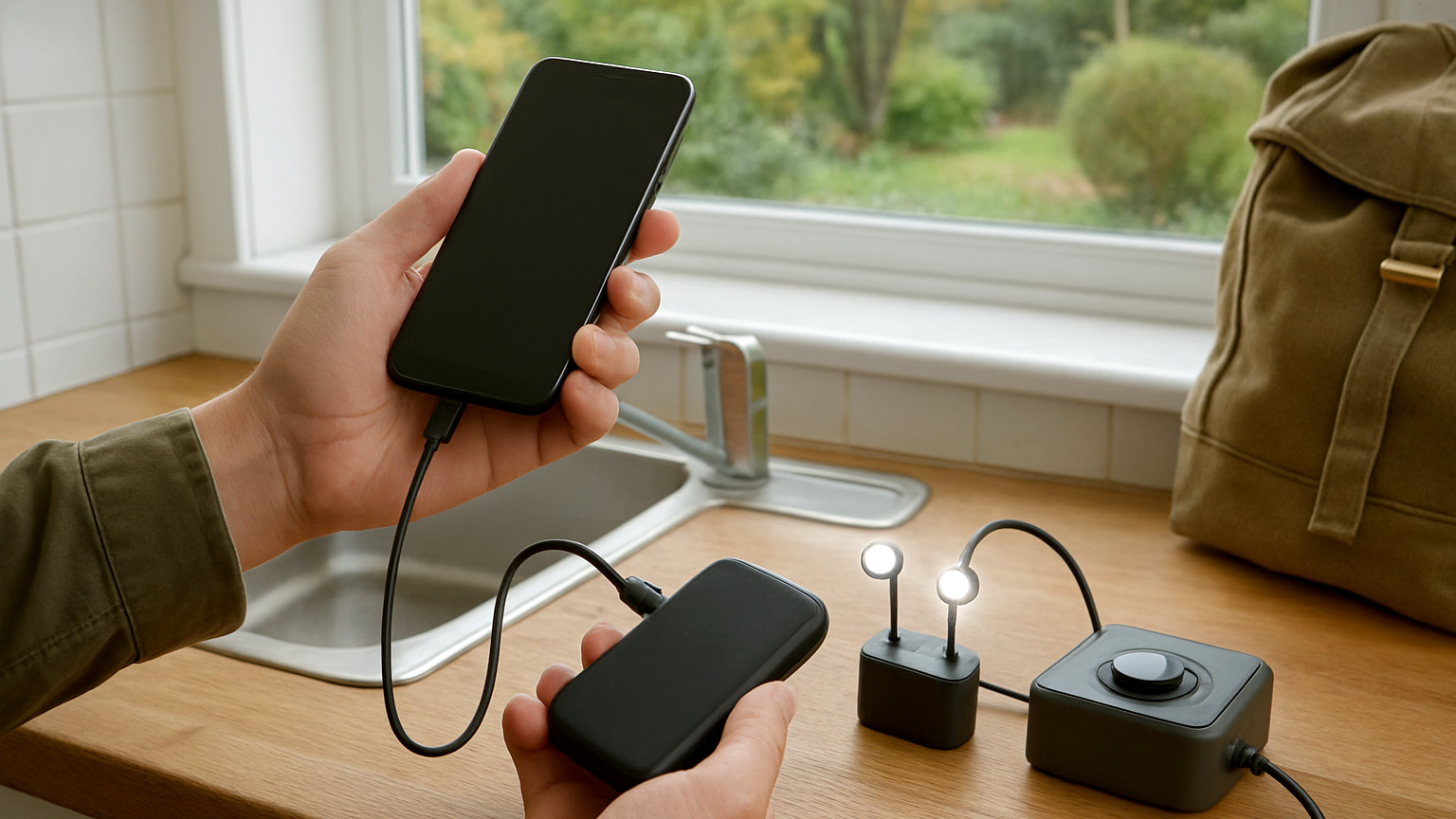
The fact that a gas boiler produces no heat during a power cut surprises most households, and the fact that it needs very little electricity to work surprises them again. Between those two facts sits one of the most useful pieces of household preparedness available.
Why does a gas boiler need electricity?
For everything except the gas itself. The circulating pump moves hot water around the radiators. The control board, thermostat, timer and fan all need power, as does the ignition. Without electricity the boiler simply does not fire, so a household with a full gas supply and no power sits in a cold house with a working gas main outside.
How much power does it need?
Very little, typically between eighty and two hundred watts depending on the model, with a brief higher draw when the pump starts. That is comparable to a couple of old light bulbs. A portable power station of five hundred to one thousand watt hours could therefore run a boiler intermittently for many hours, since it only draws power when actually heating.
- Most gas boilers need only around one hundred watts
- A modest power station can run one for many hours
- Boilers are usually hardwired, so connection needs an electrician
- A fused spur can be converted to a switched socket outlet
- Never connect a generator to house wiring through a socket
- Use a pure sine wave supply for the control electronics
What is the practical difficulty?
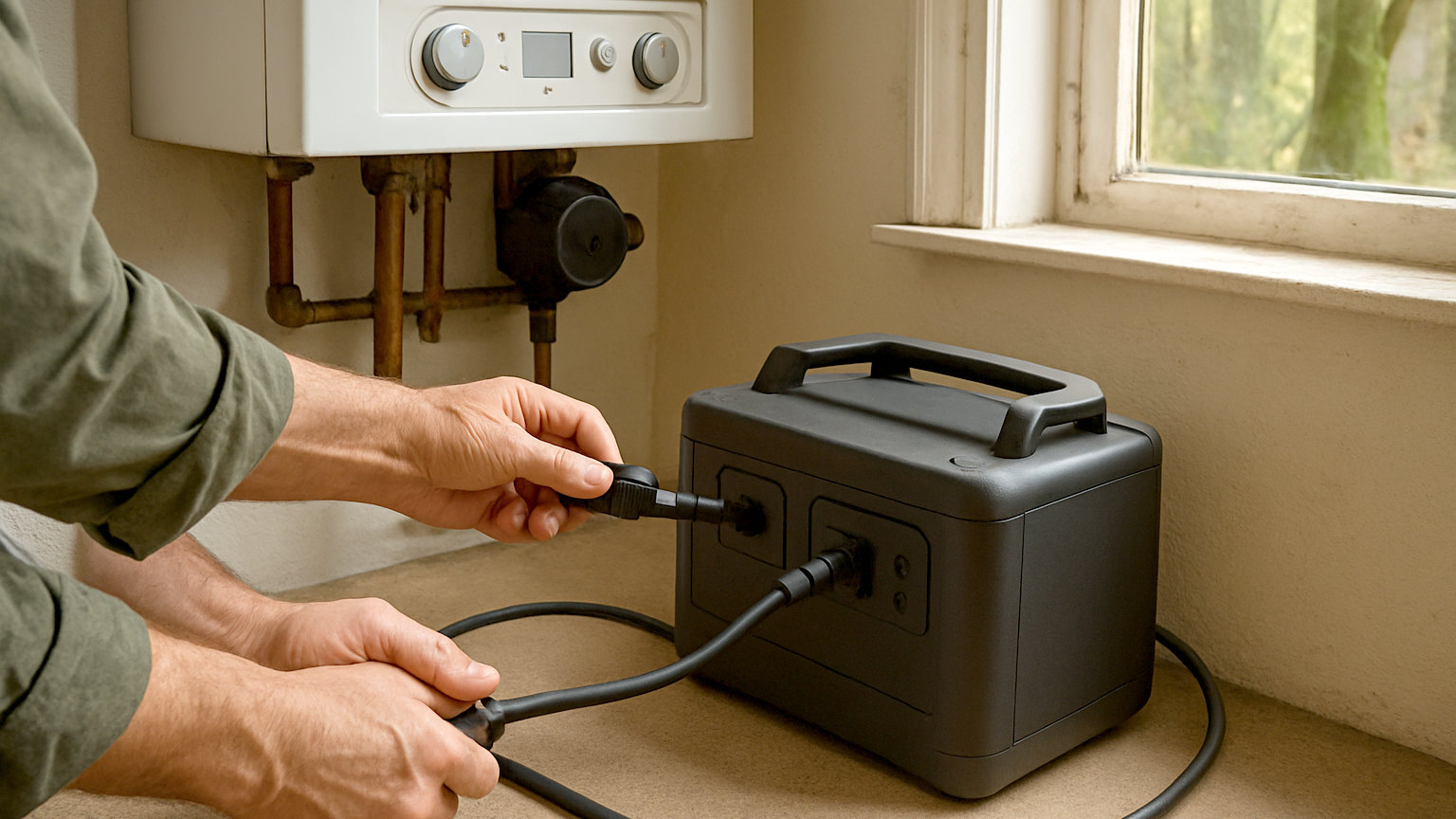
Connection. Most boilers are wired into a fused connection unit rather than plugged into a socket, so there is nothing to unplug and move to a battery. The usual solution is to have a qualified electrician replace that fused spur with a switched socket outlet, or fit a small changeover arrangement, so that in an outage the boiler can be unplugged from the mains and plugged into a power station.
Is that work notifiable?
It depends on the arrangement and the location, and it is work for a qualified electrician regardless. Electrical work in dwellings in England and Wales falls under Building Regulations Part P, with certain work notifiable to building control or carried out by a registered competent person. Ask the electrician to confirm what applies and to provide certification, and keep the paperwork with your household documents.
Does the supply quality matter?
Yes. Boiler control boards are sensitive electronics and should be run from a pure sine wave inverter rather than a modified sine wave one. Cheap inverters producing a stepped waveform can cause control boards to misread, pumps to run hot, and in some cases damage components. Almost all reputable power stations now provide pure sine wave output, and it is worth confirming.
What about electric heating?
Realistically out of reach for battery backup. Electric heaters draw one to three kilowatts, which would empty even a large power station within an hour. Storage heaters, immersion heaters and electric showers are similarly beyond it. Households heated entirely by electricity have a considerably harder problem during an outage, and the answer is usually insulation, warm clothing and one heated room rather than backup power.
What are the alternatives for warmth?
Heat people rather than rooms. Layers of clothing, blankets, hot water bottles filled from a gas hob or camping stove, and everyone gathered in one small room with the doors and curtains closed. This is genuinely effective, costs nothing, and avoids the temptation to bring outdoor heating equipment indoors, which is what kills people during cold weather outages.
Is it worth arranging?
For most households with gas central heating, yes. The electrician visit is modest, the battery is useful for other things, and the result is a warm house during a winter outage rather than a cold one. It is among the highest value backup power arrangements available, precisely because the load is so small relative to the benefit.
Get a socket fitted for the boiler, run it from a pure sine wave battery, and never try to heat a house electrically from backup power.