Household water calculations are almost always done for the people. Animals are then discovered to need a meaningful share of it, and in the case of livestock a share that dwarfs the human requirement entirely.
How much do pets need?
Roughly fifty millilitres per kilogram of body weight per day as a general guide, more in hot weather, for active animals and for those eating dry food. A ten kilogram dog therefore needs around half a litre a day, and a large breed of forty kilograms needs two litres or more, comparable to an adult human. Cats need considerably less, typically a couple of hundred millilitres.
What should you add to the store?
Their daily requirement multiplied by the number of days you are planning for, plus a margin. For most households with a dog or two cats this is a few extra litres, which is trivial to accommodate. Add a bowl to the grab bag and keep a collapsible one, since animals will not drink readily from an unfamiliar container.
- Around fifty millilitres per kilogram of body weight daily
- More in hot weather and for animals on dry food
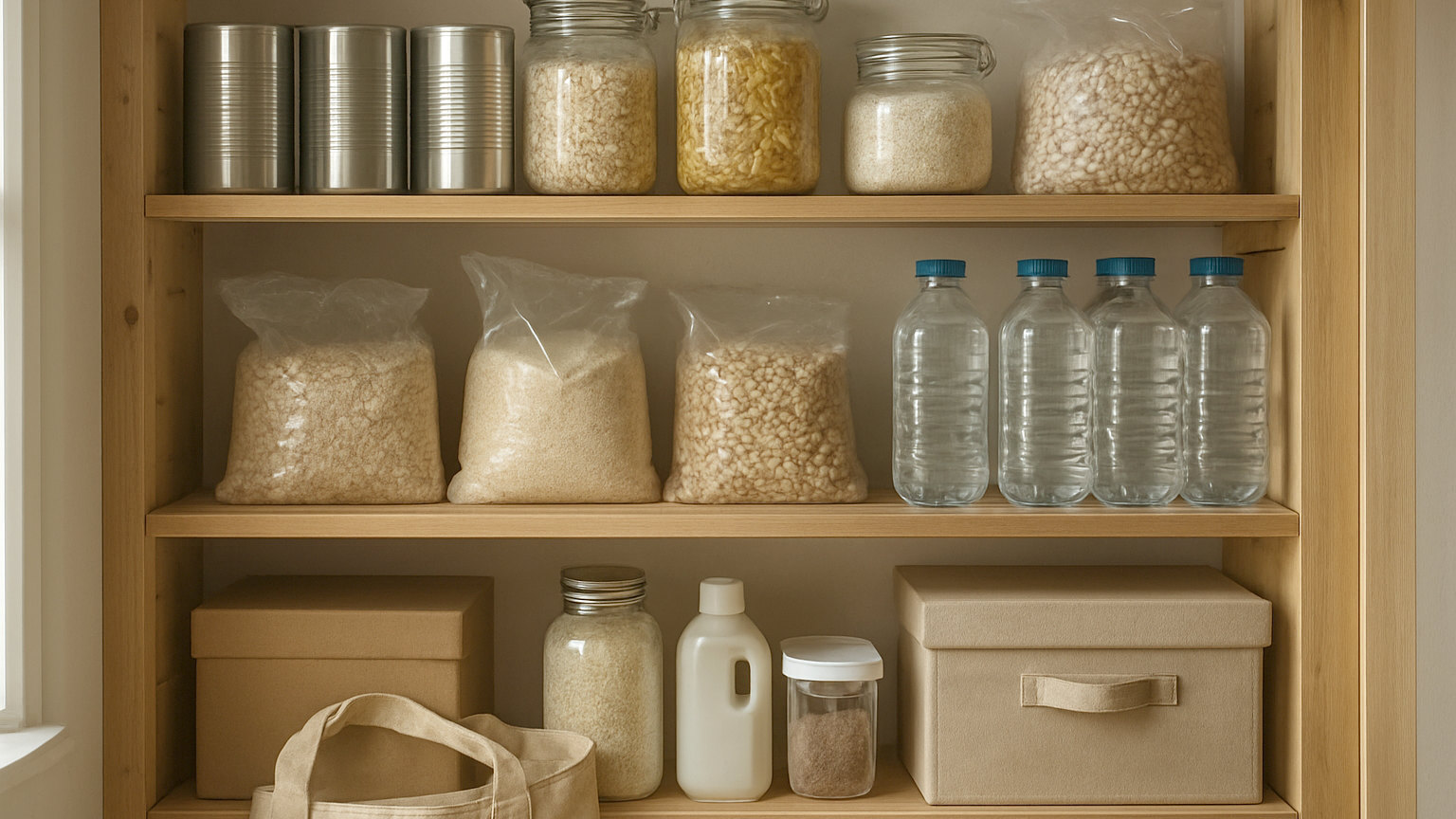
- Add their requirement to the household total explicitly
- Keep a bowl with the store and in the grab bag
- Livestock and horses need a separate plan entirely
- Do not give animals water you would not drink yourself
Can animals drink lower quality water?
Less than people assume. Dogs and cats are susceptible to many of the same waterborne organisms as people, including giardia, cryptosporidium and leptospira, and blue green algae is frequently fatal to dogs. The sensible rule is to give animals the same quality of water you would drink yourself, and to treat stored water for them as you would for the household.
What about livestock?
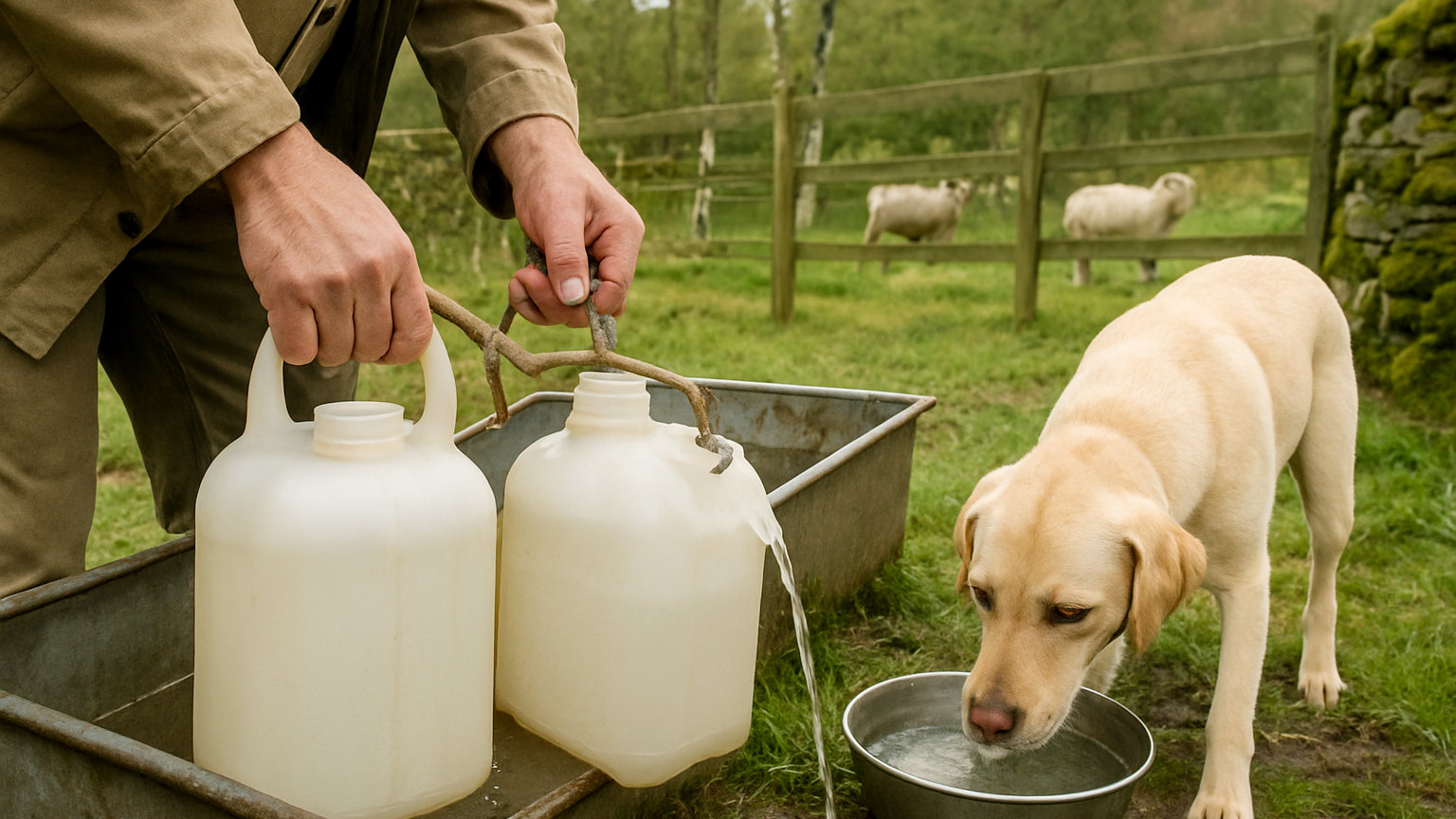
They change the scale completely. A dairy cow can drink well over a hundred litres a day, a beef animal fifty or more, a horse thirty to fifty, and sheep several litres each. A smallholding with a handful of animals therefore has a daily requirement measured in hundreds of litres, which cannot be met from stored bottles and requires a genuinely different plan.
What does a livestock plan look like?
Bulk storage, alternative sources and a means of moving water. A large tank, a natural water source with a route to it, a bowser or an intermediate bulk container that can be moved by tractor or trailer. Know where the nearest usable source is and how you would get water to the animals, since carrying it by hand is not feasible at that scale.
What if the supply fails on a smallholding?
Contact your water company immediately and say that you have livestock, since agricultural and animal welfare needs are taken into account when prioritising restoration and tankering. Contact neighbouring holdings, since sharing a functioning supply or a bowser is common practice. Moving animals to a field with a natural water source is an option worth identifying in advance.
What about horses specifically?
They drink a great deal and refuse water they do not like, which complicates matters. Horses are notoriously reluctant to drink water that tastes different from what they are used to, so a sudden change of source can lead to dehydration even when water is available. Where practical, introduce any alternative source gradually, and be alert to reduced drinking during a disruption.
What is the simple version?
Add up what your animals drink, add it to the household total, and store accordingly. For a household with pets this is a few extra litres and a bowl. For anyone with livestock it is a separate plan requiring bulk storage and a means of moving water, and it should be worked out on a calm afternoon rather than during an interruption.
What if an animal will not drink?
Watch for it, because reduced drinking during a disruption is common and easy to miss. Unfamiliar containers, a different taste, stress and disrupted routine all put animals off. Use their normal bowl if you can, offer water frequently rather than leaving it out, and try adding a little of the liquid from a tin of food to make it more appealing. Contact a vet if an animal has not drunk for a day, sooner for small animals and puppies.
Calculate fifty millilitres per kilogram daily, add it to the household total explicitly, keep a bowl with the store, and plan separately for livestock.