Water is the heaviest thing in any store, and container choices made on capacity rather than weight produce a supply nobody can actually move.
How heavy is it?
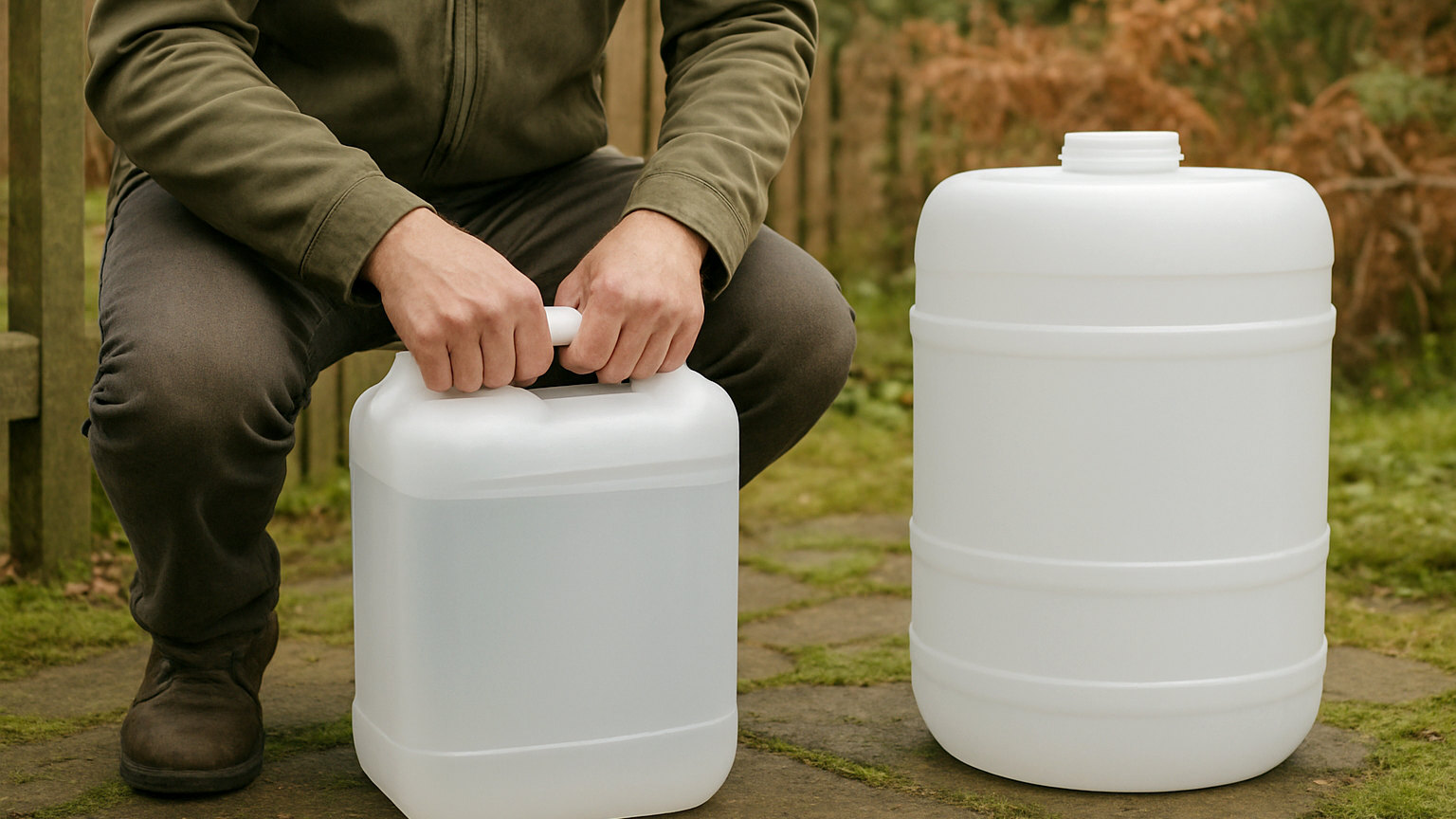
A litre of water weighs a kilogram. A five litre container weighs five kilograms, a ten litre jerry can ten, and a twenty five litre drum twenty five, which is beyond what many adults can lift comfortably and beyond what most can carry any distance. A week for a family of four is over a hundred kilograms in total, which is a genuine logistical quantity rather than a shopping trip.
What sizes work?
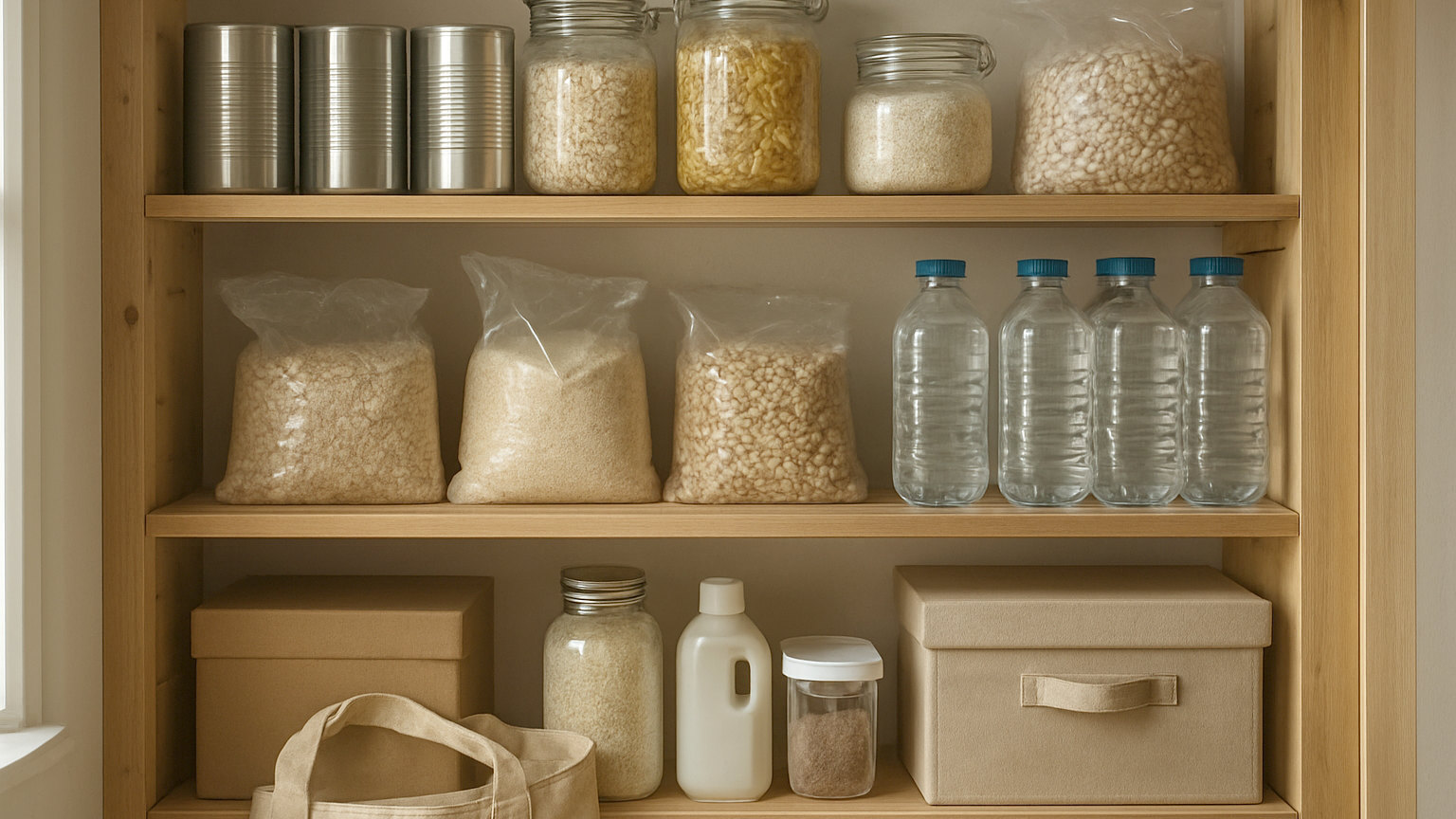
Two litres for anything to be carried freely, five litres as a comfortable maximum for most people, and ten litres as the upper limit for a fit adult over a short distance. Larger containers are reasonable for static storage that will be decanted rather than moved, and should not be the only form the store takes. A mixture is the right answer.
- A litre weighs a kilogram, so size by weight not volume
- Two to five litres for anything carried by hand
- Ten litres as the practical maximum for a fit adult
- Larger containers only for static storage with a tap
- A wheeled trolley or sack barrow for moving quantity
- Carry two balanced containers rather than one heavy one
How do you move a larger quantity?
On wheels. A sack barrow, a garden trolley, a wheelbarrow or a wheeled shopping trolley moves far more than anyone can carry and costs very little. During a supply interruption, water is often distributed at collection points and you may need to move several containers a few hundred metres, which is exhausting by hand and straightforward with wheels.
What is the right way to carry it?
Balanced and close to the body. Two five litre containers, one in each hand, is considerably easier than one ten litre container, since the load is symmetrical and does not twist the spine. A rucksack holds water well and keeps the weight over your centre of gravity. Bend at the knees when lifting from the floor, and do not carry more than you can set down under control.
What about collection points?
Water companies set up bottled water stations during interruptions, usually in car parks, community centres or supermarket forecourts, and publicise the locations through their website, local radio and social media. Take containers with you if collecting in bulk, take something wheeled, and be aware that queues form. Priority Services Register customers may receive deliveries instead.
How much can you realistically collect?
Less than you need for long. Carrying twenty kilograms is a substantial effort and covers one person for five days of drinking. A household of four needs around a hundred kilograms a week, which means repeated trips or a vehicle. This is the practical argument for storing at home rather than relying on collection, and for having something with wheels.
What about upstairs?
Store some there rather than carrying it up later. If you live in a flat above ground floor, or if your realistic scenario involves moving upstairs during a flood, positioning part of the store where you will need it saves carrying it at the worst moment. A crate of bottles under an upstairs bed is easier than a trip up two flights with a jerry can.
Who in the household can lift what?
Worth establishing honestly rather than assuming. If one adult can manage ten litres and another can manage two, size the containers so both can contribute rather than making the store dependent on one person being present and well. Children can carry two litre bottles, which is a genuine contribution over several trips.
What about carrying water any distance?
Rucksacks and yokes distribute the load far better than hands. A rucksack keeps the weight over your centre of gravity and leaves your hands free for balance and gates, which matters on rough ground or in the dark. Two containers slung from a pole or a yoke across the shoulders is the traditional solution and works well over longer distances. Whatever the method, plan on multiple lighter trips rather than one heroic one.
Buy in two to ten litre sizes, keep something wheeled, carry two balanced containers rather than one, and store some upstairs if you may need it there.