Backup power is an area where people either do nothing or buy something far larger than they need. The useful answer for most British households sits at the small end and costs considerably less than the marketing suggests.
What do you actually need to run?
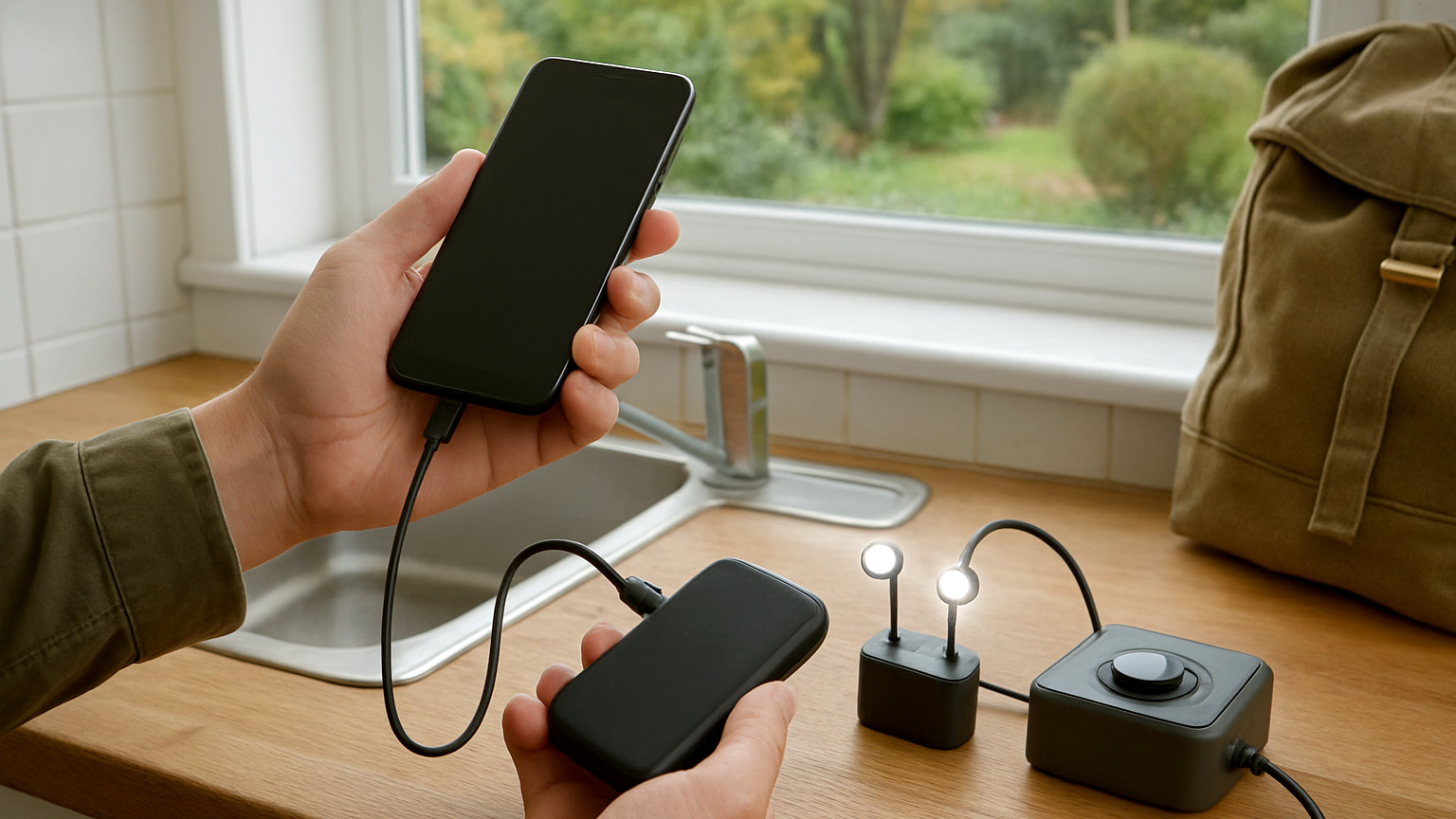
Start with the list rather than the equipment. For most households it is phones, a couple of lights, a radio, and possibly the boiler controls so the heating works. That is a very small load, measured in tens of watts, and it can be covered by a power bank and a modest battery. Everything above that, meaning cooking, electric heating and running a whole house, requires a different order of equipment and expense.
What are the tiers of solution?
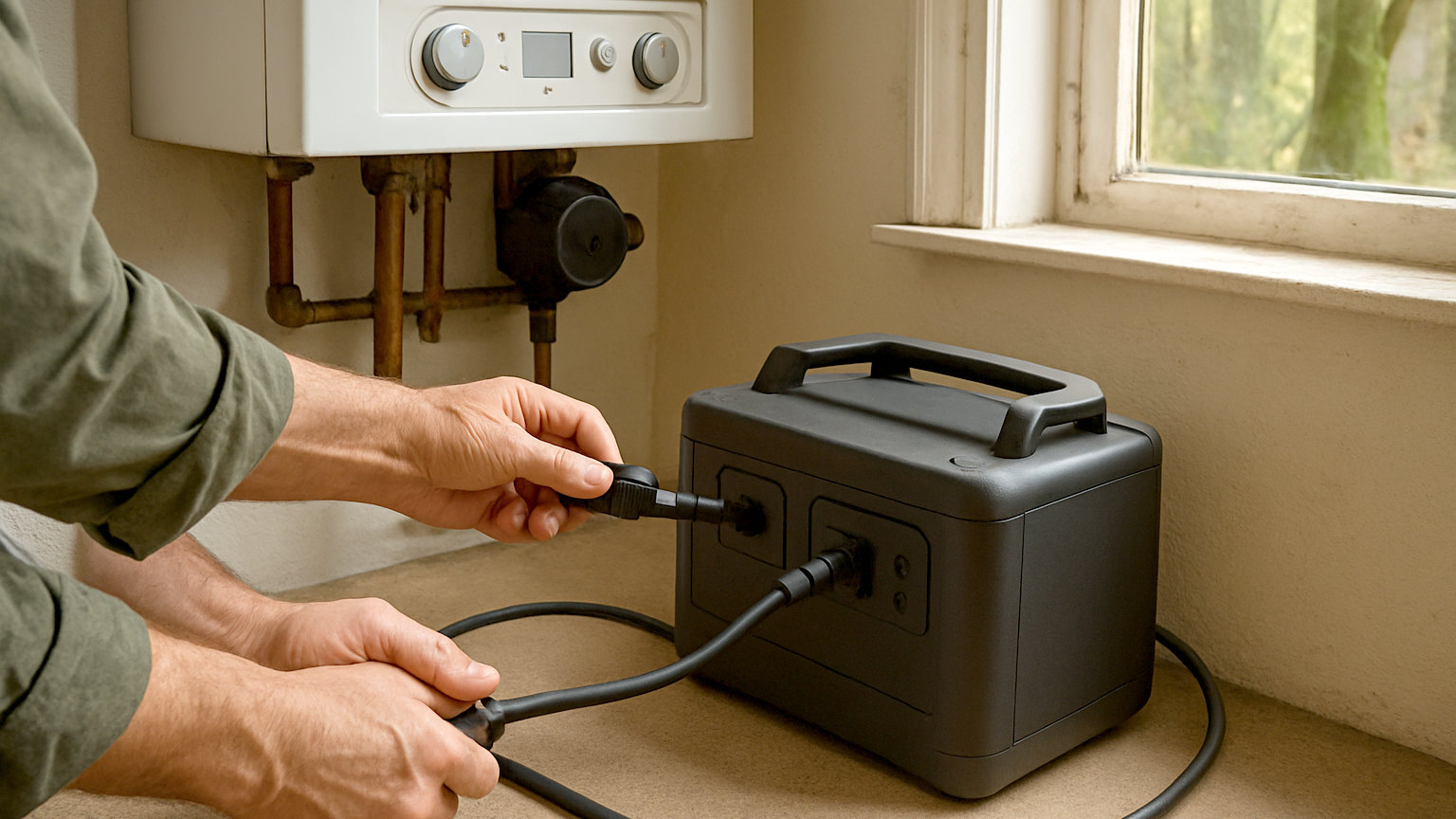
Four, roughly. A power bank charges phones and a torch and costs very little. A portable power station of a few hundred watt hours runs lights, a router, a laptop and the boiler for a day or two. A large power station or a small generator runs a fridge and freezer as well. A standby generator with proper switchgear runs the house and requires professional installation.
- Power bank, for phones and small devices
- Portable power station, for lights, router, laptop and boiler controls
- Larger station or petrol generator, to include the fridge and freezer
- Installed standby generator, for whole house supply
- Match the tier to what you genuinely need to keep running
What does the average household actually miss?
Light, phone charge, information and heating. Light and phone charge are trivially solved. Information comes from a battery radio needing no backup at all. Heating is the interesting one, because a gas boiler produces no heat without electricity for its pump and controls, and that load is only around a hundred watts. Being able to run it turns a cold house into a warm one for very little.
Do you need to keep the fridge going?
Usually not, for a typical British outage. A closed fridge holds temperature for around four hours and a full freezer for a day or more, which covers the majority of interruptions without any intervention. If outages in your area routinely run longer, or if you store medication requiring refrigeration, the calculation changes and a larger battery or generator becomes worth considering.
How long should you plan for?
Most British power cuts are resolved within a few hours, and storm related ones occasionally run to several days in rural areas at the end of long distribution networks. Planning for twenty four to forty eight hours is a reasonable target for most people. If you live somewhere that regularly loses power for longer, size upward and talk to your network operator about the pattern.
What should you avoid buying?
A generator you have never started, stored with fuel that has gone stale, with no safe place to run it. Generators demand fuel storage, maintenance, outdoor space away from windows, and a genuine understanding of carbon monoxide risk. For a household whose actual need is charging phones and running a boiler, a portable power station does the job silently, indoors, with no fuel and no risk.
What is the cheapest useful step?
A charged power bank and a couple of head torches, which together cost very little and address the immediate discomfort of an outage. Adding a battery radio covers information. That combination handles the overwhelming majority of power cuts most households will experience, and it can be assembled from a supermarket in one trip.
Who should think bigger?
Anyone dependent on powered medical equipment, anyone in a rural property at the end of a long line, anyone working from home who cannot lose a day, and anyone with a private water pump or a septic system needing electricity. In each of those cases the consequences of an outage are materially worse and the investment is justified.
List what you need to run, size to that, and start with a power bank rather than a generator.