Water is the easiest part of a preparedness store to maintain and the part most often left untouched for years. The routine takes twenty minutes annually and there is no reason for anything to go stale.
How often should you replace it?
Home filled containers every six to twelve months, and commercially bottled water every few years or as the date suggests. Annual replacement aligned with your other preparedness checks is a sensible rhythm for most households. If containers are stored somewhere warm or in the light, shorten it, since both accelerate deterioration.
How do you keep track?
Write the fill date on every container. A marker pen on the container itself or on masking tape is sufficient, and it removes any guesswork about what is oldest. Note the earliest date on a sheet with the rest of the store, so a glance tells you when the next replacement is due rather than requiring you to check each container.
- Write the fill date on every container
- Replace home filled water annually
- Rinse the container before refilling
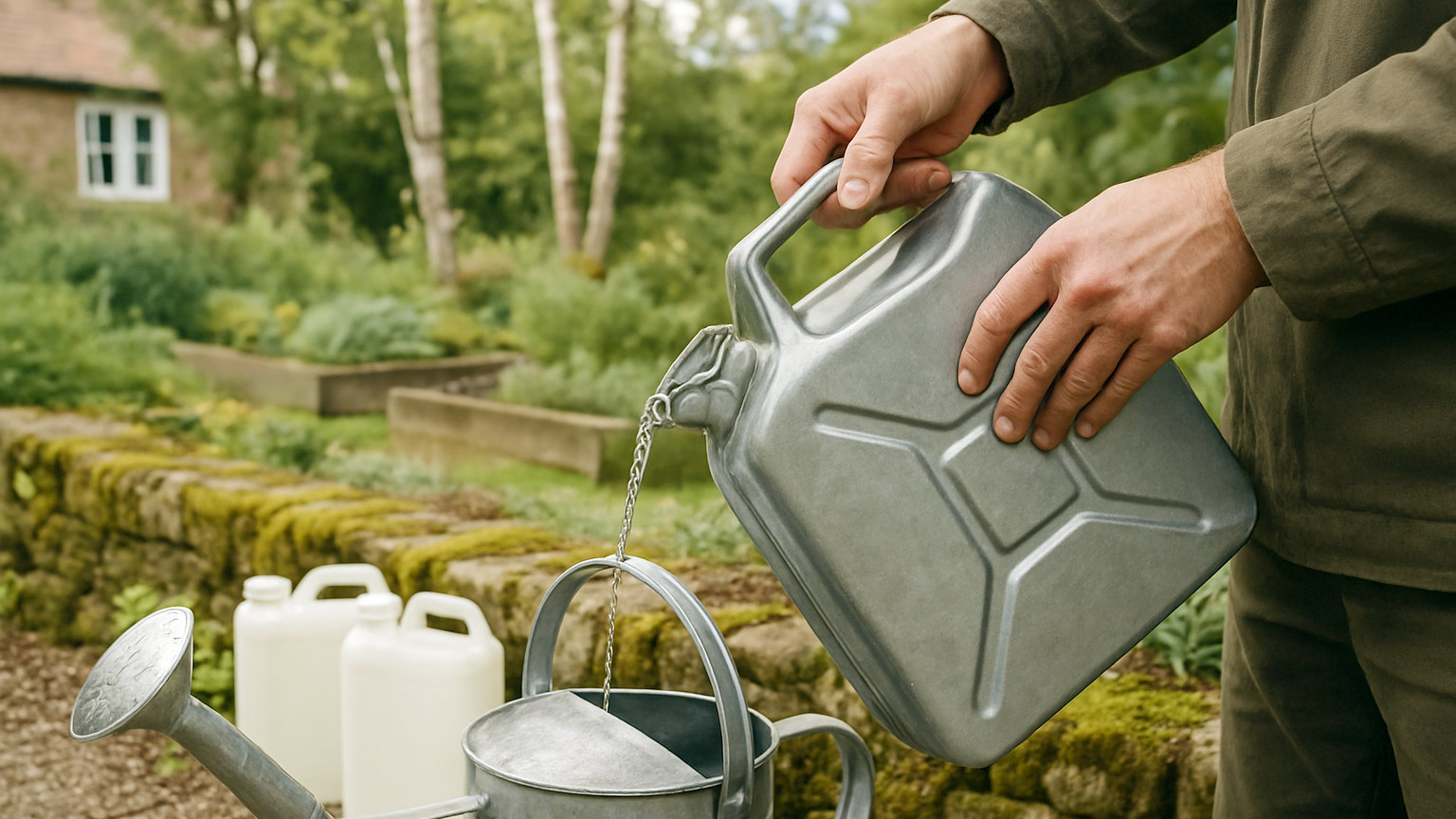
- Use the old water on the garden or for cleaning
- Do it alongside the twice yearly kit check
- Check for damage, algae and smell while you are there
What do you do with the old water?
Use it rather than waste it. Water the garden, fill a watering can, wash the car, clean the floors or flush a lavatory with it. Perfectly good water going down the drain feels wasteful and is what makes people reluctant to rotate. Treating it as a use rather than a disposal removes the reluctance entirely.
Should you clean the containers?
Rinse them at every refill and wash them properly occasionally. Hot soapy water and a thorough rinse deals with most of it. If a container has developed any slipperiness inside, which is biofilm, wash it with a sterilising solution of the type used for baby bottles, rinse very thoroughly and refill. A bottle brush is useful for anything with a narrow neck.
What should you check while rotating?
The condition of everything. Look for cracks, crazing, warped lids, leaking taps and any container that has become brittle. Check for algae, which indicates light is reaching the store, and for any smell, which indicates either growth or absorption from something stored nearby. Replace anything doubtful, since containers are cheap relative to the store they hold.
Does commercially bottled water need rotating?
Much less often. Sealed bottles stored cool and dark remain safe for years, and the printed date relates to taste rather than safety. Checking them at the same annual review and replacing every few years is more than sufficient. This is part of why bottled water suits people who would rather not think about the store at all.
How do you rotate a large volume?
In stages rather than all at once. Replacing a hundred litres in one session is a chore and gets postponed, whereas doing a quarter of it each season takes minutes and keeps the average age low. Marking containers with the season rather than the exact date makes this easy to track.
What if you have not touched it for years?
Assess rather than assume. Water in sealed containers, stored cool and dark, that looks and smells clean is very likely fine and can be boiled or treated before drinking if you want certainty. Water that is cloudy, green, smells musty or is in a damaged container should go on the garden and the container should be cleaned or replaced.
Can you tie it to something else?
It helps enormously. Rotating water when the clocks change, alongside testing smoke alarms and checking the rest of the kit, means it happens without anyone having to remember it independently. Some households do it at the start of each season and replace a quarter of the store, which spreads the effort and keeps the average age low. The specific trigger matters far less than having one at all.
Label the fill date, replace annually, use the old water on the garden, and check the containers for damage while you are doing it.