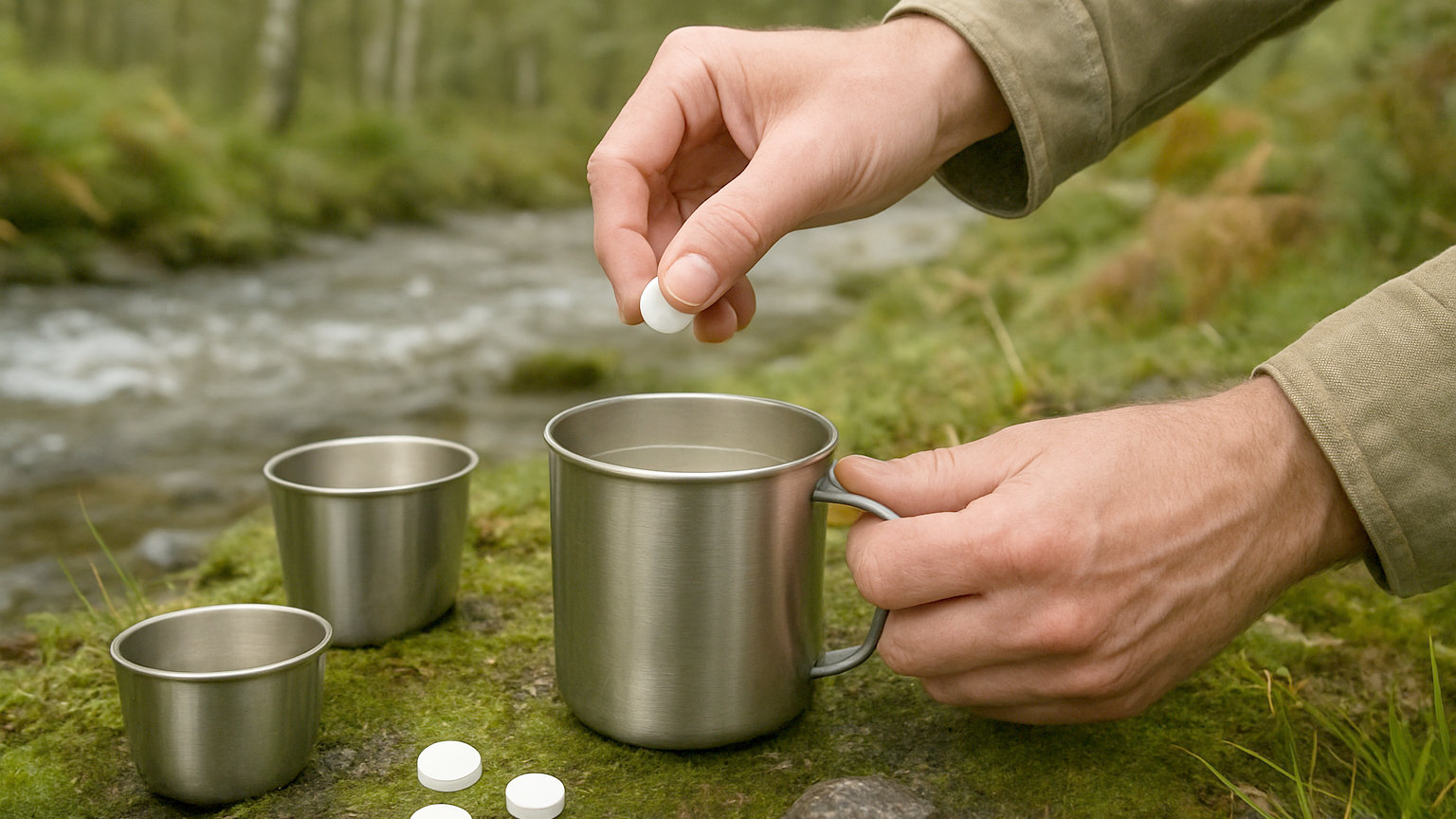
Water purification tablets are the cheapest and lightest treatment available, which makes them worth carrying whatever else is in your pack. They are also the treatment people understand least well, largely because three quite different chemicals are sold in similar looking packets.
Which chemicals are actually used?
Three dominate the market. Chlorine based tablets, usually sodium dichloroisocyanurate, are the cheapest and most common. Iodine tablets have a long military history and remain widely available. Chlorine dioxide is the most recent and most capable, sold either as tablets or as a two part liquid that is mixed before use. They look similar on a shelf and behave quite differently in a bottle.
What does each one reliably kill?
All three deal effectively with bacteria such as E. coli, salmonella and campylobacter, and all three inactivate viruses including hepatitis A and norovirus. The difference appears with protozoa. Giardia is killed by all three given sufficient contact time. Cryptosporidium, however, has a tough outer shell that resists chlorine and iodine at any dose you could safely drink. Only chlorine dioxide handles it, and even then it needs around four hours of contact time rather than the thirty minutes shown for other pathogens.
- Chlorine tablets, effective against bacteria and viruses, not cryptosporidium
- Iodine tablets, similar coverage, unsuitable for some people long term
- Chlorine dioxide, covers bacteria, viruses, giardia and cryptosporidium
- All three work more slowly in cold water
- All three work poorly in cloudy water without pre filtering
How long do they need to work?
Longer than most people wait. Thirty minutes is the usual figure printed on packaging, and that assumes clear water at around twenty degrees centigrade. Cold water dramatically slows the chemistry, so at close to freezing you should double the time as a minimum. Cloudy or organic rich water consumes the active chemical before it reaches the pathogens, which is why pre filtering through cloth or letting sediment settle first is not optional. For cryptosporidium with chlorine dioxide, plan for four hours and treat it as an overnight job.
Is iodine safe for everyone?
Not quite. Iodine is not recommended for pregnant women, for people with thyroid conditions, or for anyone with a known iodine allergy. It is also generally advised against for continuous use beyond a few weeks, because sustained high iodine intake can affect thyroid function. For short trips in healthy adults it remains perfectly serviceable, but chlorine dioxide has largely superseded it for good reason.
What about the taste?
Chlorine and iodine both leave a noticeable taste that many people dislike, and iodine also tints the water faintly yellow. Neutraliser tablets containing vitamin C remove both taste and colour, but they must only be added after the full contact time has elapsed, because adding them early stops the disinfection dead. Chlorine dioxide has a far milder taste, which is another reason it has become the default choice.
Where do tablets fit alongside other methods?
As a backup and as a partner to filtration. A filter removes protozoa, bacteria and sediment but usually not viruses. Tablets kill viruses but struggle with cloudy water and cryptosporidium. Used together, filtering first and then treating chemically, they cover each other completely and produce water that is safe from any realistic biological threat. Given that a strip of tablets weighs a few grams, carrying them alongside a filter is close to free insurance.
How should you store them?
In their original foil or blister packaging until the moment of use, because all three chemistries degrade on exposure to air, moisture and light. Loose tablets rattling in a tin lose potency at an unpredictable rate, which is the worst possible failure mode since there is no way to tell by looking. Check the expiry date at least annually, keep them out of direct sunlight and away from heat, and replace the strip in your kit every couple of years regardless. Given the cost, there is no sensible argument for stretching them beyond their stated life.
Buy chlorine dioxide if you are buying one type, keep them somewhere you will not forget them, and check the expiry date, because the active chemistry does degrade over time.