Foraging occupies a large place in survival imagination and a small one in survival arithmetic. Understanding the actual numbers changes how you prioritise, usually for the better.
How many calories are in wild greens?
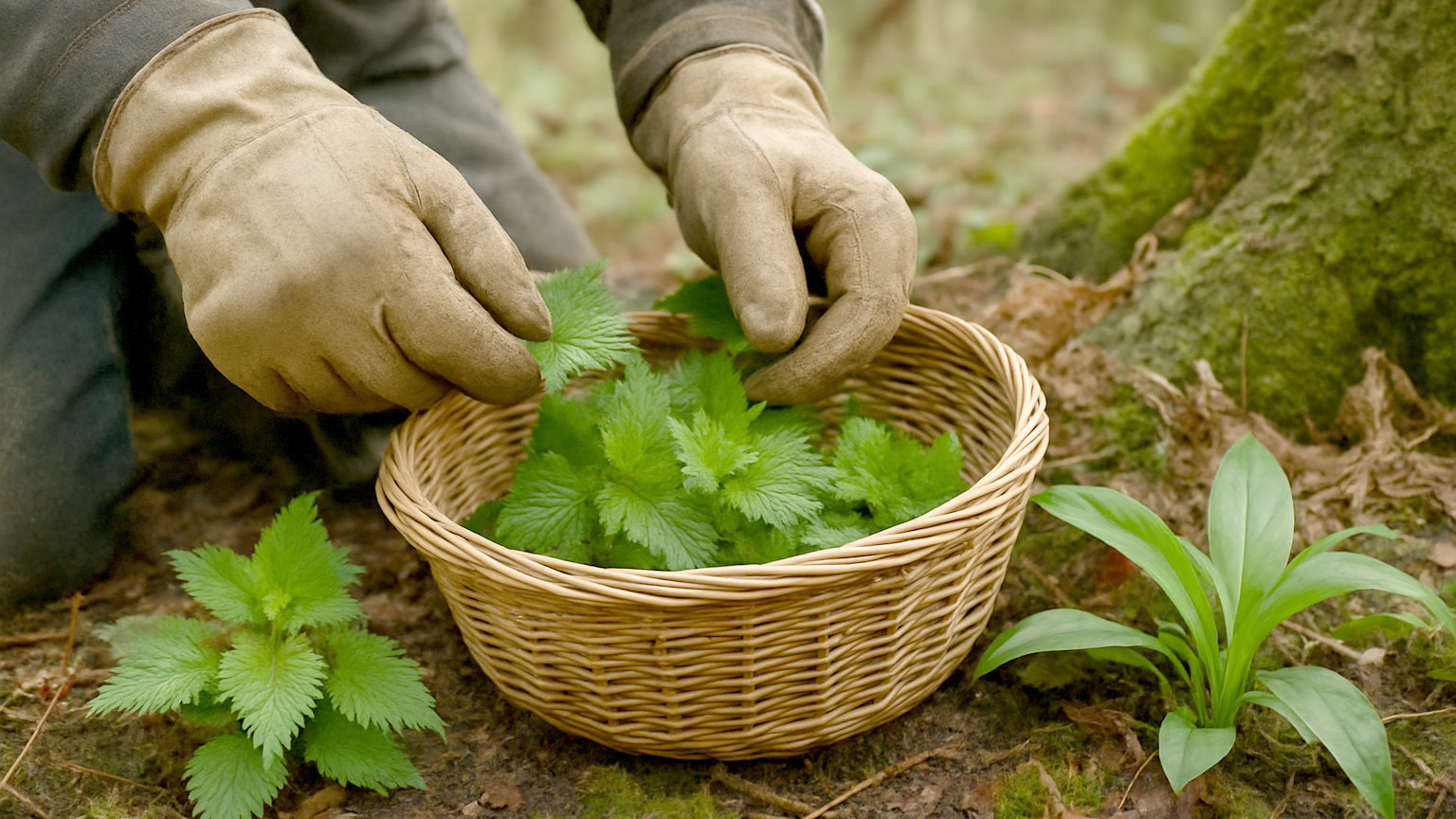
Very few. Nettles, dandelion, wild garlic, sorrel and most other wild leaves sit between twenty and fifty calories per hundred grams, similar to lettuce or spinach. A substantial carrier bag of gathered greens might contain two or three hundred calories, against a daily requirement of two thousand or considerably more when active and cold. The gathering itself burns a meaningful fraction of that, so the net return approaches nothing.
Where are the real calories?
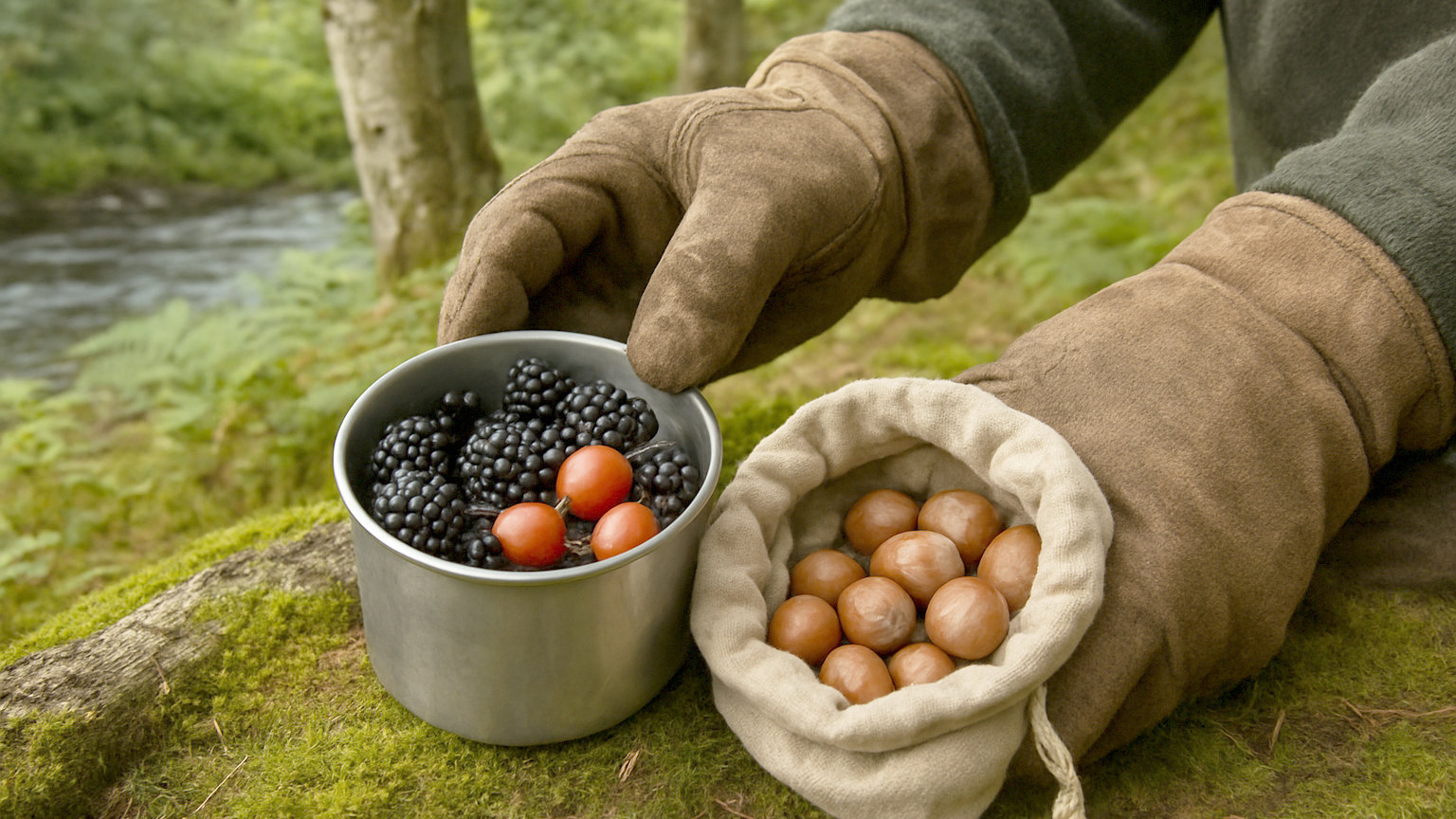
In nuts, and almost nowhere else in the British countryside. Hazelnuts contain around six hundred calories per hundred grams and substantial fat, which is the nutrient hardest to obtain from wild sources. Sweet chestnuts, walnuts and beech mast are all worthwhile. Fatty fish is the other genuine source. Everything else, including berries at around fifty calories per hundred grams, contributes flavour and micronutrients rather than energy.
- Wild greens, twenty to fifty calories per hundred grams
- Berries, around forty to sixty per hundred grams
- Hazelnuts and other nuts, five to seven hundred
- Fatty fish, one to two hundred with useful fat
- Small mammals, lean, low fat and low yield
Why does fat matter so much?
Because it is the most energy dense nutrient and the hardest to find in the wild. A diet of only lean wild protein, without fat or carbohydrate, produces a condition historically called rabbit starvation, in which the body cannot process the protein load and the person deteriorates despite eating. This is why nuts and oily fish matter disproportionately, and why the traditional emphasis on trapping small lean mammals is misplaced.
How does foraging fit into survival priorities?
Last. The conventional ordering places shelter and warmth first, water second, signalling and rescue third, and food fourth, and the timescales justify it. Exposure kills in hours, dehydration in days, and starvation in weeks. A healthy adult has ample reserves for any realistic British survival scenario, and time spent foraging is time not spent on shelter, water or being found.
Is foraging worth doing at all?
Very much so, for reasons other than survival calories. It builds real knowledge of the landscape, provides excellent food to supplement a normal diet, costs nothing, gets people outdoors, and produces genuinely superior ingredients that cannot be bought. Autumn nuts and fruit can be gathered in quantity worth preserving. It simply should not be understood as a way of feeding yourself in an emergency.
What about morale?
Here foraging earns its place in a survival context. Hot food, something with flavour, and the sense of having done something useful all matter considerably to a person who is cold and frightened. A handful of berries or a hot nettle broth may be nutritionally trivial and psychologically valuable, and morale is not a soft consideration when judgement and the will to keep going are what determine outcomes.
What should you actually prioritise?
Carrying food. A few hundred grams of high energy food in a pack outperforms any amount of foraging skill, costs almost nothing, and requires no identification. Nuts, chocolate, dried fruit and energy bars deliver more calories than a day of gathering, weigh little, and are available immediately when you are cold and need fuel. Foraging knowledge complements that and does not replace it.
How long does it take to gather a meal?
Longer than most people estimate, and the figure is worth knowing. Gathering enough nettle tops for a soup for two takes perhaps twenty minutes in a good patch. Picking a kilogram of blackberries takes half an hour to an hour depending on the season and the bushes. Collecting and shelling enough hazelnuts to matter can occupy an afternoon. None of that is wasted time if you are enjoying it, and all of it is time not spent on shelter, water or walking out if you are actually in difficulty.
Learn foraging because it is genuinely worthwhile, and carry food because that is what will actually feed you.