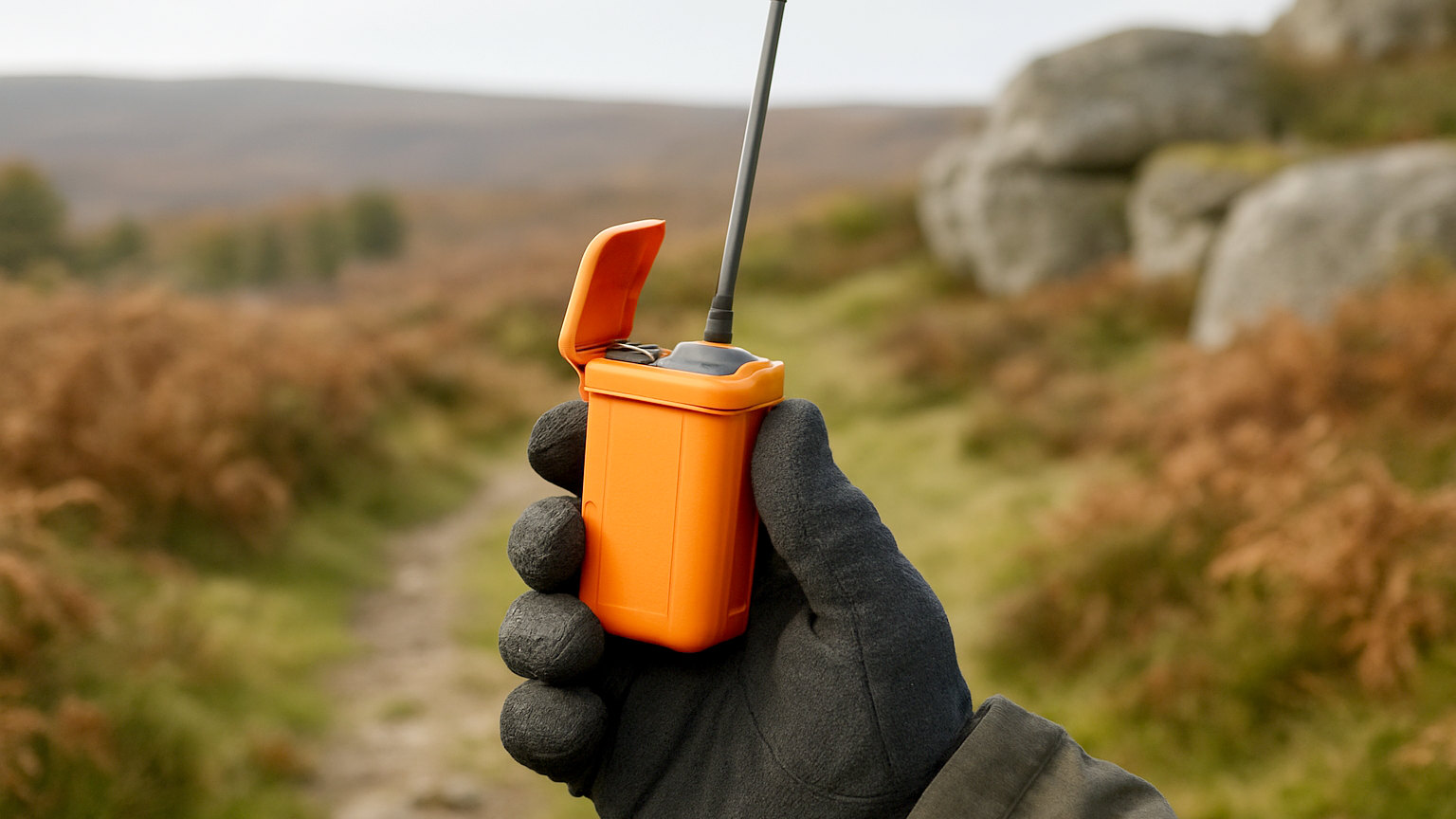
Everything in the standard signalling kit is convenient rather than essential. The underlying principles, contrast, pattern, movement and sound, can all be produced from what is around you.
What is the most effective improvised signal?
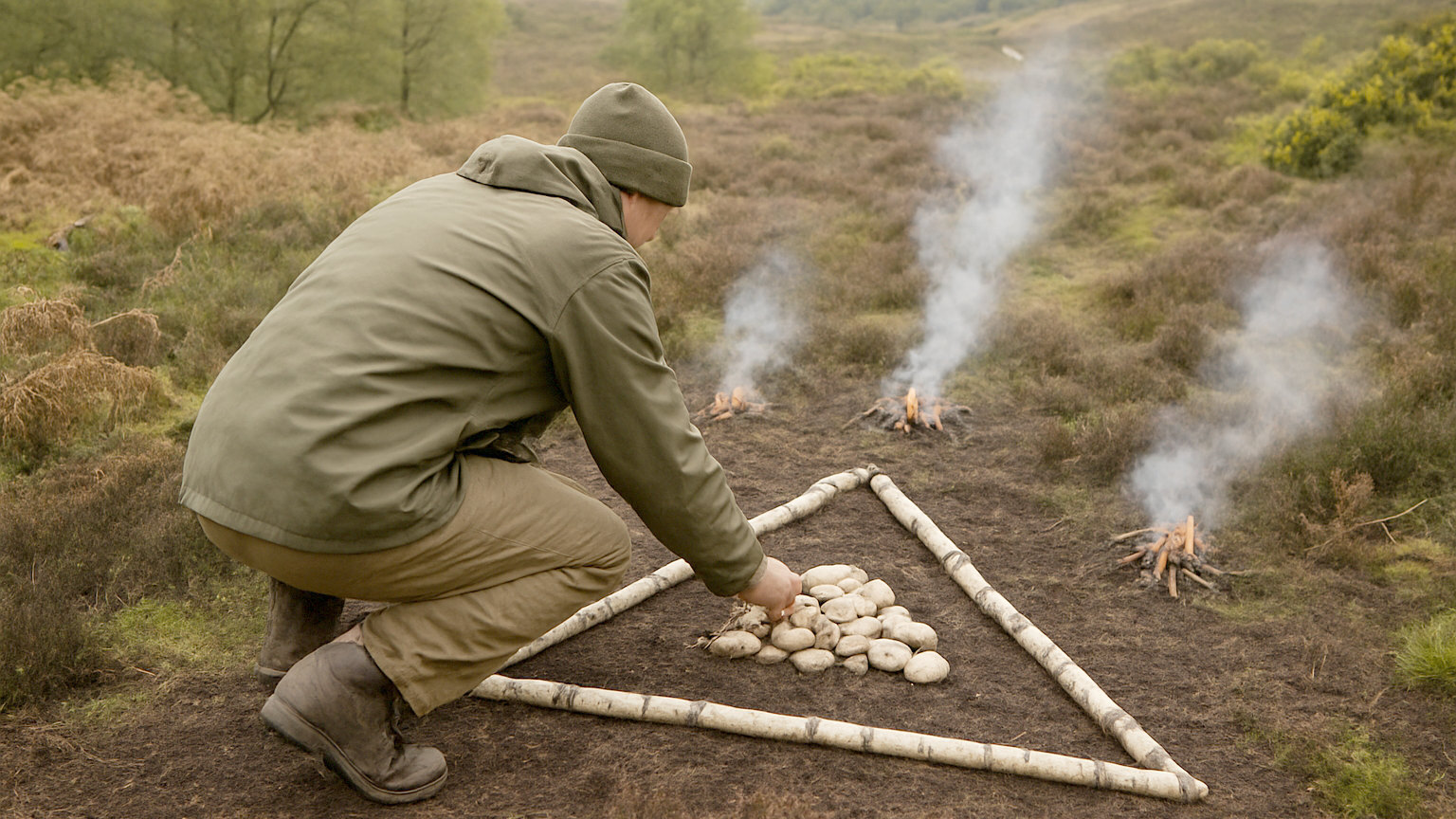
Fire, particularly at night, and smoke by day. Both are visible over long distances, both read unambiguously as human presence, and both can be produced from natural materials alone. Three fires arranged in a triangle is a recognised distress arrangement. Prepare the fire fully and keep it unlit until you have reason to believe someone might see it, because fuel is finite and a fire burning all day when nobody is searching achieves nothing.
How do you make useful smoke?
By choosing material for colour. Green vegetation, damp moss, fresh grass and leafy branches piled onto an established fire produce thick white smoke, which shows well against dark ground, woodland and hillsides. Rubber, oil, plastic and anything resinous produce black smoke, which contrasts far better against snow, sand or a pale sky. Match the smoke to the background rather than simply making as much as possible.
- Three fires in a triangle as a distress arrangement
- Green vegetation for white smoke against dark ground
- Oily or rubbery material for black smoke against snow
- Ground shapes built from stones, turf, branches or trampled vegetation
- Trenches dug in snow or sand for shadow contrast
- Banging rock on rock or metal for sound
What can you build ground markings from?
Whatever contrasts with the surroundings. Stones laid out on grass, turf sods cut and turned dark side up, branches on open ground, or vegetation trampled and cut into a shape. On snow, dig trenches or scatter dark material such as ash, soil or spruce boughs. On sand or shingle, trenches produce shadow lines that read strongly from the air. Aim for strokes at least three metres long, and use a large X to indicate that medical help is needed.
How do you produce sound without a whistle?
By striking things. Rock against rock carries surprisingly well, as does metal on metal or metal on rock. A hollow log struck with a branch produces a low sound that travels through woodland. Any of these can be sustained far longer than shouting and are less exhausting. Use the six per minute distress pattern, and listen during the pauses, since hearing a reply is as important as sending the signal.
What natural contrast is available?
More than people expect. The pale underside of many leaves, freshly turned earth, cut vegetation, ash from a fire and the bright inner wood of a split log all differ markedly from the surrounding landscape. Snapping branches to expose light coloured wood along a line, or scattering ash in a geometric shape, creates contrast without any manufactured material at all.
Does movement still matter?
Very much, and it is free. Waving anything large and light coloured, or waving a leafy branch, is far more visible than waving an arm. Slow broad arcs above the head register better than fast movement. Standing in the open rather than sitting under cover doubles your visibility for no effort, which is the simplest improvement available.
What should you prioritise with nothing at all?
Position first, since moving into open ground costs nothing and makes everything else more effective. Then a fire, if you can make one, prepared and ready to light. Then ground markings, built as large as your energy allows. Then sound, at intervals. And throughout, protect yourself from cold and wet, because a person who becomes hypothermic while building signals has made the situation worse rather than better.
How do you make a fire visible for longest?
By preparing three separate fires rather than one large one, and by managing fuel deliberately. A single large blaze consumes everything you gathered within an hour. Three modest fires in a triangle carry the recognised distress meaning, spread the fuel demand, and cover a wider area visually. Keep a reserve of dry material under cover so that you can produce a sudden bright flare or a burst of smoke on demand, which is far more useful than a steady fire nobody happens to be looking at.
Get into the open, prepare a fire, build one large marking, and signal by sound at intervals while staying warm and sheltered.