Loss or contamination of mains water is the most likely water emergency any British household will face. It arrives with little warning, is usually resolved within days, and is far easier to sit out if the first hour is used well.
What does a boil water notice actually mean?
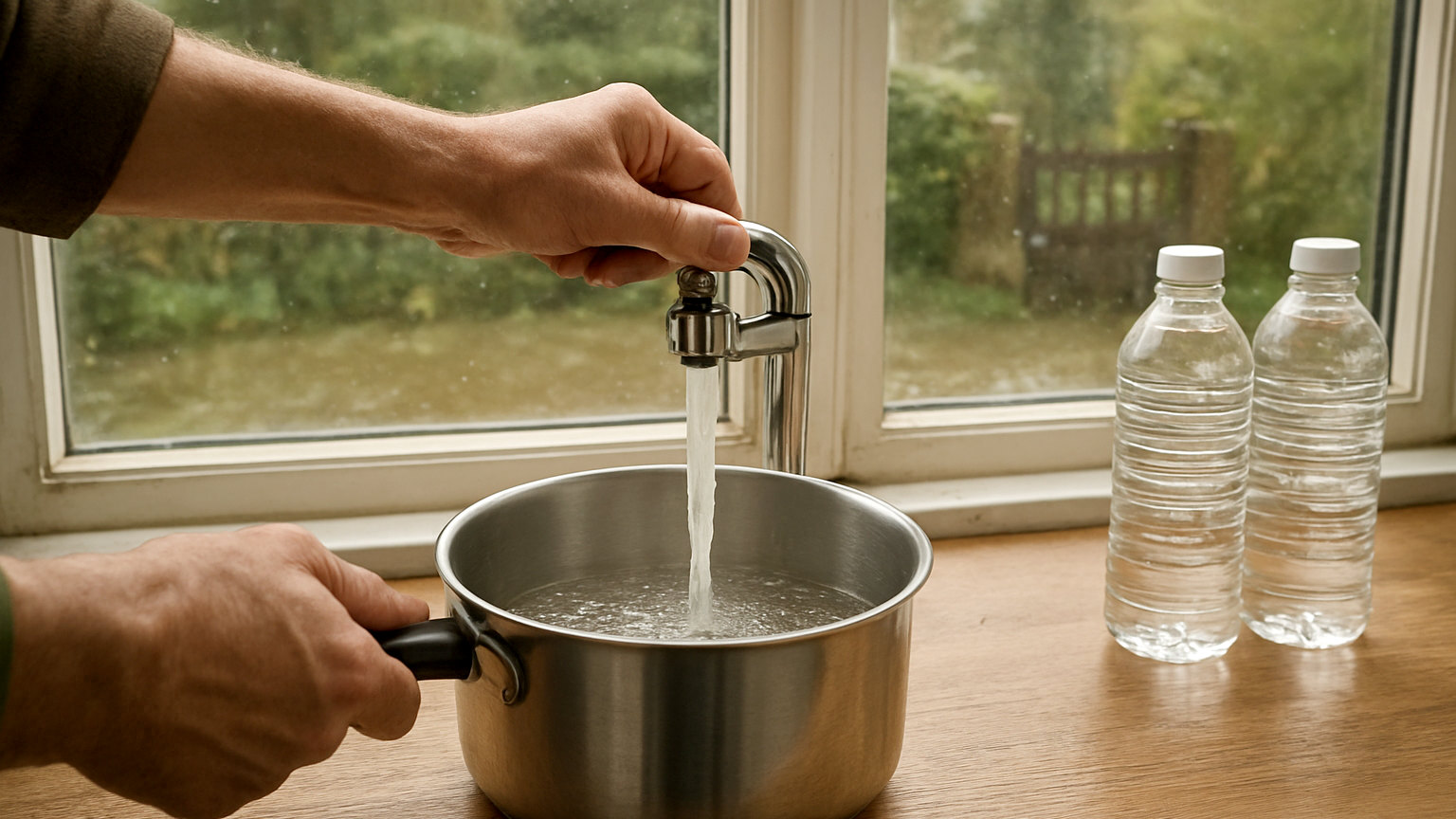
It means your supplier has detected or suspects microbiological contamination and that water must be boiled before any use involving consumption. Bring it to a rolling boil, let it cool, and store it covered. Crucially, the notice covers more than drinking. It applies to preparing food, washing salad and fruit, making ice, brushing teeth and preparing baby formula. Washing, bathing and flushing are normally unaffected unless the notice says otherwise, though small children should be supervised to avoid swallowing bathwater.
What should you do in the first hour?
Fill everything while pressure remains. Supply frequently degrades before it stops entirely, so the window between the first news and an empty tap can be short. Fill the bath, clean buckets, saucepans, jugs, kettles and every bottle in the house. Bath water is not for drinking but is invaluable for flushing lavatories, which is the use people most consistently underestimate. Filling a bath takes a few minutes and provides well over a hundred litres.
- Fill the bath, containers and bottles immediately
- Reserve bath water for flushing rather than drinking
- Boil anything for consumption, including for teeth and ice
- Check the supplier website for bottled water collection points
- Check on elderly or disabled neighbours who cannot carry water
Why is flood contamination treated differently?
Because it introduces chemicals as well as pathogens. Flood water mixes sewage, agricultural slurry, fuel oil from domestic tanks, garden and garage chemicals and rodent urine into an unpredictable combination. Boiling handles the biological component and does nothing about the chemical component. If flood water has entered a private supply, a borehole or a storage tank, that source should be considered unsafe until it has been professionally tested, regardless of any treatment you apply at home.
What about private supplies and boreholes?
They carry the greatest risk in a flood, because there is no supplier monitoring them and no notice to tell you something is wrong. If you rely on a spring, well or borehole, assume contamination after any flooding, use bottled or boiled alternative water, and contact your local authority environmental health team, which is responsible for private water supply testing. Chlorination and disinfection of the system usually follow, and that is a job for someone qualified.
How much should you store in advance?
Three litres per person per day for drinking, plus one to two litres for cooking and hygiene, for a minimum of three days and preferably seven. For a family of four that means roughly eighty five to one hundred and twenty litres for a week, which sounds enormous until you realise it is around twenty five two litre bottles stored under a bed. Rotate them annually, keep them out of sunlight, and remember pets need water too.
When is it safe to go back to normal?
When your supplier says so and not before. They will confirm the notice has been lifted through their website, local media and usually direct notification. Once lifted, run all cold taps for several minutes to flush standing water from your internal pipework, flush and discard the first ice made, and run appliances with a water inlet such as dishwashers through an empty cycle. Replace any water filter cartridges in jugs or plumbed in units, since these may have trapped contamination.
What about pets and medical needs?
Both are routinely forgotten in household planning. A medium dog needs roughly a litre a day and a large one considerably more, and pets should be given the same boiled or bottled water as everyone else during a notice. Anyone using home dialysis, feeding tubes or medical equipment requiring water should contact their clinical team and their water supplier immediately, since suppliers maintain a priority services register that provides bottled water deliveries to vulnerable customers. Registering in advance rather than during an incident is the point of it.
The households that find this easy are the ones that filled the bath early and had a few crates of bottled water already in the garage.