Rain is distilled water that has fallen through the atmosphere, and as a source it starts out remarkably clean. Nearly everything that makes rainwater unsafe happens after it lands, which means the answer depends almost entirely on how you collect it.
How clean is rain before it lands?
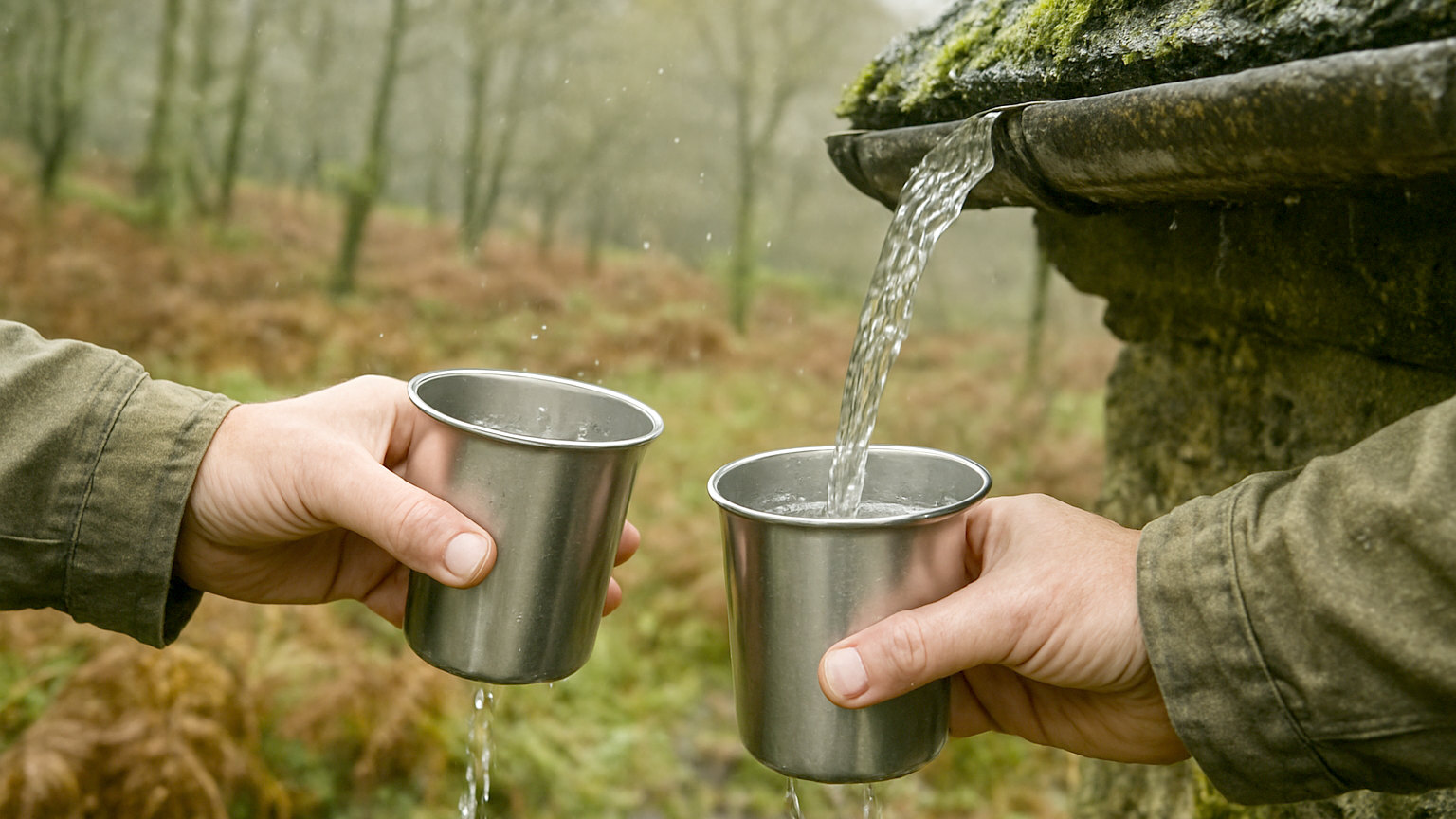
Very clean, biologically speaking. Evaporation leaves salts, minerals and pathogens behind, so what falls is close to distilled. It does pick up dust, pollen, atmospheric pollutants and dissolved gases on the way down, which is why rain is slightly acidic even in unpolluted areas. In an industrial area or immediately downwind of heavy traffic, it can carry more than that, but for most locations rain caught directly in a clean vessel is drinkable without further treatment.
What changes when it hits a roof?
Everything. Roof runoff picks up bird and rodent droppings, decaying leaves, insects, moss, dust and whatever the roofing material itself sheds. Bird droppings alone can introduce salmonella, campylobacter and cryptosporidium. Certain materials add chemical risk: lead flashing, older bitumen felt, treated timber and some painted or moss treated surfaces all leach substances you do not want. Water off a roof should always be treated before drinking and, in the case of lead or treated timber contact, avoided entirely.
- Rain caught directly in a clean container is the safest option
- Roof runoff needs filtering and disinfecting before drinking
- Discard the first flush that washes the collection surface
- Avoid runoff from lead flashing, asbestos or treated timber
- Store in food grade opaque containers, kept covered and cool
How should you collect it in an emergency?
Maximise clean surface area. A tarp, groundsheet or clean plastic sheet rigged with a low point in the centre and a container beneath it will gather a surprising volume in modest rain. A square metre of collection surface yields around a litre for every millimetre of rainfall, so a three metre tarp in ten millimetres of rain produces close to ninety litres. Rinse the sheet with the first of the rain before you start collecting, and keep the container covered between showers.
What is the first flush and why does it matter?
The first flush is the initial runoff that washes accumulated debris off the collection surface, and it carries by far the highest contaminant load. Permanent harvesting systems use first flush diverters that discard the opening few litres automatically. In an improvised setup, simply let the first minute or two run to waste before positioning your container. This single step removes a substantial proportion of the contamination for no cost and almost no effort.
How long does stored rainwater keep?
Indefinitely if it is genuinely sterile and sealed, and only days if it is not. In practice, stored rainwater grows algae when exposed to light and bacteria when exposed to organic matter, so use opaque food grade containers, fill them completely to minimise trapped air, keep them cool and dark, and label them with the date. If in any doubt after storage, boil or treat before drinking. Water butts intended for the garden are not suitable for drinking water storage without treatment.
Is drinking only rainwater a problem long term?
Mildly, over months rather than days. Rain contains almost no dissolved minerals, so a diet relying on it alone provides no calcium, magnesium or trace elements that harder water normally supplies. For any realistic emergency period this is irrelevant, and hydration matters infinitely more than mineral content. Over sustained periods, a varied diet covers the shortfall.
Is collecting rainwater legal in Britain?
Yes, and it is actively encouraged. There is no restriction on harvesting rainwater falling on your own property in England, Wales, Scotland or Northern Ireland, and many water companies subsidise butts to reduce demand. The regulatory position becomes more involved only if you plumb harvested water into the household supply, which falls under the Water Supply Regulations and requires backflow prevention to protect the mains from contamination. For emergency collection into containers there is nothing to consider beyond common sense.
Catch it directly wherever possible, discard the first flush, treat anything off a roof, and rainwater becomes one of the most dependable emergency supplies available.