Untreated water is the most common way a manageable situation becomes a serious one. The illness rarely arrives immediately, which is the problem. It turns up a day or two later, when you are further from help and less able to cope with losing fluid faster than you can replace it.
What are you actually trying to remove?
Four categories of threat, and no single method handles all of them equally well. Protozoa such as giardia and cryptosporidium are relatively large and are stopped by most filters. Bacteria such as E. coli and campylobacter are smaller but still filterable. Viruses are smaller again and pass straight through most backpacking filters. Chemical contamination from agriculture, mining or industry cannot be boiled or filtered out by ordinary field equipment at all. Knowing which of these your source is likely to carry decides your method.
Why is boiling still the benchmark?
Because it kills everything biological, needs no consumables, and requires no faith in a product working as advertised. Bring water to a rolling boil and hold it there for one minute, or three minutes above roughly two thousand metres where the lower boiling point reduces the margin. Pathogens are in fact killed well below boiling, so reaching a visible rolling boil is a safety margin rather than a strict requirement. The drawbacks are fuel, time and the fact that boiling does nothing about chemical pollution, silt or taste.
When should you use a filter instead?
When you need water quickly, repeatedly and without fuel. A filter with a pore size of around zero point two microns removes protozoa and bacteria, which covers the realistic risks from most British and European fresh water. Gravity filters suit groups and camps, pump filters suit awkward shallow sources, and squeeze or straw filters suit individuals moving fast. The critical limitation is viruses, which most filters do not remove. In areas where human sewage contamination is likely, a filter alone is not enough.
- Boiling, kills all pathogens, needs fuel and time
- Filtration, fast and repeatable, usually misses viruses
- Chemical tablets, light and cheap, slow and affects taste
- Ultraviolet pens, effective and fast, need batteries and clear water
- Distillation, removes salt and chemicals, very slow and fuel hungry
How do chemical treatments compare?
Tablets weigh almost nothing and cost very little, which makes them an excellent backup regardless of what else you carry. Chlorine dioxide is the most capable option, dealing with bacteria, viruses and, given four hours of contact time, cryptosporidium. Older chlorine and iodine tablets handle bacteria and viruses but do not reliably kill cryptosporidium at any practical dose. All chemical treatments work more slowly in cold or cloudy water, so double the contact time when either applies and always pre filter silt out first.
Does the source matter more than the method?
Substantially, yes. Choosing well reduces what your treatment has to cope with. Moving water is preferable to standing water. Water upstream of habitation, roads, livestock and mine workings is preferable to anything downstream. Springs emerging from rock are usually the cleanest option available. Avoid anything with an oily sheen, unusual colour, strong smell, foam, or a complete absence of aquatic life, because these suggest chemical contamination that no field method will fix.
What should you do when you have no equipment at all?
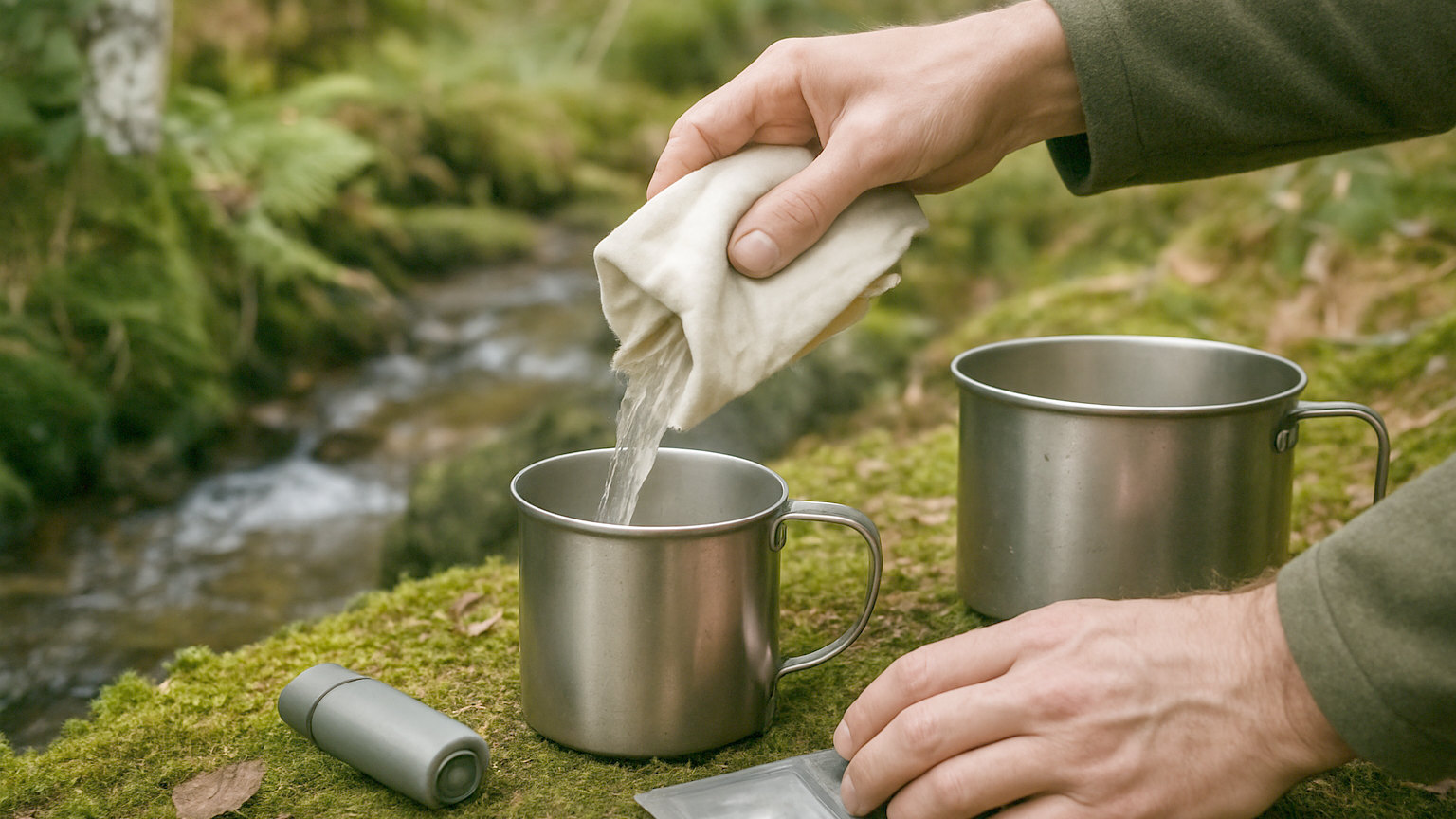
Improvise in order. Let sediment settle in a container, then decant the clear water off the top. Pour it through cloth to remove larger particles. Then boil it in whatever will hold heat, including a metal bottle, a tin, or even a plastic bottle held just above flame with water inside. Rock boiling works too: heat stones in a fire and drop them into a container to raise the temperature. None of this addresses chemicals, so source selection becomes far more important when treatment options are limited.
Carry tablets as a backup, a filter for volume and the knowledge of how to boil properly, and wild water stops being a gamble.