Cloudy water defeats almost every treatment method. Ultraviolet cannot penetrate it, chemical disinfectants are consumed by the organic matter suspended in it, and manufactured filters clog within a few litres. Clarifying first is not cosmetic, it is what makes the actual treatment work.
Why does turbidity matter so much?
Suspended particles do two things. They physically shield pathogens from ultraviolet light and from chemical contact, so organisms hiding behind or within a clump of sediment survive treatment that would otherwise kill them. And organic matter chemically consumes chlorine, iodine and chlorine dioxide, so the dose you added is largely spent before it reaches anything living. This is why tablet instructions specify clear water and why doubling the dose in cloudy water is standard advice.
What is the simplest first step?
Time. Fill a container, leave it undisturbed for several hours, and gravity does most of the work as heavier particles settle to the bottom. Carefully decant or siphon the clearer water off the top without disturbing the sediment layer. Overnight settling frequently removes most of the visible cloudiness for no effort and no equipment, and it costs nothing but patience.
- Settle the water for several hours and decant from the top
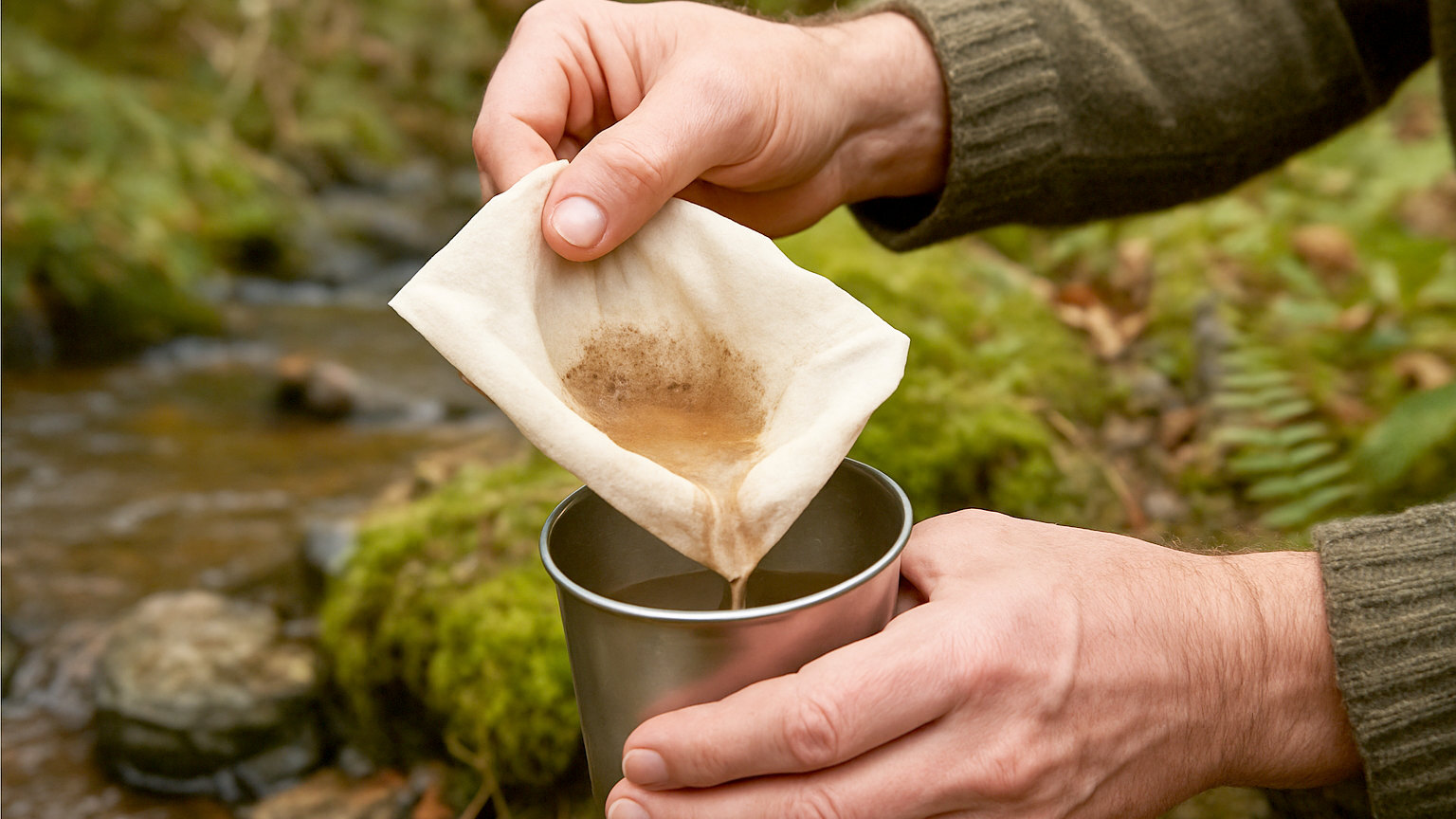
- Pour through tightly woven cloth, ideally several layers
- Build a layered filter of gravel, sand and charcoal
- Add crushed chalk or fine clay to help particles clump and drop
- Only then disinfect by boiling, tablets or ultraviolet
How do you build an improvised layered filter?
Cut the base off a plastic bottle and invert it, or use a cloth bag or a hollow section of trunk. Plug the neck with cloth or grass. Then layer from the bottom up: fine charcoal from a cold fire, then fine sand, then coarse sand, then gravel, then larger stones at the top to break the flow of poured water. Each layer traps progressively larger particles. Pour water in at the top and collect it below, repeating the process two or three times for markedly better clarity.
What does the charcoal actually do?
It adsorbs some dissolved organic compounds, which improves taste and odour and removes a proportion of the material that would otherwise consume your disinfectant. Crushed charcoal from a wood fire is the field version of the activated carbon used in commercial filters, though considerably less effective. It is worth including when available. It does not kill pathogens and must never be mistaken for disinfection.
Does an improvised filter make water safe?
No, and this is the most important point on the subject. A layered filter produces water that looks clear, tastes better and smells cleaner, and that visual improvement is dangerously persuasive. Giardia, cryptosporidium, bacteria and viruses pass through sand and charcoal without difficulty. Always treat improvised filtration as preparation for disinfection, never as a substitute for it.
How do you protect a manufactured filter from silt?
Pre filter everything and collect carefully. Scoop water into a container rather than dipping the filter intake into the bed of a stream, let it settle, then run it through cloth before it reaches the membrane. Hollow fibre filters clog progressively as sediment accumulates, and while backflushing recovers some flow, heavy silt permanently shortens the working life. A few minutes of preparation can double or triple how long a filter lasts, which matters considerably on a long trip.
How clear does it need to be?
Clear enough to read text through a filled container is the traditional field standard, and it corresponds reasonably well to the turbidity at which ultraviolet and chemical treatment start performing as intended. If the water is still visibly hazy, either repeat the filtration or double the chemical dose and contact time. Colour is a separate question from clarity: peaty upland water is often distinctly brown while carrying very little suspended sediment, and that tannin staining is harmless. Judge by whether particles are visible in suspension rather than by tint alone.
Settle it, strain it, then treat it. The order is what makes the difference, and skipping the first two steps is why treatment so often disappoints.