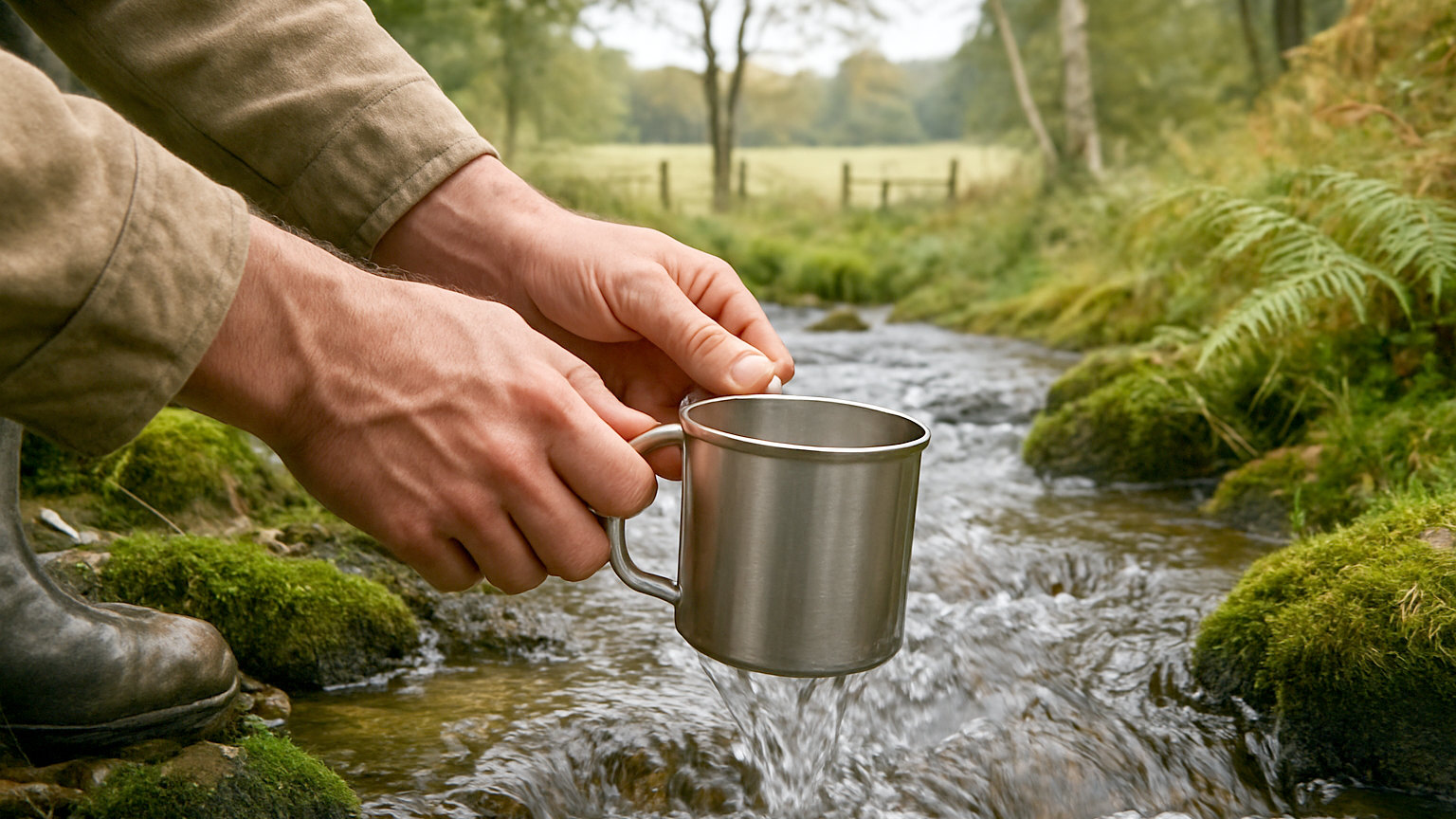
A clear upland stream running over rock looks like the definition of clean water, and people drink from them untreated every weekend without obvious consequence. That does not make it safe, and the reasons are worth understanding before deciding.
What is realistically in a British stream?
Three things. Protozoa, chiefly giardia and cryptosporidium, shed by sheep, cattle, deer and dogs across almost all British uplands. Bacteria including E. coli and campylobacter from the same sources. And agricultural chemistry, meaning nitrates, phosphates, slurry runoff and pesticides, particularly in lowland farming country. Viral contamination is less common because human sewage rarely reaches upland sources directly, though this changes downstream of villages and after heavy rain overwhelms combined sewers.
Why does clarity mislead people?
Because the organisms that make you ill are microscopic and the chemicals are dissolved. Water can be gin clear, cold and fast flowing while carrying a substantial cryptosporidium load from a dead sheep two hundred metres upstream. Clarity tells you about suspended sediment and nothing else. The absence of taste or smell is equally uninformative for pathogens, though a strong smell or oily sheen is a good reason to walk away.
- Take water upstream of grazing, tracks, roads and buildings
- Prefer springs emerging directly from rock over surface flow
- Prefer fast moving water to still pools
- Avoid sources below mine workings, particularly in Wales and Cornwall
- Avoid anything with foam, sheen, unusual colour or no visible life
- Walk upstream and check for carcasses before filling
Which sources carry the least risk?
Springs are the best option, because water emerging from rock has been filtered through the ground and has had no opportunity to collect surface contamination. Failing that, take water as high in the catchment as possible, above the grazing line where practical, from fast moving flow rather than pools. The single most useful habit is walking a few minutes upstream before filling, which frequently reveals a sheep track, a carcass or a field drain you would rather have known about.
What happens if you get it wrong?
Giardiasis typically appears one to two weeks after exposure and causes prolonged diarrhoea, bloating, cramps and fatigue, often lasting several weeks and usually needing treatment. Cryptosporidiosis has a similar profile and is particularly serious for anyone immunocompromised. Campylobacter arrives faster, within a few days, and is unpleasant enough to end a trip. None of these are typically dangerous to a healthy adult with access to care, but all of them are miserable, and in a survival context fluid loss from diarrhoea is exactly what you cannot afford.
Does mining history matter?
In parts of Britain, considerably. Former metal mining areas in mid Wales, the Pennines, Cornwall and the Lake District have watercourses carrying elevated lead, zinc, cadmium and arsenic from spoil heaps and adit drainage. These are dissolved metals, so boiling makes the concentration worse rather than better and ordinary filters do nothing. Water in these catchments should be avoided rather than treated, and the giveaway is often orange staining on the stream bed or a striking absence of vegetation and invertebrate life.
What is the sensible working rule?
Treat everything. A hollow fibre filter weighs under a hundred grams and takes seconds to use, and tablets weigh almost nothing. Given how cheap and light the solution is, drinking untreated is an unnecessary gamble even when the odds are generally in your favour.
Does cold or fast water make it safer?
Only marginally, and not enough to rely on. Fast moving water is better oxygenated and less likely to harbour stagnant growth, and cold slows bacterial multiplication, which is why upland streams are a better bet than lowland ponds. Neither factor kills anything. Giardia and cryptosporidium cysts survive happily in cold running water for weeks and are entirely unaffected by flow rate. The common belief that water running over stones purifies itself within a set distance has no basis: physical aeration does nothing to protozoa.
Choose the source carefully first, then treat it. Source selection is the part that handles chemicals, and treatment is the part that handles everything else.