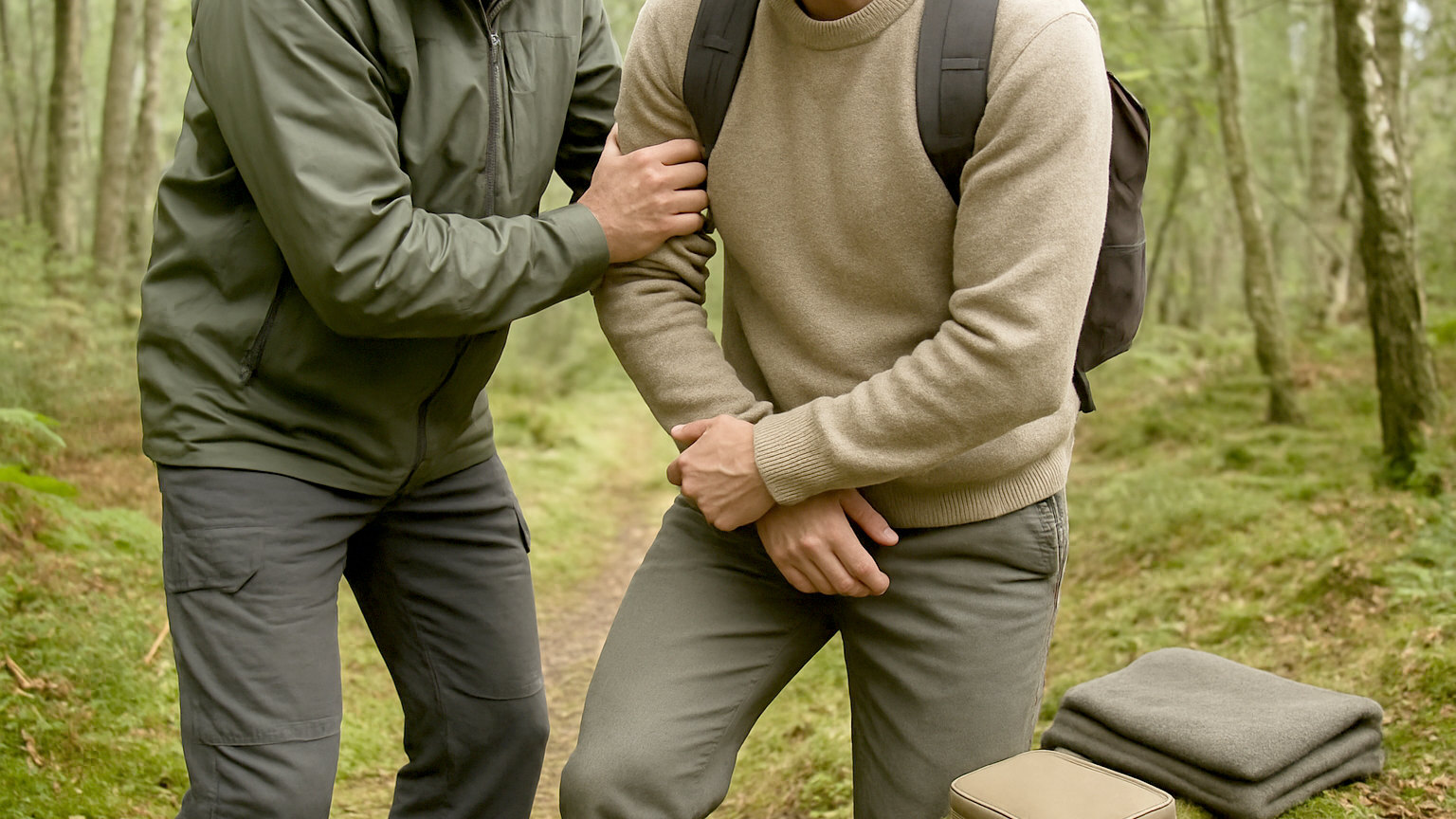
Moving an injured person can turn a recoverable injury into a permanent one, particularly where the spine is involved. The general rule is to treat where they lie and wait for help, and the exceptions are few and specific.
What are the reasons to move someone?
Three, essentially. Immediate danger to them or to you, such as fire, traffic, rising water, rockfall or an unstable structure. An airway that cannot be opened or maintained in their current position. And a genuine evacuation requirement where help cannot reach you and staying put is more dangerous than moving. Anything short of these, including discomfort, awkward position and your own inconvenience, is not a reason.
Why is spinal injury the main concern?
Because the spinal cord is undamaged in many spinal fractures until movement displaces the broken bone into it. Mechanism of injury is the key indicator: falls from height, falls onto the head or shoulders, diving injuries, high speed impacts and any incident where the casualty complains of neck or back pain, tingling, numbness or weakness in the limbs. Assume a spinal injury in these cases even if the person seems fine, because adrenaline masks a great deal.
- Treat where they lie unless there is a compelling reason not to
- Move for danger, airway, or an unavoidable evacuation
- Keep the head, neck and spine in line throughout any movement
- Use the fewest movements possible rather than the neatest
- Use extra hands, with one person dedicated to the head
- Insulate from the ground rather than moving to softer ground
How do you move someone in immediate danger?
Quickly and along the line of the body. Drags are preferred to lifts because they need one person and keep the spine roughly aligned. Grasp the clothing at the shoulders and pull along the long axis of the body, supporting the head between your forearms if you can. The blanket drag, where the casualty is rolled onto a coat or tarpaulin and dragged, spreads the load and works well over rough ground. Move only as far as necessary to reach safety, then stop and reassess.
What is a log roll?
A controlled technique for turning someone while keeping the spine aligned, used to check their back, remove them from water or place insulation underneath. It needs at least three people, ideally four. One person takes charge at the head and controls the movement with clear commands, while the others support the shoulders, hips and legs and roll on the count together. Everyone moves as one unit and nobody rolls faster than the head.
Should you try to carry someone off a hill?
Almost never. Carrying an injured adult over rough ground requires several strong people, is exhausting within a few hundred metres, and risks dropping them or injuring the carriers. Mountain rescue teams exist precisely because this is difficult, and they have stretchers, training and numbers. Call 999 and ask for the appropriate rescue service, then shelter and warm the casualty while you wait.
What should you do instead of moving them?
Bring the shelter to the casualty. Insulate them from the ground with anything available, get a group shelter or survival bag over them, protect them from wind and rain, and keep them warm. Heat loss is the enemy of any injured person lying still outdoors, and preventing it is usually the single most valuable thing a bystander can do while waiting for help.
How do you handle a helmet?
Leave it on unless it is preventing you from managing the airway. Removing a helmet moves the head and neck considerably and is a two person job. If it genuinely must come off, one person holds the head steady from below while the other eases the helmet off, and neither hurries.
What if the casualty wants to get up?
Discourage it calmly and explain why. People frequently try to stand after a fall, driven by adrenaline, embarrassment and a wish to prove they are fine, and adrenaline masks pain well enough that a serious injury can feel manageable for several minutes. Ask them to stay still while you check them over, get them to describe what they feel rather than demonstrate it, and let the assessment rather than their optimism decide whether standing is sensible.
The default answer is do not move them, keep them warm, and call for help. Moving is the exception, not the plan.