Cardiac arrest is the situation where a bystander makes the greatest difference of any first aid intervention. Survival falls sharply for every minute without compressions, and imperfect CPR is enormously better than none. This is a summary and everyone should attend a practical course.
How do you know it is cardiac arrest?
The person is unresponsive and not breathing normally. Open the airway with a head tilt and chin lift, then look, listen and feel for up to ten seconds. Occasional slow noisy gasps, known as agonal breathing, are common in the first minutes of cardiac arrest and are not normal breathing. Mistaking them for breathing is a well documented cause of delayed CPR, so if you are unsure, treat it as arrest and start.
What should you do before starting?
Get help moving. Call 999 yourself on speakerphone if alone, or send someone to call while you begin. Ask specifically whether there is a defibrillator nearby, since the ambulance service holds a register of them and can direct someone to the nearest. If there are two of you, one calls and fetches the defibrillator while the other starts compressions immediately.
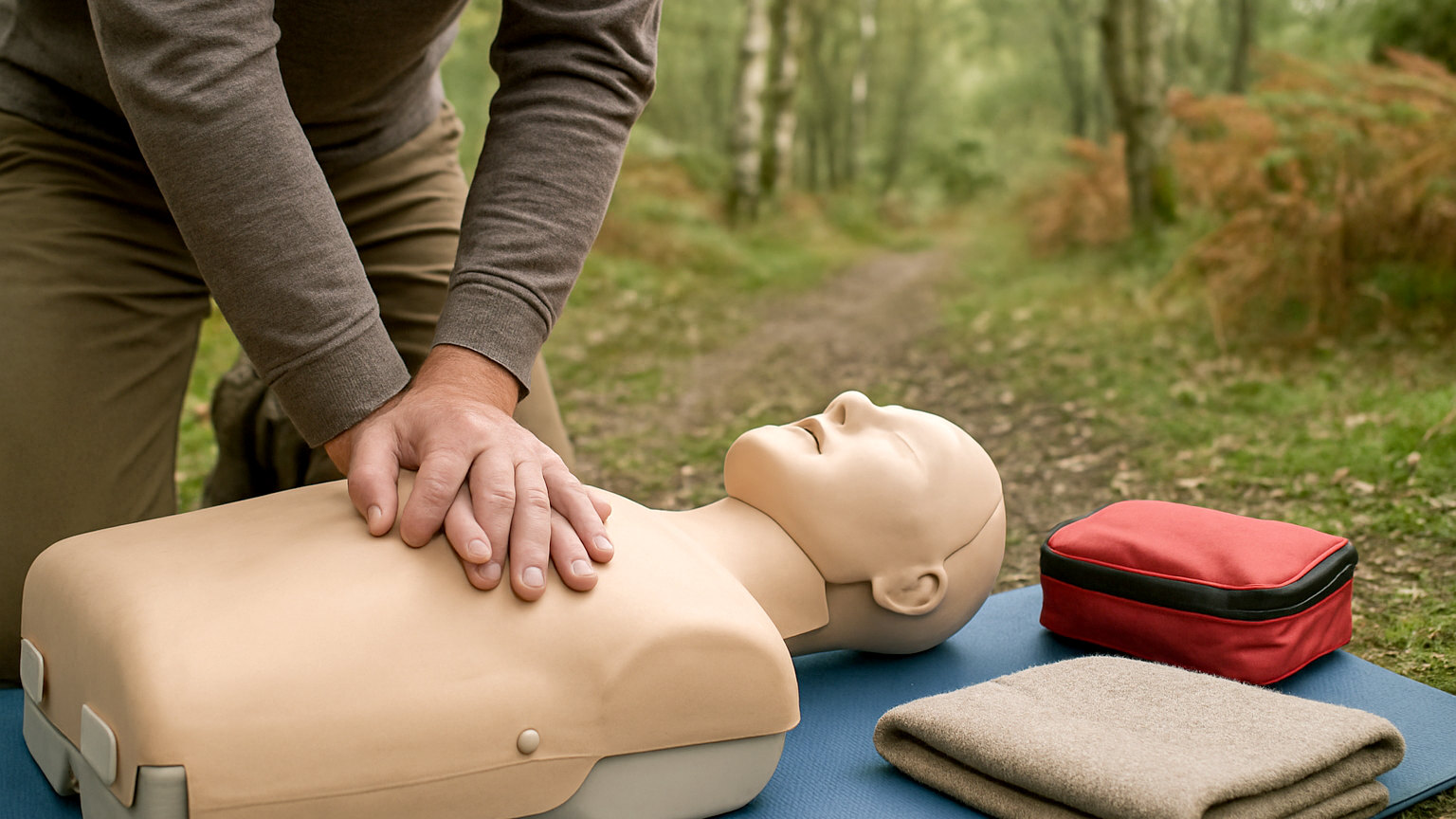
- Kneel beside them and place the heel of one hand centre of the chest
- Place the other hand on top and interlock the fingers
- Keep your arms straight and shoulders directly above your hands
- Press down five to six centimetres, then release fully
- Aim for one hundred to one hundred and twenty per minute
- Give thirty compressions, then two rescue breaths, and repeat
How hard should you press?
Harder than feels comfortable. Five to six centimetres in an adult is roughly a third of the chest depth, and it takes real effort. Rescuers consistently press too shallowly, and shallow compressions do not move blood. Allow the chest to recoil fully between compressions, since incomplete recoil prevents the heart refilling. Ribs sometimes crack, which is distressing and is not a reason to stop.
Do you have to give rescue breaths?
No. If you are unwilling or untrained, compression only CPR is recommended and is substantially better than doing nothing. Rescue breaths are more important in children, in drowning and in situations where the arrest was caused by a breathing problem, since in those cases the blood has already run short of oxygen. If you do give breaths, pinch the nose, seal your mouth over theirs, and give two breaths over one second each, watching for the chest to rise.
How do you use a defibrillator?
By switching it on and following the spoken instructions, which are designed for untrained users. Expose the chest, attach the pads as shown on the diagrams, and let the machine analyse. It will only advise a shock if one is needed, so it cannot harm someone whose heart is beating. Ensure nobody is touching the casualty when a shock is delivered, then resume compressions immediately. Public access defibrillators are unlocked or opened with a code the 999 call handler will give you.
When should you stop?
When professional help takes over, when the person shows clear signs of life such as breathing normally and moving, or when you are physically unable to continue. If more than one rescuer is present, swap every two minutes, because compression quality falls off noticeably with fatigue and the person doing it rarely notices.
What about a child or baby?
Start with five initial rescue breaths, because breathing problems are the usual cause in children, then continue with thirty compressions to two breaths. Use one hand for a child and two fingers for an infant, compressing about a third of the chest depth. If alone, perform one minute of CPR before leaving to call for help, which is the reverse of the adult sequence.
Push hard, push fast, send for a defibrillator, and book a course, because this is the one skill where practice on a manikin genuinely changes what you can do.