The first minute at any incident decides a great deal, and the instinct to rush straight to an injured person is the wrong one. A structured sequence finds the problems that kill fastest and prevents you becoming a second casualty. This article explains the framework and is no substitute for a hands on first aid course.
Why does danger come before the casualty?
Because rescuers who become casualties make everything worse and halve the help available. Look for traffic, unstable ground, falling rock, deep or fast water, live electricity, fire, gas and animals. Ask what injured this person and whether it is still there. If the scene cannot be made safe, do not enter it, and call 999 instead. This feels callous and it is the correct decision every time.
How do you check for a response?
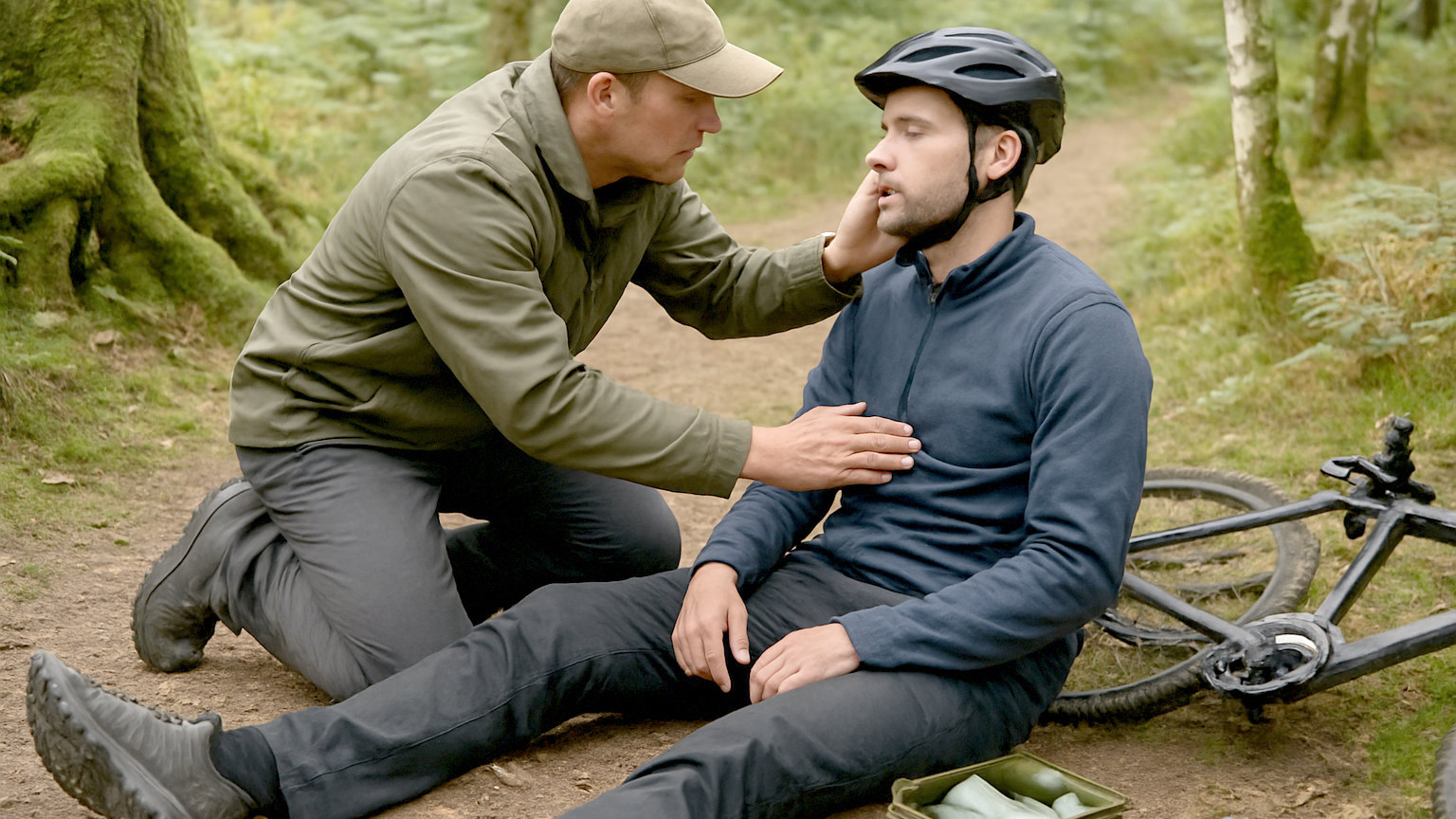
Speak loudly and clearly, introduce yourself, and ask the person to open their eyes. If there is no reply, gently shake their shoulders. A person who responds normally has a working airway, is breathing and has enough circulation to supply their brain, which rules out several emergencies at once. A person who does not respond needs immediate attention to airway and breathing.
- Danger, make sure the scene is safe for you
- Response, speak to them and gently shake the shoulders
- Catastrophic bleeding, look for and stop major blood loss
- Airway, open it with a head tilt and chin lift
- Breathing, look, listen and feel for up to ten seconds
- Circulation, check for other serious bleeding and signs of shock
Why does bleeding come before airway in trauma?
Because a person can lose enough blood to die faster than an obstructed airway will kill them. Modern trauma teaching places catastrophic haemorrhage first, before airway, on the reasoning that no amount of oxygen helps if there is nothing left to carry it. Look quickly for pooling blood, soaked clothing and obvious wounds, and apply firm direct pressure immediately if you find any. For non trauma collapse, airway remains the first priority.
How do you open an airway?
Place one hand on the forehead and tilt the head back gently, then lift the chin with two fingertips of the other hand. This moves the tongue clear of the back of the throat, which is the most common cause of obstruction in an unresponsive person. If you suspect a neck injury, still open the airway, because an airway that is not open will kill someone while a spinal injury may not. Handle the head carefully and avoid unnecessary movement.
How do you check breathing properly?
With the airway open, put your cheek near their mouth and look along the chest. Look for chest movement, listen for breath sounds and feel for air on your cheek, for no more than ten seconds. Occasional gasping, sometimes called agonal breathing, is not normal breathing and is a sign of cardiac arrest. If breathing is absent or abnormal, call 999 and begin chest compressions.
What happens after the first minute?
A secondary survey, once life threats are addressed. Work head to toe, looking and gently feeling for wounds, deformity, swelling and tenderness, and asking about pain. Ask what happened, what they remember, whether they have any medical conditions, allergies or medication, and when they last ate. Note the time of everything, because a handover to an ambulance crew or rescue team is far more useful with times attached.
What should you keep doing?
Monitoring and reassuring. A casualty who is stable can deteriorate, so recheck responsiveness and breathing regularly and keep them warm, since heat loss worsens almost every serious injury. Talk to them even if they seem unresponsive. Get someone to call 999 early rather than late, and if you are alone with an unresponsive casualty, call before starting treatment so help is already on its way.
Learn this sequence on a proper course where you can practise it. Reading it builds understanding, and only practice builds the ability to do it while frightened.