Most commercial first aid kits are built around the injuries people imagine rather than the ones that happen, which is why they contain forty plasters and nothing that would help with serious bleeding. Assembling your own produces a better kit for less money.
What are you actually likely to need?
Blisters, small cuts, headaches, upset stomachs and existing medical conditions account for the overwhelming majority of outdoor first aid use. Serious trauma is rare and consequential. A good kit therefore has generous quantities of the everyday items and a small number of things that genuinely address life threatening problems. Everything else is weight.
What handles serious bleeding?
A large trauma dressing, sometimes called an emergency bandage, which combines a sterile pad with an integrated pressure bandage and can be applied one handed. A packet of haemostatic gauze for wounds that cannot be tourniqueted. And, for anyone travelling somewhere remote or working with tools and blades, a proper windlass tourniquet. These three items are compact and are the only things in the kit that address a genuine emergency.
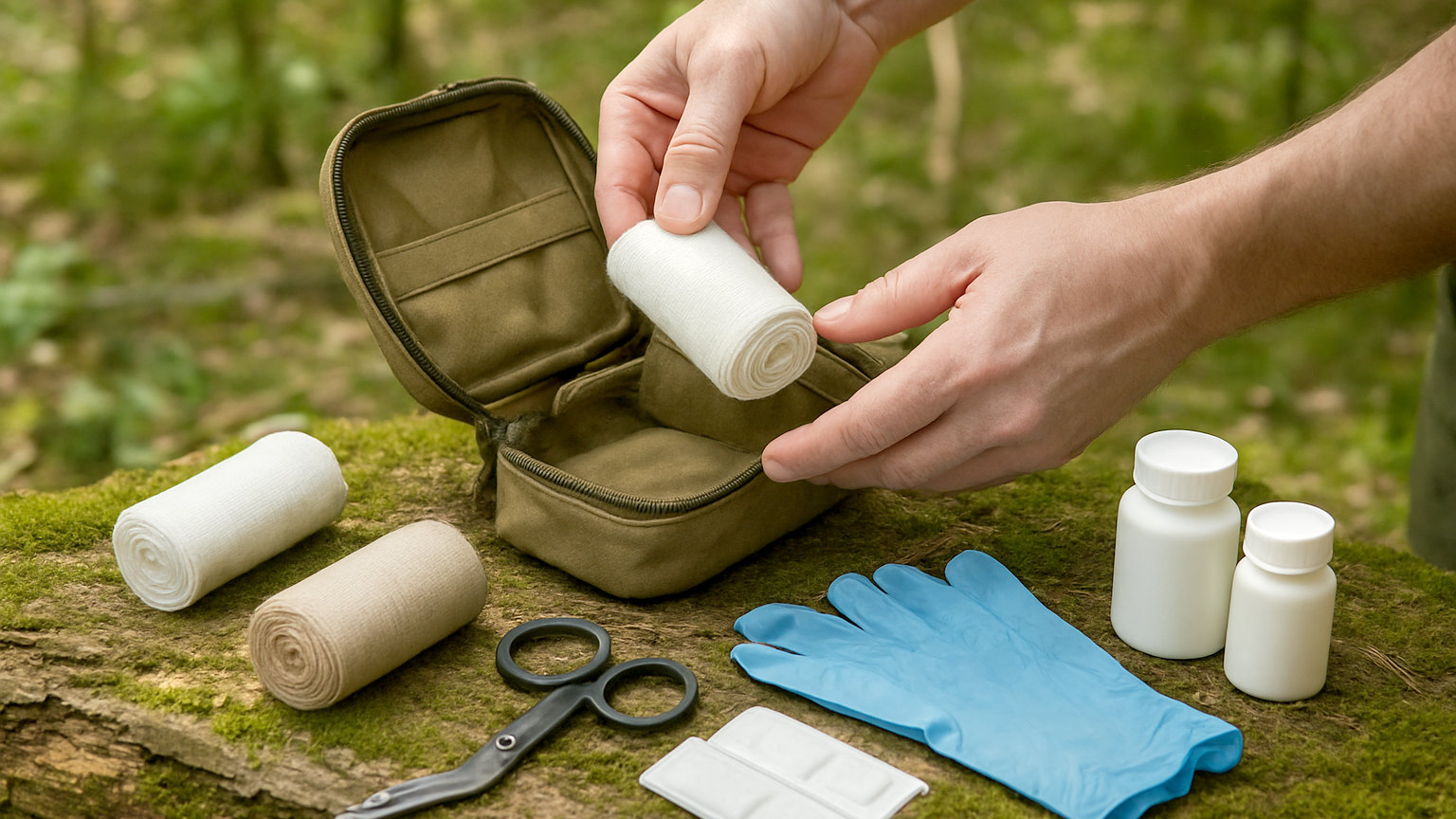
- Large trauma dressing and a couple of sterile pads
- Roller bandage and a triangular bandage for slings
- Zinc oxide tape and blister dressings, generously
- Antiseptic wipes, tweezers and small scissors
- Painkillers, antihistamines and rehydration sachets
- Nitrile gloves and a resuscitation face shield
- A foil blanket or, better, a survival bag
Why does tape matter more than plasters?
Because blisters end more trips than anything else, and plasters fall off wet feet within an hour. Zinc oxide tape stays on, can be cut to any shape, doubles as equipment repair, and treats hot spots before they become blisters. A roll of it and a few hydrocolloid blister dressings will earn their place on almost every walk, which very few other items in a first aid kit can claim.
What about personal medication?
This is the most important and most frequently overlooked part. Anyone with asthma, allergies, diabetes, epilepsy or a heart condition should carry their own medication, in date and accessible, and at least one other person in the group should know where it is and how it is used. An adrenaline auto injector for a known allergy is not optional. Carrying a spare inhaler costs nothing and has saved a great many walking trips.
What can you leave out?
Most of the contents of a typical boxed kit. Tiny plasters in quantity, eye baths, safety pins in bulk, and the wire saw that sometimes appears in survival kits are all dead weight. Suture kits and improvised stitching belong in a hospital and not in a rucksack, since closing a contaminated wound in the field traps infection. Splints are usually improvised from what you carry anyway.
How should you pack it?
Waterproof and organised, with the bleeding control items separate and instantly reachable. A dry bag or a sealed pouch keeps dressings sterile, and colour coded inner bags let you find things without emptying everything out. Keep the trauma dressing and tourniquet where you can reach them one handed, because the situations needing them are the situations where you may only have one hand.
How often should you check it?
Twice a year, and after every use. Medicines expire, adhesive dressings dry out, sterile packaging splits, and items get used and not replaced. A kit that has not been opened for three years is an assumption rather than a resource. Take the opportunity to remind yourself what is in it and where, which is worth as much as the contents.
Does the kit change with the trip?
It should, in weight rather than principle. A local afternoon walk needs tape, a few dressings and personal medication. A remote multi day trip warrants the trauma dressing, a tourniquet, more substantial wound care and a broader range of medicines, since you may be many hours from help. Group trips need more of the consumables and fewer duplicates of the bulky items. Build one core kit and add a supplementary pouch for bigger days rather than carrying everything always.
Build the kit around bleeding, blisters and personal medication, keep it accessible, and take a course that teaches you to use the parts that matter.