Hypothermia is the most likely serious medical problem in the British outdoors, and its defining feature is that it impairs the very judgement needed to recognise it. Groups therefore watch each other rather than themselves. This is general information and not a substitute for training.
What are the early signs?
Shivering that the person cannot stop, cold pale skin, and a cluster of changes sometimes remembered as the umbles: stumbles, mumbles, fumbles and grumbles. Clumsiness with zips and buckles, slurred or slowed speech, unusual irritability or withdrawal, and poor decision making all appear early. Someone who has stopped talking, is falling behind or is uncharacteristically bad tempered should be treated as cold until proven otherwise.
What happens as it worsens?
Shivering slows and then stops entirely, which is a dangerous sign rather than an improvement, because it means the body can no longer generate heat. Confusion deepens, movement becomes uncoordinated, and consciousness declines. Some people paradoxically remove clothing, a phenomenon of severe hypothermia. At this stage the casualty is a medical emergency requiring evacuation, and 999 should already have been called.
- Stop, shelter from wind and get them off cold ground
- Remove wet clothing and replace with dry insulation
- Insulate above, below and around, including the head
- Handle gently and keep them horizontal
- Warm sweet drinks only if fully alert and able to swallow
- No alcohol, no rubbing of limbs, no direct intense heat
Why does gentle handling matter so much?
Because a severely cold heart is irritable and prone to dangerous rhythm disturbances. Rough handling, sudden movement or standing a casualty upright can trigger cardiac arrest, which is why mountain rescue teams move hypothermic casualties horizontally and slowly. Keep the person lying down, avoid jostling, and resist any urge to walk them out if they are more than mildly affected.
How should you rewarm someone?
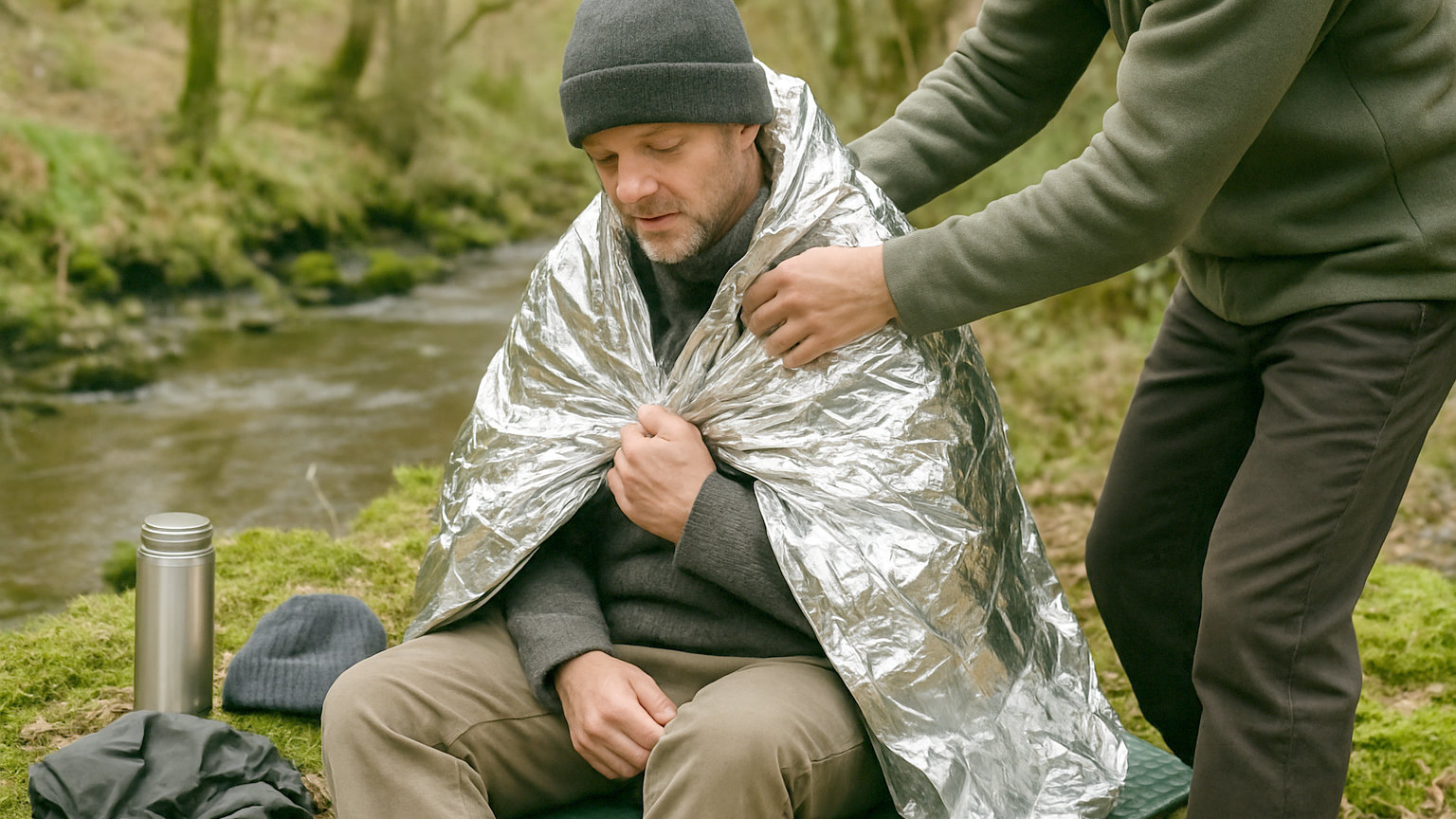
Passively and from the core outward. Get them out of the wind, remove wet clothing, wrap them in dry insulation including a hat, and insulate them from the ground, which is where most heat is being lost. A group shelter or survival bag transforms the situation within minutes. Skin to skin contact inside a sleeping bag works and is a legitimate technique. Chemical heat pads placed on the chest, armpits and groin help, wrapped so they do not burn skin.
What is afterdrop and why does it matter?
When cold blood from the limbs returns to the core during rewarming, core temperature can briefly fall further rather than rise. This is why rubbing arms and legs, immersing limbs in hot water, or exercising a cold casualty are all discouraged. Rewarm the trunk, keep the limbs insulated but do not actively heat them, and let the process happen gradually.
Can you give them a hot drink?
Only if they are fully conscious, alert and able to swallow safely. A warm sweet drink provides fuel and comfort and does very little direct warming, but the sugar genuinely helps because shivering consumes energy fast. Never give anything by mouth to someone who is drowsy or confused, because of the risk of choking. Alcohol is actively harmful, since it dilates skin blood vessels and accelerates heat loss while creating a false sensation of warmth.
How do you prevent it?
By managing wet and wind before they matter. Wet clothing loses most of its insulation, so waterproofs go on before the rain rather than after. Eat regularly, since fuel drives heat production. Add layers at rest stops rather than waiting to feel cold. Watch the quietest member of the group, and turn back early, because the decision to continue is exactly the judgement hypothermia degrades first.
Is a cold casualty ever beyond help?
Not on appearance alone, which is why the phrase used in mountain medicine is that nobody is dead until they are warm and dead. Severe hypothermia slows the heart and breathing so profoundly that a pulse can be almost impossible to detect, and people have made full recoveries after prolonged resuscitation from deep hypothermia. If someone is unresponsive and not breathing normally, start CPR, call 999, and continue until professional help arrives and makes that decision.
Shelter, dry, insulate, handle gently and call for help early. Those five actions cover almost everything that can be done in the field.