Shock in a medical sense has nothing to do with being upset. It is the failure of the circulation to deliver enough oxygen to the tissues, it follows serious injury and blood loss, and it develops over minutes to hours in someone who initially appeared to be coping.
What causes it?
Most commonly blood or fluid loss, whether visible from a wound or hidden internally from a fractured femur, pelvis or abdominal injury. It can also result from severe burns, prolonged vomiting and diarrhoea, a failing heart, severe infection, or an allergic reaction. In an outdoor context, the two to worry about are blood loss from trauma and anaphylaxis from an allergic reaction, since both progress quickly.
What are the signs?
Pale, cold, clammy skin as blood is diverted away from the surface. A rapid, weak pulse. Fast shallow breathing. Thirst and nausea. Restlessness, anxiety and a sense that something is badly wrong. As it progresses, drowsiness, confusion and eventually unresponsiveness. The early signs are subtle and easy to attribute to cold or to the stress of the incident, which is why any significant injury should prompt you to look for them deliberately.
- Lie them down and raise the legs if injuries allow
- Treat the cause, particularly any external bleeding
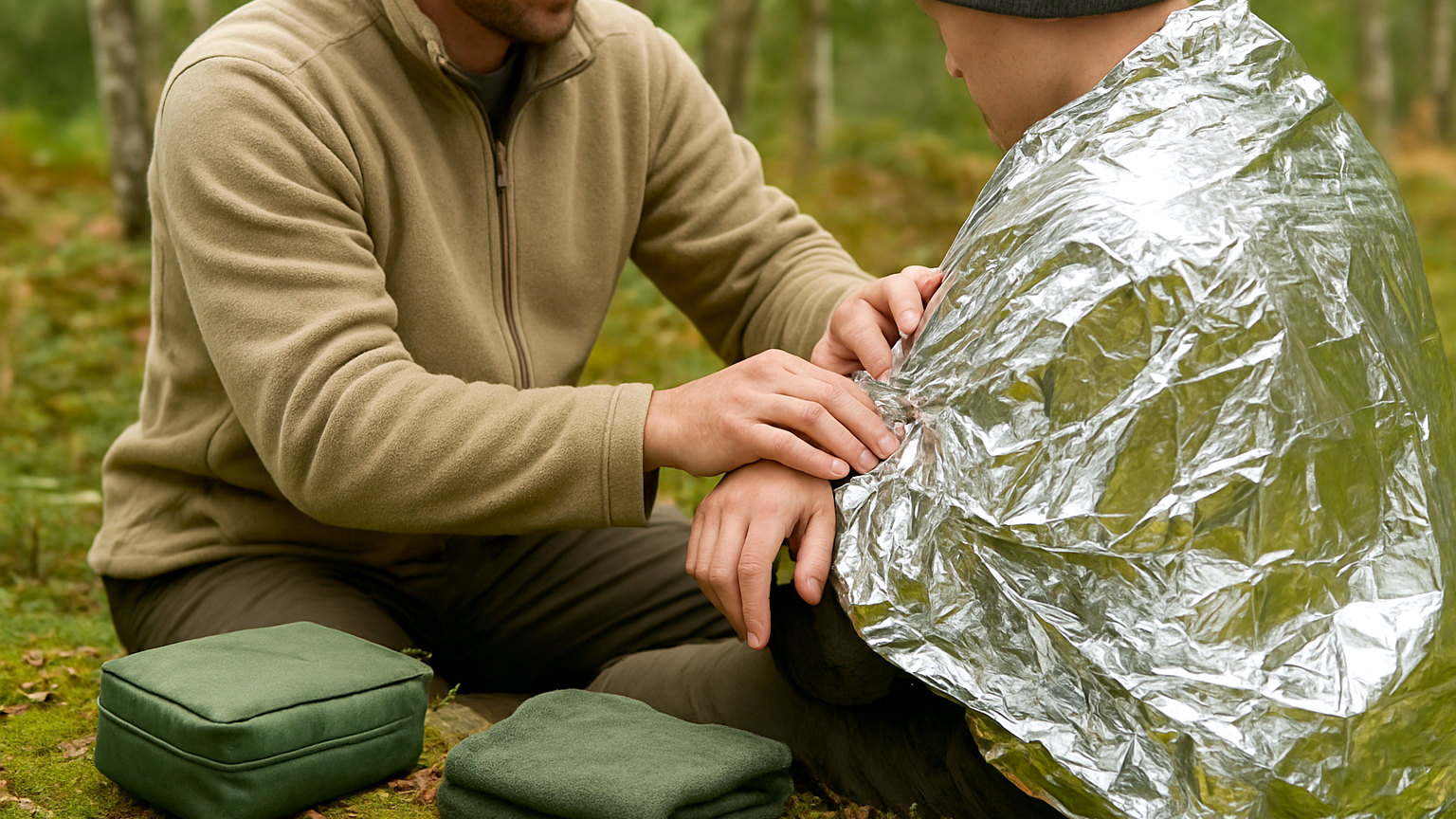
- Insulate from the ground and cover them to retain heat
- Loosen tight clothing and keep them still
- Give nothing to eat or drink
- Reassure them and monitor breathing continuously
Why raise the legs?
To encourage blood from the legs back toward the heart, brain and vital organs. Raising them by twenty to thirty centimetres is sufficient. Do not do it if there are leg or pelvic fractures, suspected spinal injury or a head injury, and do not tip someone head down, which is unhelpful and can impair breathing. If in doubt, simply lying them flat is beneficial.
Why should you not give anything to drink?
Because a casualty in shock may need surgery, and a full stomach increases the risk during anaesthesia. There is also a real risk of vomiting and choking if consciousness declines. Thirst is a prominent symptom and refusing water feels unkind, so explain why. Moistening their lips with a damp cloth is acceptable and helps considerably with the discomfort.
Why does warmth matter so much?
Because cold worsens shock directly. Low body temperature impairs blood clotting, which increases bleeding, and it places extra demand on a circulation already struggling. The combination of bleeding, cold and disturbed blood chemistry is well recognised in trauma medicine as a spiral that is difficult to reverse. Insulating a casualty from the ground and covering them is genuinely part of the treatment, not merely comfort.
What is different about anaphylaxis?
It is faster and it has a specific treatment. Swelling of the face, lips or tongue, difficulty breathing, wheeze, widespread rash and collapse after a sting, food or medication suggest anaphylaxis. Use the casualty adrenaline auto injector immediately into the outer thigh, call 999 and say it is anaphylaxis, and be ready to give a second dose after five minutes if there is no improvement. Someone with breathing difficulty should sit up rather than lie flat.
When should you call for help?
Immediately, and before the signs are convincing. Shock is progressive and a casualty who looks marginal will look considerably worse in twenty minutes. Ring 999 as soon as you suspect significant blood loss or internal injury, describe the mechanism of injury, and continue treating while help is dispatched.
Why can shock be hidden?
Because the body compensates well at first, particularly in fit young adults. Blood vessels constrict and the heart speeds up, holding blood pressure close to normal even after significant blood loss, so someone can appear reasonably well until the compensation fails and they deteriorate rapidly. This is why the mechanism of injury matters as much as the appearance of the casualty: a serious fall or a suspected femur fracture warrants treating for shock regardless of how well the person seems.
Lie them down, stop the bleeding, keep them warm, give nothing by mouth, and get help moving early.