Heat illness sits on a spectrum, and the distinction between the two named stages matters enormously because one is treated with shade and fluids and the other with an ambulance and aggressive cooling.
What does heat exhaustion look like?
Heavy sweating, pale clammy skin, headache, dizziness, nausea, cramps, thirst, weakness and a fast weak pulse. The person feels dreadful but remains alert and orientated. Core temperature is raised but generally below forty degrees. This stage is common on hot days, particularly early in a heatwave before anyone has acclimatised, and it responds well to prompt treatment.
What is the treatment?
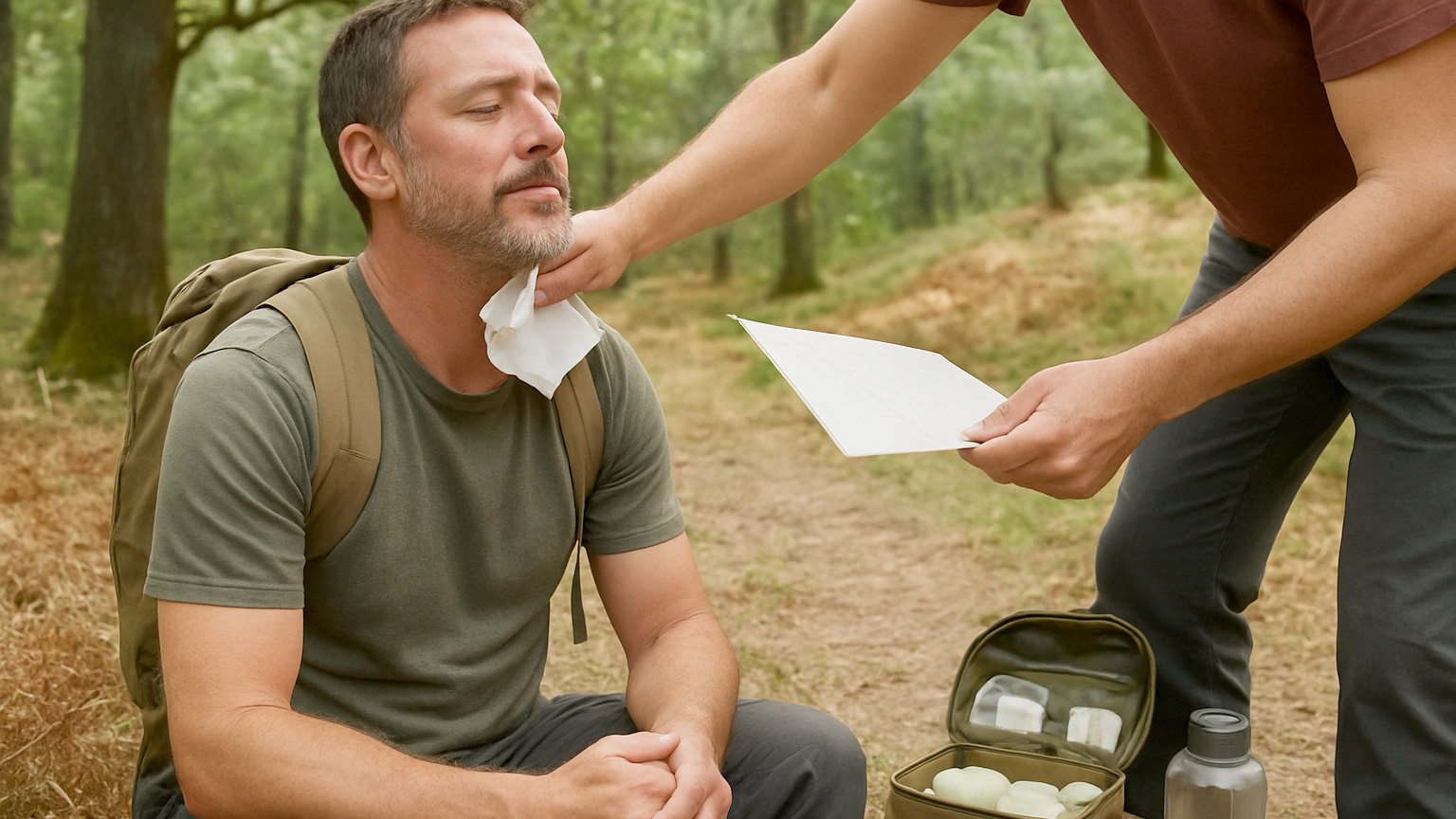
Move them into shade or a cool place, lie them down and raise their legs, remove excess clothing, and cool them with water and airflow. Give sips of water or an oral rehydration solution if they are fully alert. Improvement should be noticeable within half an hour. If they are not clearly better after thirty minutes, or if they deteriorate at any point, treat it as heatstroke and call 999.
- Move to shade and lie them down with legs raised
- Remove excess clothing and cool the skin with water
- Fan them to increase evaporative cooling
- Give fluids only if fully alert and able to swallow
- Call 999 immediately if consciousness or behaviour changes
- Keep cooling while waiting for the ambulance
How do you recognise heatstroke?
By a change in the brain rather than the skin. Confusion, disorientation, slurred speech, unusual or aggressive behaviour, seizures, loss of consciousness and a lack of coordination all indicate that core temperature has risen high enough to affect the nervous system. The skin may be hot and dry as sweating fails, though it can also still be sweaty, so do not rely on dry skin to make the diagnosis. Any altered mental state in a hot casualty is heatstroke until proven otherwise.
Why is heatstroke so dangerous?
Because sustained high core temperature damages the brain, kidneys, liver and clotting system, and the damage accumulates with every minute above the threshold. It has a significant mortality rate and outcomes depend directly on how quickly the temperature is brought down. This is why cooling begins immediately and continues during transport rather than waiting for hospital.
How do you cool someone aggressively?
Get them into shade, strip to underwear, and use whatever water is available. Immersion in cool water is the most effective method where a stream, lake or bath is available and can be done safely. Otherwise, pour or spray water over them continuously and fan vigorously, since evaporation carries away a great deal of heat. Place cold packs or wet cloths at the neck, armpits and groin where large blood vessels run close to the surface. Do not give fluids to anyone who is confused or drowsy.
Who is most at risk?
Older people, young children, anyone with a chronic illness, and people taking medication affecting sweating or fluid balance, including some antidepressants, antihistamines and diuretics. Also anyone exercising hard in heat and humidity, particularly if unacclimatised, dehydrated or wearing heavy clothing or equipment. Humidity matters as much as temperature, since sweat that cannot evaporate provides no cooling at all.
How do you prevent it?
By adjusting the plan rather than pushing through. Start early and rest through the hottest part of the day, drink before you feel thirsty, add electrolytes on long hot days, wear loose light coloured clothing and a hat, and seek shade regularly. Acclimatisation takes one to two weeks, so the first hot days of a trip or a heatwave carry the highest risk and deserve the most caution.
What about hyponatraemia?
It is the mirror image and it catches people who have done the right thing badly. Drinking large volumes of plain water while sweating heavily dilutes the sodium in the blood, producing headache, nausea, confusion and, in severe cases, seizures. The symptoms closely resemble heat illness, but the treatment is opposite, since more water makes it worse. Anyone drinking heavily on a long hot day should take salty food or an electrolyte solution alongside, rather than water alone.
Shade and fluids for exhaustion, immediate cooling and 999 for anything involving confusion. The change in behaviour is the line between them.