Serious first aid is rare. Blisters, twisted ankles and small cuts are common, and dealing with them well is the difference between a shortened trip and an uneventful one.
How do you prevent blisters?
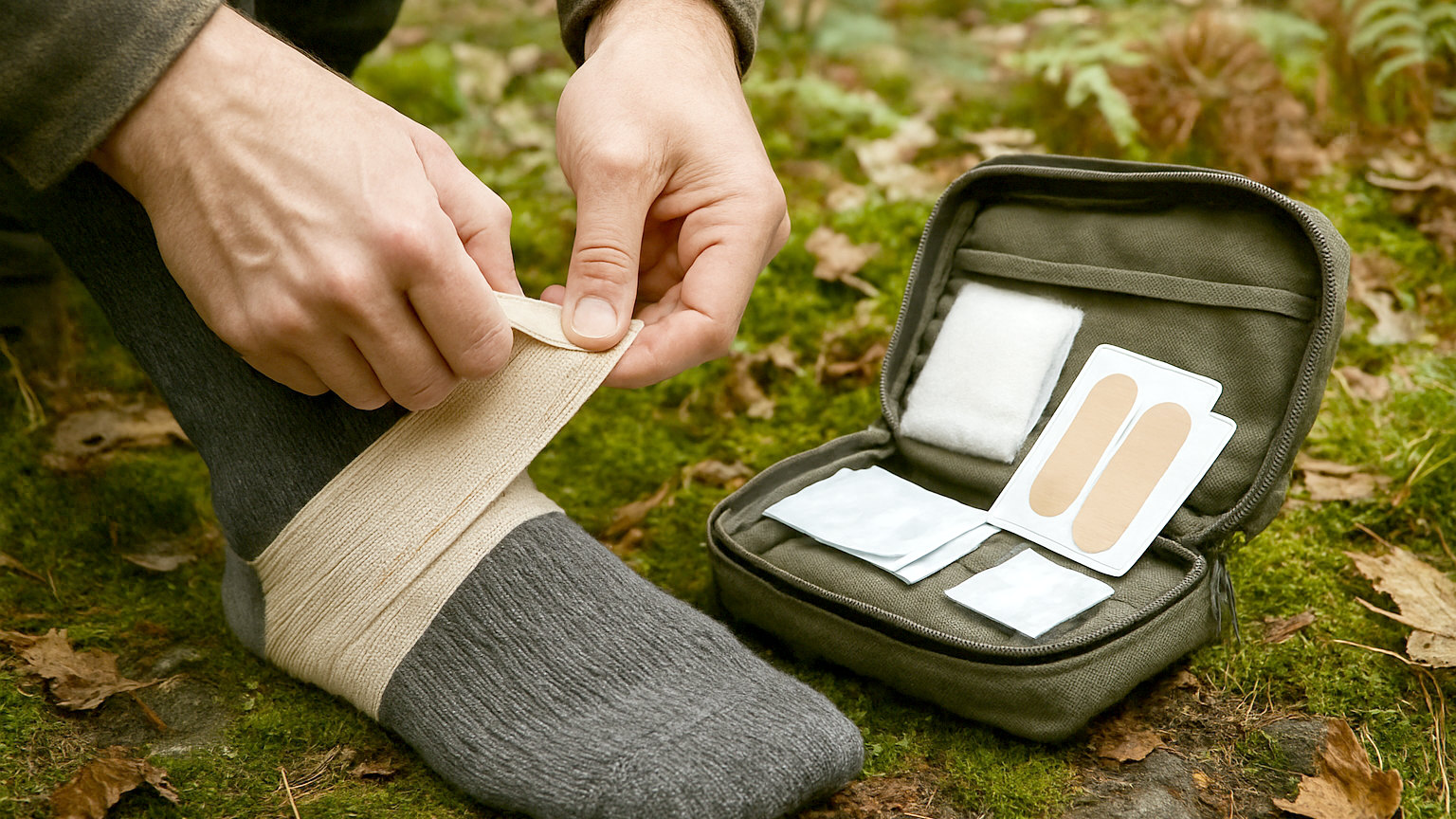
By addressing friction, moisture and fit before anything hurts. Boots should be worn in, socks should fit without wrinkles and should wick moisture, and feet should be kept as dry as conditions permit. Stop at the very first sensation of a hot spot rather than pressing on to the next break, because a hot spot taped early stays a hot spot, and a hot spot ignored for an hour becomes a blister that will bother you for days.
Should you burst a blister?
Generally not, since intact skin is a sterile barrier and bursting it invites infection. Cover a small blister with a hydrocolloid dressing or pad around it with a doughnut of foam or tape to relieve pressure. If a large blister is under pressure and likely to burst anyway, draining it with a sterilised needle at the edge while leaving the roof of skin in place is reasonable, followed by a clean dressing. Never remove the loose skin.
- Stop and tape at the first hot spot, not at the next break
- Leave blisters intact where possible and pad around them
- Clean wounds with clean water rather than antiseptic alone
- Cover wounds and change dressings if they become wet or dirty
- Protect, rest and elevate a sprain, and load it gently as it settles
- Watch any wound for spreading redness, heat and swelling
How should you clean a wound?
With plenty of clean drinking water, using pressure to flush debris out rather than dabbing at it. Irrigation matters more than antiseptic, since the main determinant of infection is how much contamination remains. Remove visible grit and vegetation with clean tweezers. Do not scrub aggressively, do not close a dirty wound, and cover with a clean non adherent dressing once clean. Wounds in the outdoors are frequently contaminated with soil, which carries tetanus risk, so check vaccination status.
What is the current advice for sprains?
The old RICE approach has been revised. Current guidance favours protecting the injury and avoiding aggravating movement in the first day or two, elevating it, and then reintroducing gentle loading and movement early rather than resting completely, since controlled loading promotes better healing. Ice provides pain relief and its effect on recovery is now considered limited. Prolonged immobilisation is discouraged.
How do you tell a sprain from a fracture?
Often you cannot without an X ray, which is why anything suspicious deserves caution. Features suggesting a fracture include an inability to bear weight for more than a few steps, tenderness directly over bone rather than soft tissue, obvious deformity and rapid marked swelling. If in doubt, treat it as a fracture, support it and get it assessed, particularly for ankles where fractures are easily missed.
When does a minor wound need medical attention?
If it is deep, gaping or will not stop bleeding with pressure. If it is over a joint or involves a tendon, nerve or major blood vessel. If it is a puncture wound, a bite, or heavily contaminated. If there is anything embedded that you cannot easily remove. And if signs of infection develop, meaning increasing pain, spreading redness, heat, swelling, pus or feeling unwell, which typically appear after a day or two rather than immediately.
What matters most in the kit?
Zinc oxide tape, in quantity, along with hydrocolloid blister dressings, a means of cleaning wounds and a few non adherent dressings. These handle the overwhelming majority of real outdoor first aid use. A roll of tape has also splinted fingers, repaired boots and held dressings on, which very little else in the kit can claim.
How do you tape a hot spot properly?
On clean dry skin, with no wrinkles, and extending well beyond the area that hurts. Zinc oxide tape sticks poorly to damp or dirty feet, so dry the foot first and give it a moment. Cut the corners round, since square corners peel first and lift the whole strip. Smooth it down firmly with the flat of your thumb rather than pressing it on in patches. Applied properly it will stay on for days, and applied carelessly it comes off within an hour and creates a new pressure point where it rucks up.
Tape early, leave blisters intact, flush wounds properly, and move a sprain gently once the first day has passed.