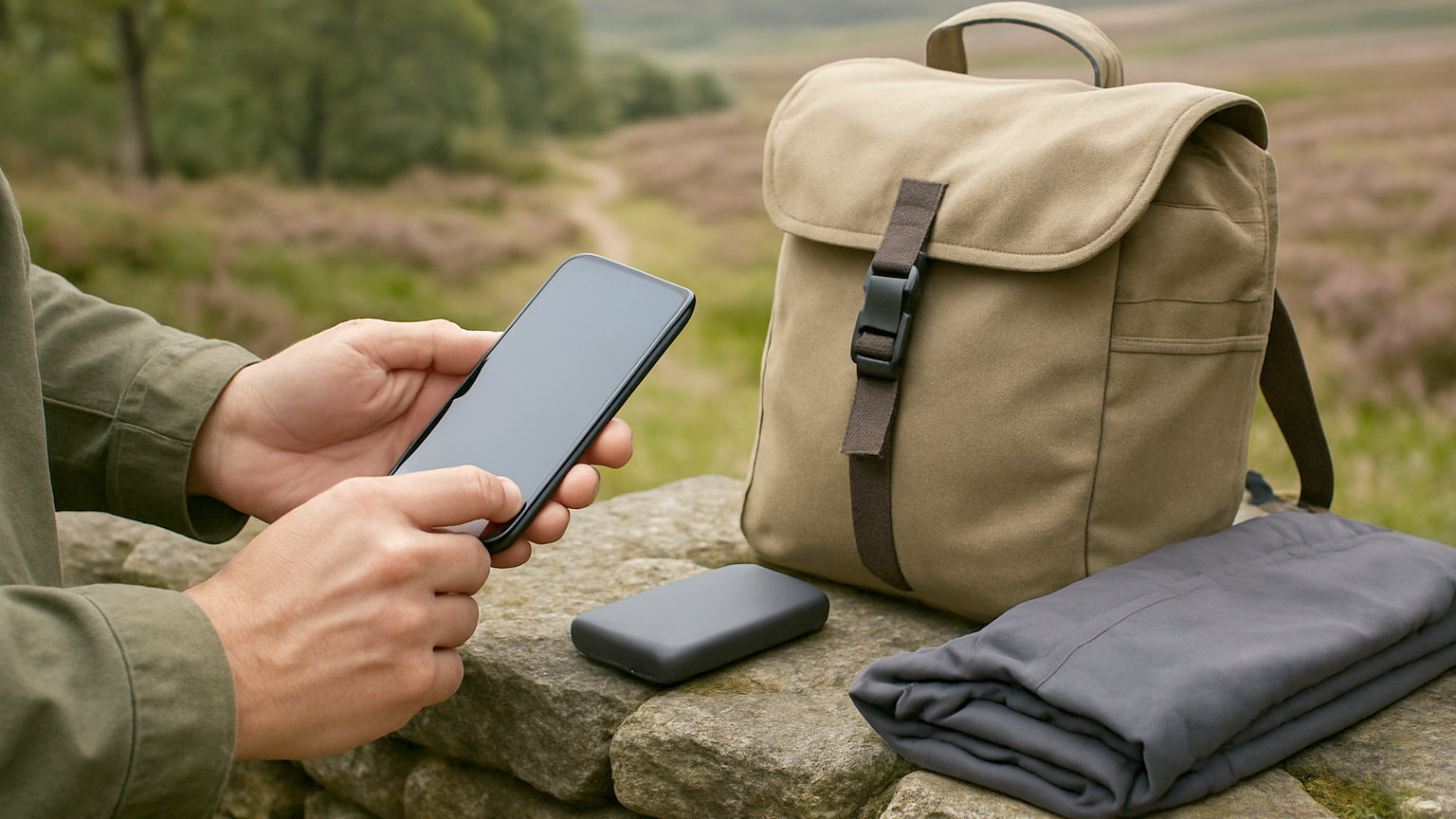
The emergency SMS service allows a text message to reach the emergency services in the United Kingdom. It exists for people who cannot hear or speak, and it is equally valuable for anyone in an area with marginal mobile signal.
Why does a text get through when a call does not?
Because a text needs far less from the network. A voice call requires a continuous stable connection for its whole duration, whereas a text is a very small packet that can be sent in a brief moment of connectivity and will retry automatically until it succeeds. In marginal signal on a hillside, a call may fail repeatedly while a text sends within a minute or two. This makes it genuinely useful in exactly the terrain where problems occur.
How do you register?
Text the word register to 999. You will receive a reply with instructions, and following them completes the process, which takes a couple of minutes in total. Registration is free and only needs doing once per phone number. The critical point is that it must be done in advance, because an unregistered phone cannot use the service at the moment you need it.
- Text the word register to 999 before you need it
- Follow the reply to complete registration, which is free
- Register every phone in the household and the group
- State which service you need at the start of the message
- Include location, what has happened and how many people
- Wait for a reply and do not assume it has been received
What should the message say?
Which service, where you are, and what has happened, in that order and as briefly as possible. Start with ambulance, police, fire or coastguard. Give a grid reference or a what3words address if you have one, or the clearest description of your location you can manage. Then the nature of the emergency, the number of casualties and their condition. Keep it short, because a shorter message is more likely to send in poor signal.
How do you know it has been received?
You will get a reply, and you should wait for it rather than assuming. The service is not instantaneous and may take a few minutes, particularly in weak signal. Keep the phone on, keep it somewhere with the best signal you can find, and be prepared to answer follow up questions by text. Do not switch the phone off to save battery while waiting for a reply.
Who else is it for?
It was introduced for people who are deaf, hard of hearing or have a speech impairment, for whom a voice call to 999 is not practical. It is also valuable for anyone in a situation where speaking aloud would be dangerous, and for anyone in an area of poor coverage. Everyone should register regardless of whether they expect to need it, since the cost is a minute and the benefit may be considerable.
What is the Silent Solution system?
A separate route for people who can dial but cannot safely speak. Call 999, listen to the operator, and when prompted by an automated message press 55. This signals that a genuine emergency may be in progress and passes the call to police. It does not work on landlines and pressing 55 alone does not summon help automatically, so it is a fallback rather than an alternative to speaking or texting.
What else should you set up in advance?
A grid reference app such as OS Locate, which works from GPS without any signal, and what3words, which is used by UK emergency services. Add medical information and emergency contacts to your phone lock screen, which most phones support and which is accessible without unlocking the device. All of this takes ten minutes at home and none of it can be done from a hillside.
Text register to 999 now, before you next go out, and encourage everyone you walk with to do the same.