Spring is the most productive season for wild greens in Britain, and also the season in which the most serious identification mistakes are made, because several dangerous species emerge alongside the desirable ones. This is an overview rather than an identification guide.
What is the easiest place to start?
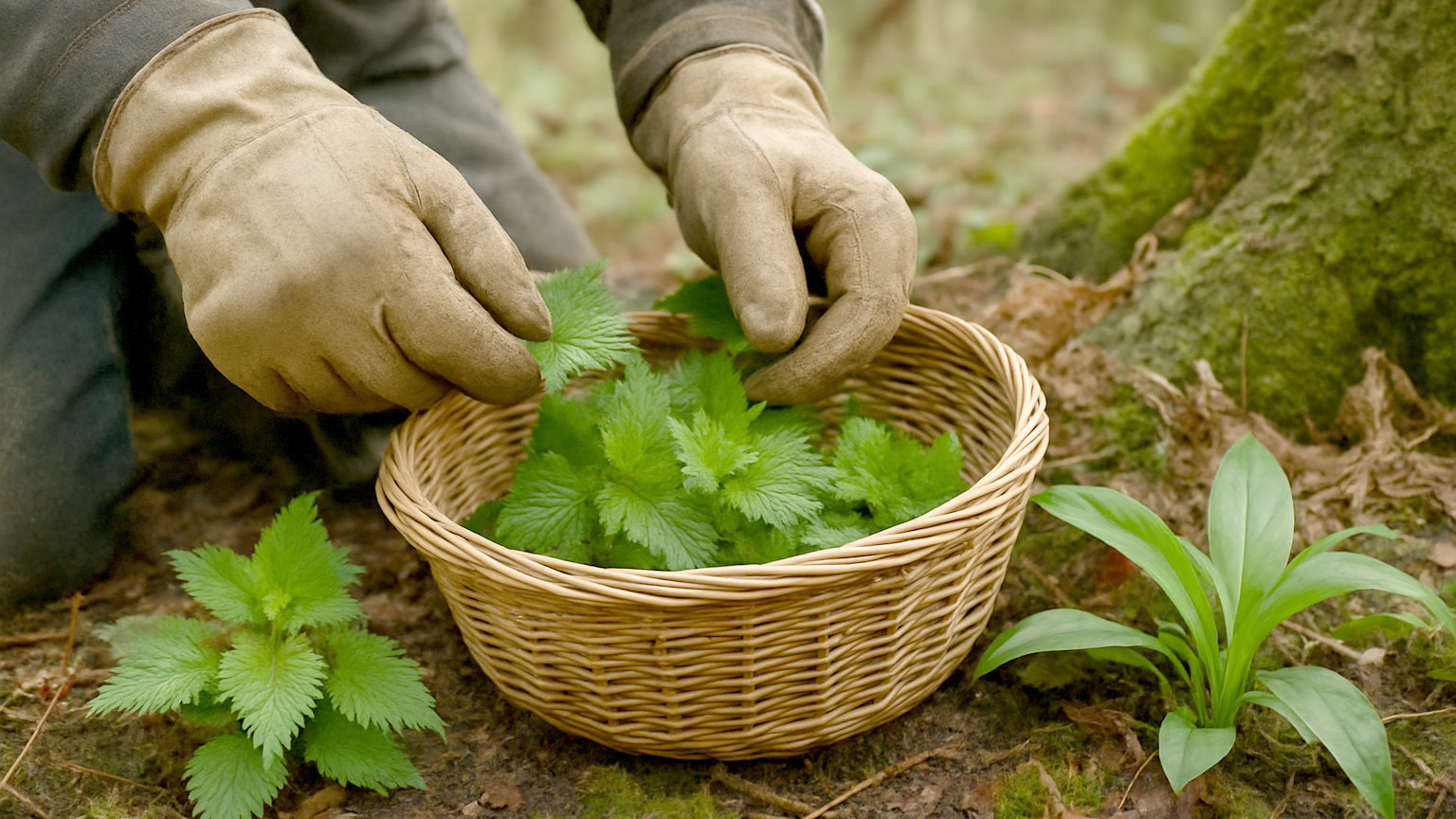
Nettles. They are abundant, unmistakable, have no dangerous lookalikes, and the young tops in early spring are genuinely good eating, high in iron and vitamin C. Pick the top four leaves of young plants before they flower, wearing gloves, and cook them, which destroys the sting entirely. Once nettles have flowered they become gritty and are best left. Few wild foods are so widely available with so little risk attached.
What about wild garlic?
Ramsons carpet damp woodland from March and are among the most rewarding spring foods, with a strong garlic scent when crushed. They also grow alongside three seriously toxic plants with similar leaves: lords and ladies, lily of the valley and autumn crocus. The smell is a useful indicator and is not sufficient alone, because leaves lying among ramsons pick up the scent from them. Pick each leaf individually, check it, and crush it in your own hand rather than trusting the smell of the patch.
- Nettle tops, before flowering, always cooked
- Wild garlic leaves and flowers, checked leaf by leaf
- Hawthorn leaves, the young bright growth in April
- Dandelion leaves and flowers, best before the plant flowers
- Elderflower, in late May and June, for cordial
- Sea beet and sea kale along the coast
- Cleavers, the sticky climbing plant, when young and tender
What is worth picking from hedgerows?
Hawthorn leaves, the fresh bright green growth that appears in April, sometimes called bread and cheese. They are mild, pleasant raw in salads, and hawthorn is easy to recognise and has no dangerous lookalikes once you know it. Cleavers, the sticky climbing plant that attaches to clothing, is edible when young and makes a reasonable cooked green, though it becomes tough quickly as the season progresses.
When does elderflower appear and what is it for?
Late May into June, as broad creamy flat topped heads on elder shrubs. It is the basis of cordial and is one of the most reliably identifiable and rewarding wild harvests of the year. Pick on a dry sunny day when the scent is strongest, shake rather than wash to keep the pollen that carries the flavour, and take only a proportion from any bush so it can still fruit in autumn. Elder is unmistakable in flower and considerably less obvious out of season.
What should you be most careful about?
Anything in the carrot family, which is at its most confusing in spring when many species are in leaf but not yet in flower. Hemlock and hemlock water dropwort are both emerging, both lethal, and both resemble desirable species at this stage. Foxglove leaves also resemble comfrey before flowering and are seriously toxic. The general advice for beginners is to avoid both families entirely until you have had proper instruction.
Does spring foraging provide meaningful nutrition?
Vitamins and minerals, yes. Calories, very few. Wild greens are nutritionally excellent and energetically negligible, so they supplement a diet rather than sustaining one. Treat spring foraging as something that improves food you already have rather than as a source of sustenance, which is the realistic framing for almost all wild plant foraging in Britain.
How do you avoid damaging the plants?
Take a little from many plants rather than a lot from one, never uproot anything, and leave enough for the plant to recover and for wildlife that depends on it. Ramsons in particular are slow to spread and a heavily stripped patch takes years to recover. Picking is generally lawful with permission, uprooting is not, and the distinction matters legally as well as ecologically.
Start with nettles and hawthorn, treat the carrot family as off limits, and check wild garlic leaf by leaf rather than by the patch.