Calling for help is only the first half of a rescue. The second half is being located, and people consistently underestimate how invisible a person becomes against open ground, woodland or water even at modest distance.
What should you do first?
Call for help by the most reliable means available, which in Britain is 999 or 112 asking for the appropriate service. A phone call gives your position, your situation and two way communication, all of which are worth more than any visual signal. Only when that has been attempted, or has failed, does physical signalling become the priority. A great many people begin waving before they have tried a call that would have worked.
What actually attracts attention?
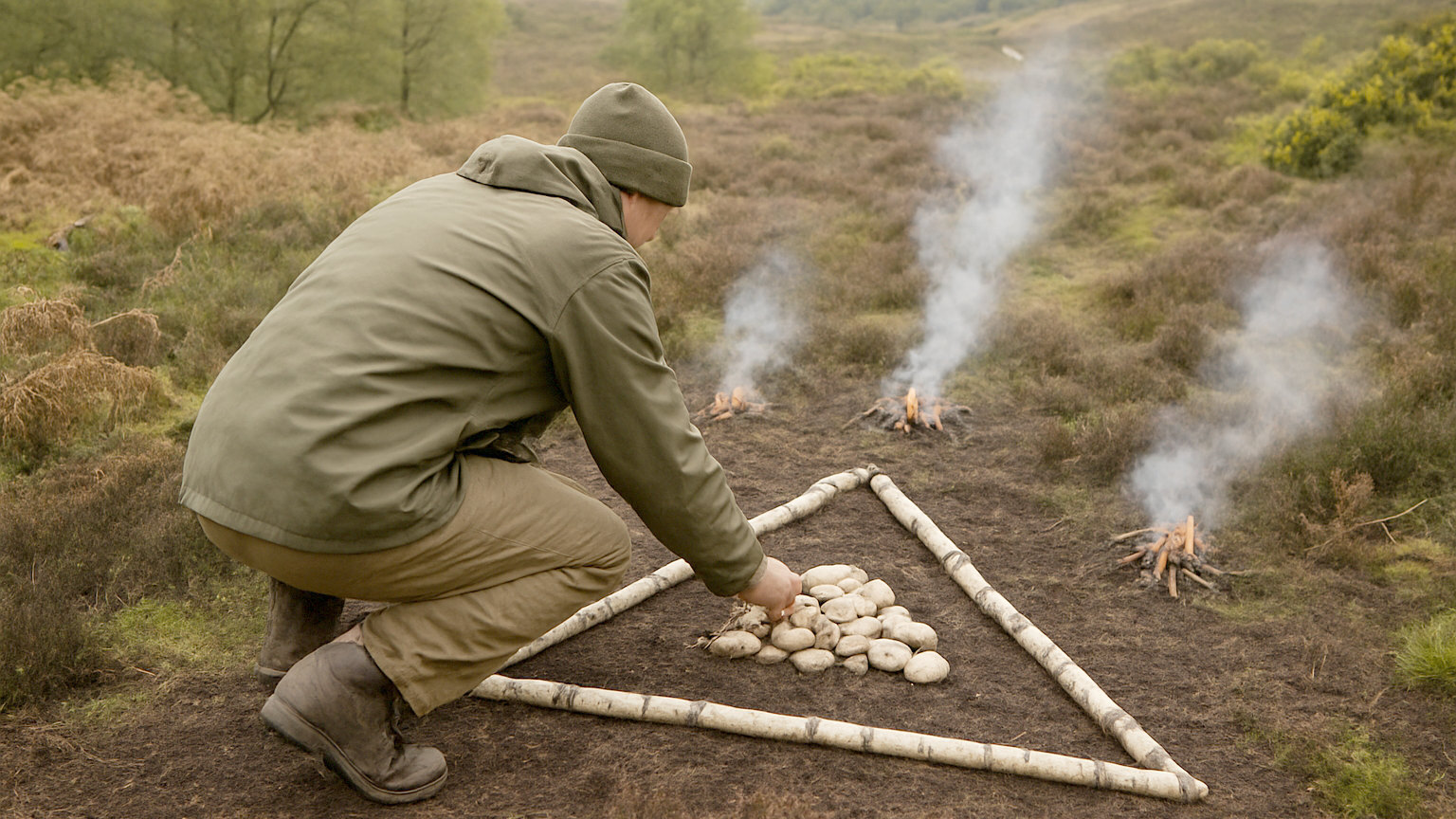
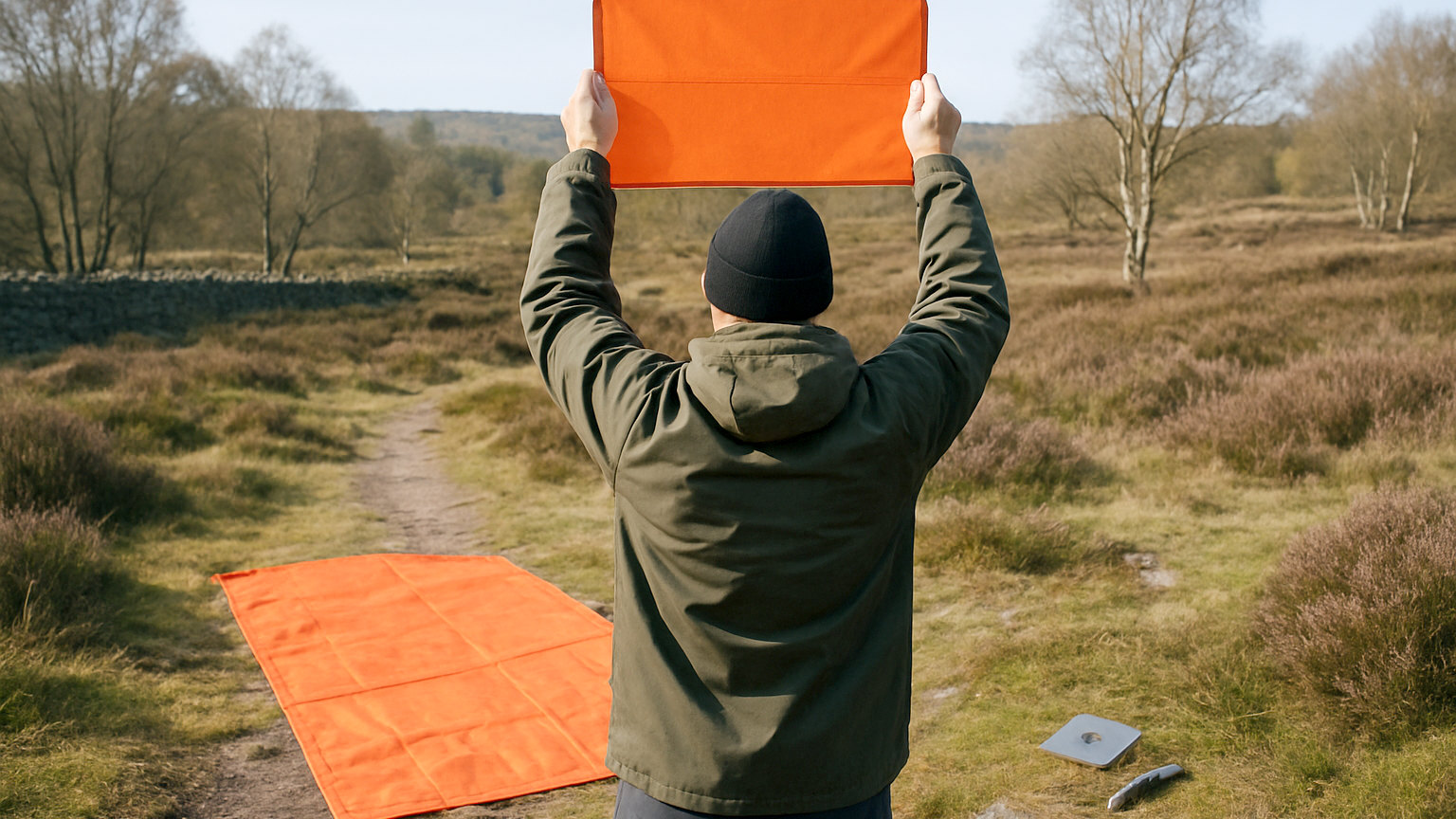
Three things: contrast, movement and pattern. The eye is drawn to anything that does not belong, which in a natural landscape means bright unnatural colours, straight lines, geometric shapes and regular repetition. Nature contains very few straight lines and almost no perfect symmetry, so a straight line of bright fabric laid on a hillside reads as human from a considerable distance while a person sitting still does not.
- Contrast, bright or unnatural colour against the background
- Movement, waving something large rather than an arm
- Pattern, straight lines and geometric shapes
- Repetition, signalling in a regular rhythm rather than randomly
- Size, larger than instinct suggests, by a wide margin
Which methods work best?
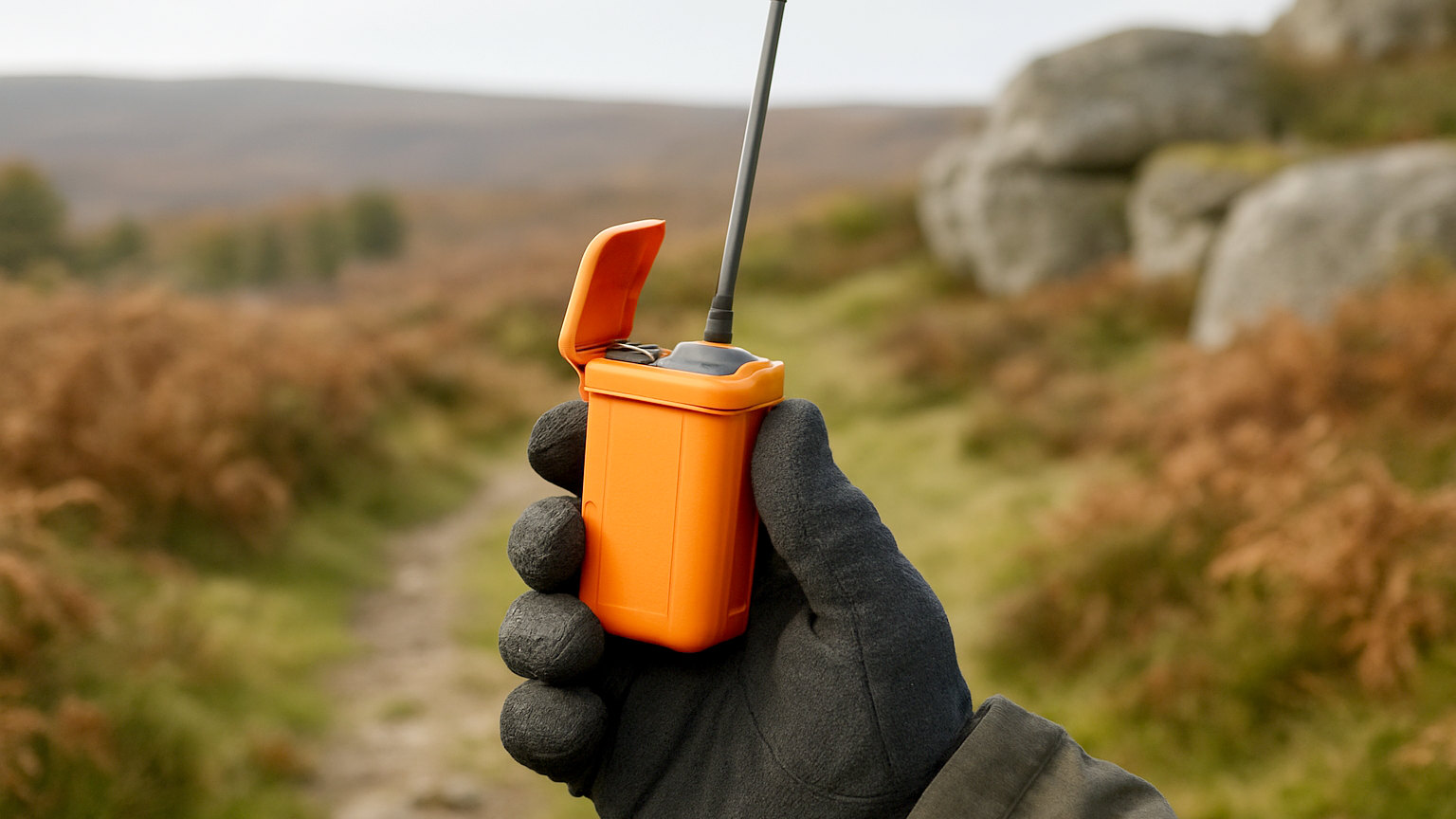
In rough order: a registered emergency beacon, a phone call, an emergency text, a signal mirror in sunshine, smoke by day, fire and torch by night, a whistle for close range, and ground markings for aircraft. The first three communicate who you are and where. The rest simply say that somebody is here, which matters enormously once a search is already under way in your area.
Why is a whistle so useful?
Because it carries several times further than a shout, costs almost no energy, and works when your voice has gone. A person shouting is exhausted and inaudible within twenty minutes. A whistle can be sounded for hours, penetrates wind and vegetation far better than the human voice, and is unmistakably artificial. It weighs a few grams and belongs on every rucksack strap.
Should you stay put or move?
Stay put, in almost every case where help has been alerted. Search teams work from a last known position and a planned route, and a person moving unpredictably makes that mathematics considerably worse. Moving also increases the chance of injury and takes you away from any shelter you have built. The exceptions are when your position is unsafe, when nobody knows you are missing, or when self rescue is clearly achievable.
How do you make a position visible?
By preparing it before anyone is looking. Lay out bright kit, foil blankets shiny side up, or lines of stones and vegetation in geometric patterns on open ground. Choose a clearing, a ridge or a shoreline rather than dense cover, since being under a canopy makes you effectively invisible from the air. Keep a fire ready to light and a torch to hand, and position everything so that responding takes seconds.
What about conserving resources?
Signal in bursts, not continuously. A torch left on all night flattens the battery before anyone is searching, and a fire fed constantly consumes fuel you will want later. Signal at regular intervals, increase the rate sharply when you hear or see anything, and keep enough in reserve for a sustained effort when a search actually begins. Rescues frequently take longer than expected, and the resource that runs out first is usually the one being used carelessly at the start.
What if nobody knows you are missing?
Then no search will begin, and that changes everything. Signalling only works when somebody is looking, so without a route plan left with a reliable person your effort should be aimed at chance observers: roads, farms, footpaths, boats and passing aircraft rather than a coordinated search. This is the strongest practical argument for always telling someone where you are going and when you expect to be back, since it costs a text message and determines whether anyone comes at all.
Call first, prepare the position while you wait, and signal in bursts with contrast, pattern and movement rather than hoping to be noticed.