Ground to air symbols are a simple visual code allowing someone on the ground to communicate a specific need to an aircraft overhead. They are genuinely useful and are frequently built far too small to work.
What are the standard symbols?
A small internationally recognised set. A large V means assistance required. An X means medical assistance required, which is the one worth remembering above all others. An arrow indicates that you are proceeding in that direction. A Y means yes or affirmative and an N means no or negative. An SOS is universally understood. These are simple enough to build from almost anything and unambiguous enough to be acted on.
How large do they need to be?
Far larger than instinct suggests. Each stroke should be at least three metres long and ideally six or more, with the lines themselves half a metre wide or wider. A symbol built at human scale simply will not resolve from an aircraft at altitude and speed. If you have limited material, build one large symbol rather than several small ones, since a small marking is effectively invisible.
- V for assistance required
- X for medical assistance required
- An arrow for proceeding in this direction
- Y for yes and N for no
- Strokes at least three metres, preferably six or more
- Maximum contrast against the specific background
What can you build them from?
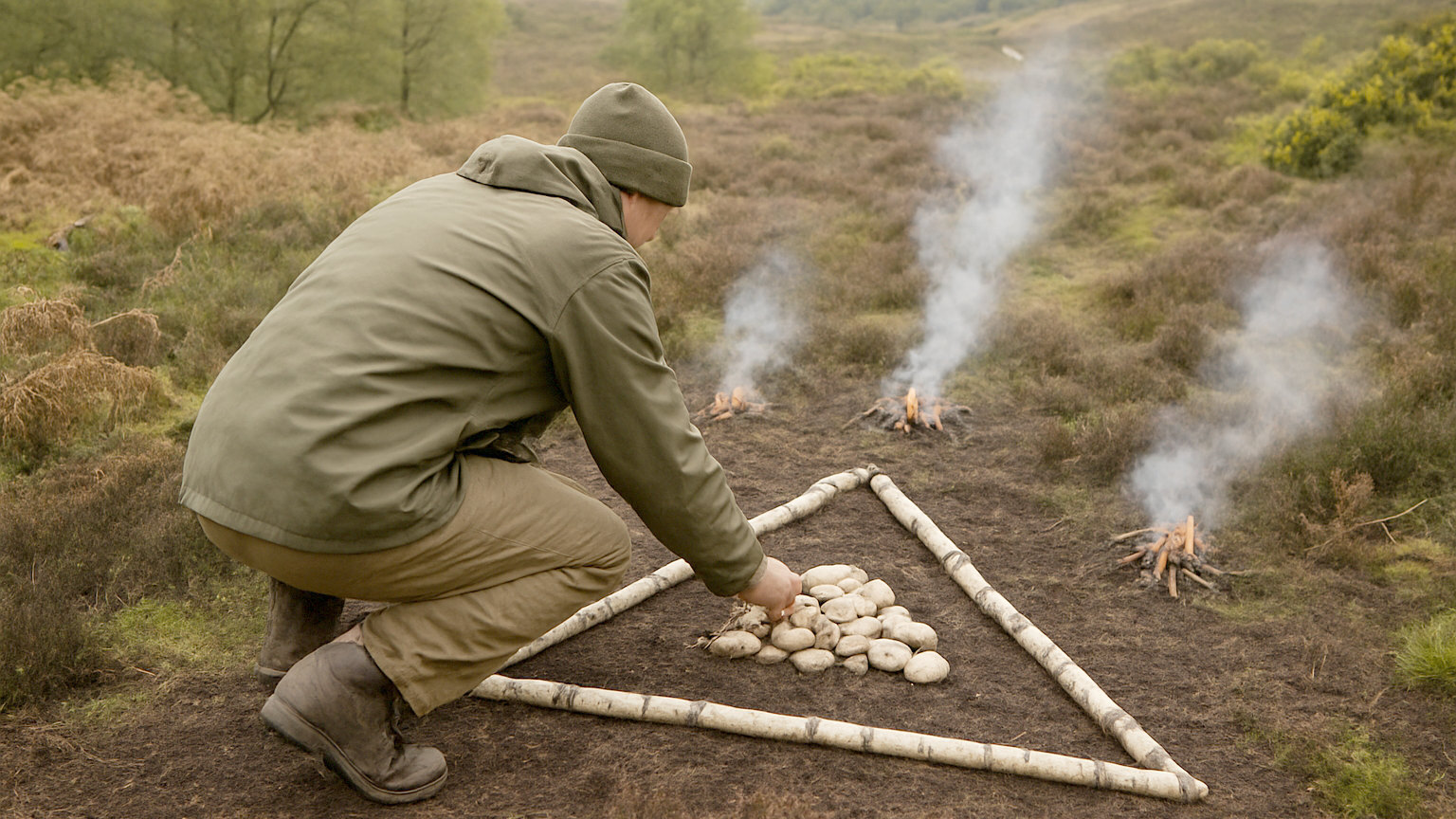
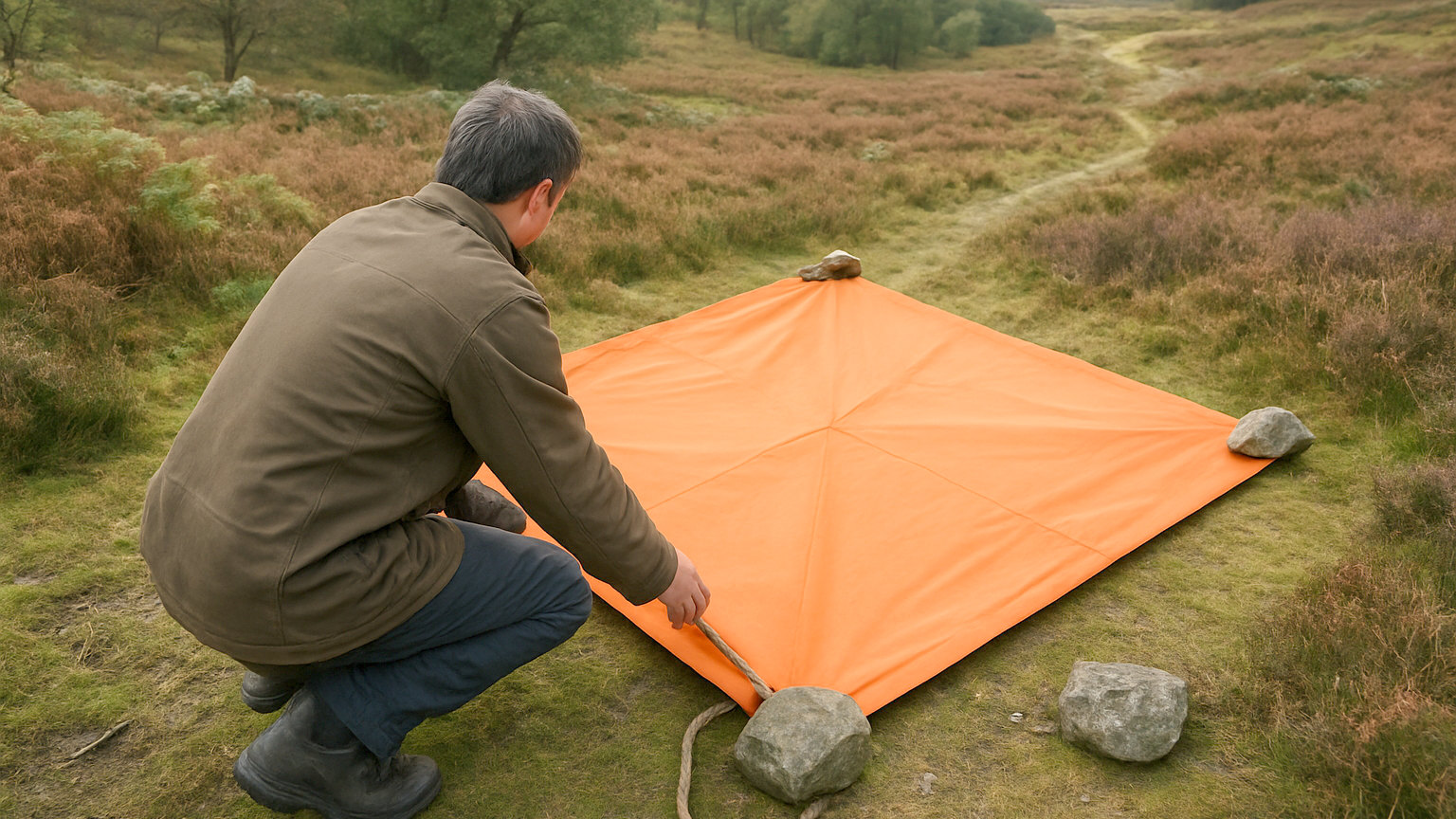
Anything that contrasts. Bright clothing, survival bags, tent fabric, rucksacks and foil blankets all work. In vegetation, trampling or cutting a shape into grass, heather or bracken produces good contrast. On beaches, digging trenches creates shadow lines that read strongly. On snow, dark material or trenches work far better than anything pale. Rocks, branches and turf sods all serve where fabric is limited.
Why does shadow matter?
Because contrast alone can fail in flat light or when the ground colour is similar. Building a symbol up in three dimensions, or digging it in, produces shadow that defines the shape and effectively doubles its visibility, particularly early and late in the day when the sun is low. Trenches in snow or sand are exceptionally effective for this reason and cost only effort.
Where should you lay them out?
On open, flat, unobstructed ground close to your position, ideally where you can be seen alongside them. A symbol in a clearing while you shelter in trees fifty metres away risks the crew searching the wrong spot. Weight everything down with stones, because rotor downwash will remove loose fabric and can throw it into the aircraft.
Are they still relevant?
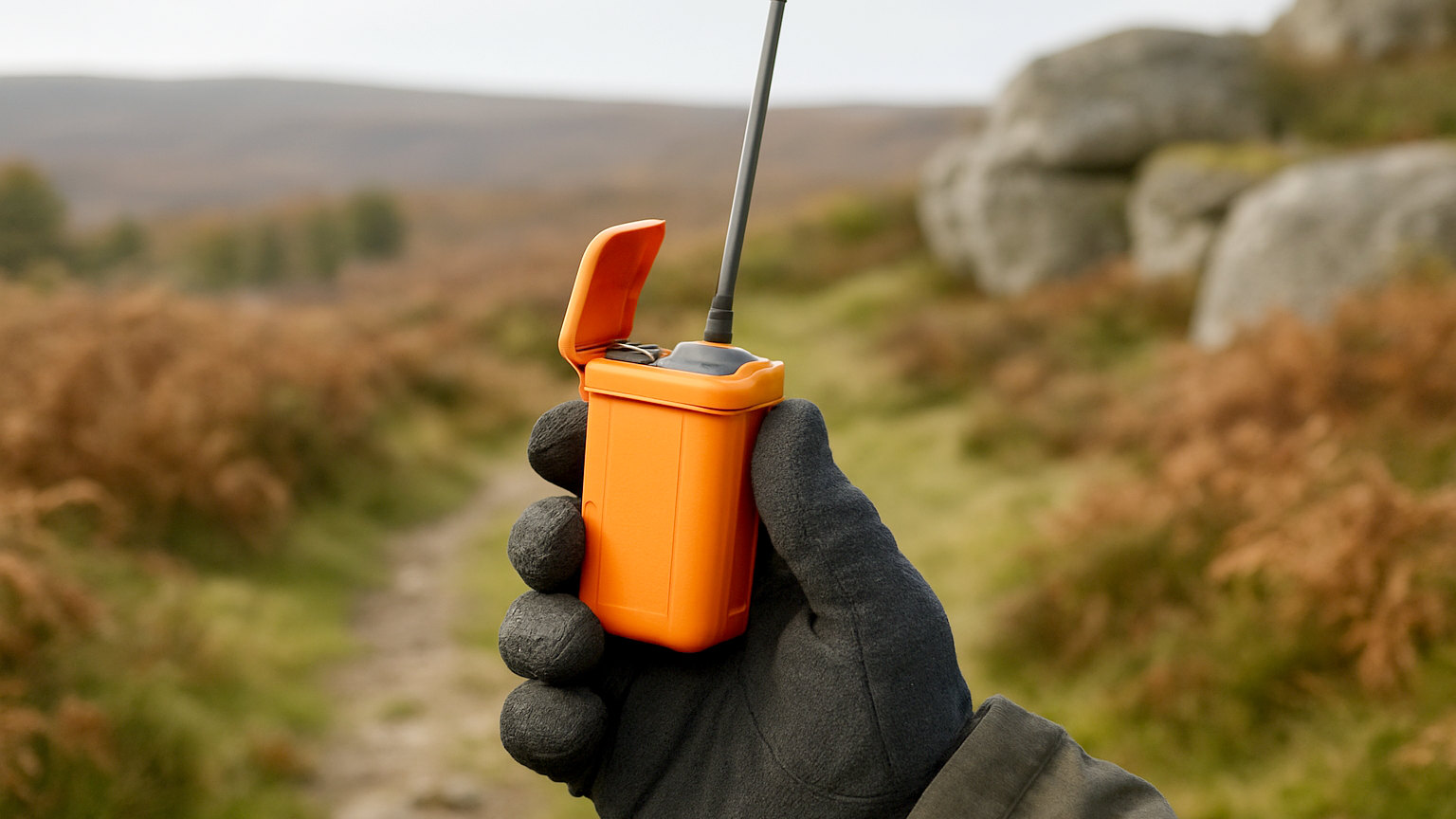
Yes, though less central than they once were. Beacons, phones and satellite messengers have replaced them as the primary means of communicating a situation, since those convey far more detail. Ground symbols remain useful when you have no working communications, when a search aircraft is already in the area, and as a way of confirming a specific need to a crew that has found you but cannot yet land or speak to you.
What should you do once seen?
Secure everything immediately. As soon as the crew has clearly acknowledged you, the loose fabric that made your symbol becomes a hazard under downwash. Pack it away or weight it heavily, protect your eyes, and wait to be approached rather than moving toward the aircraft.
How do you show which way you have gone?
With a large arrow, which is the one symbol communicating movement rather than need. If circumstances force you to leave a location where you have been signalling, lay out an arrow pointing in your direction of travel, as large as you can make it, and leave it behind. It tells a search team that the site is not abandoned but relocated, and roughly where to look next. Leaving a note weighted under a stone alongside it, with the time and your intentions, is better still.
Learn X and V, build them at least three metres per stroke, use shadow, and secure the material as soon as you have been seen.