A finished shelter that is still cold and damp inside is a frustrating outcome, and the cause is usually one of three things. Diagnosing which applies matters, because the remedies pull in opposite directions and guessing tends to make things worse.
Is the water coming from you?
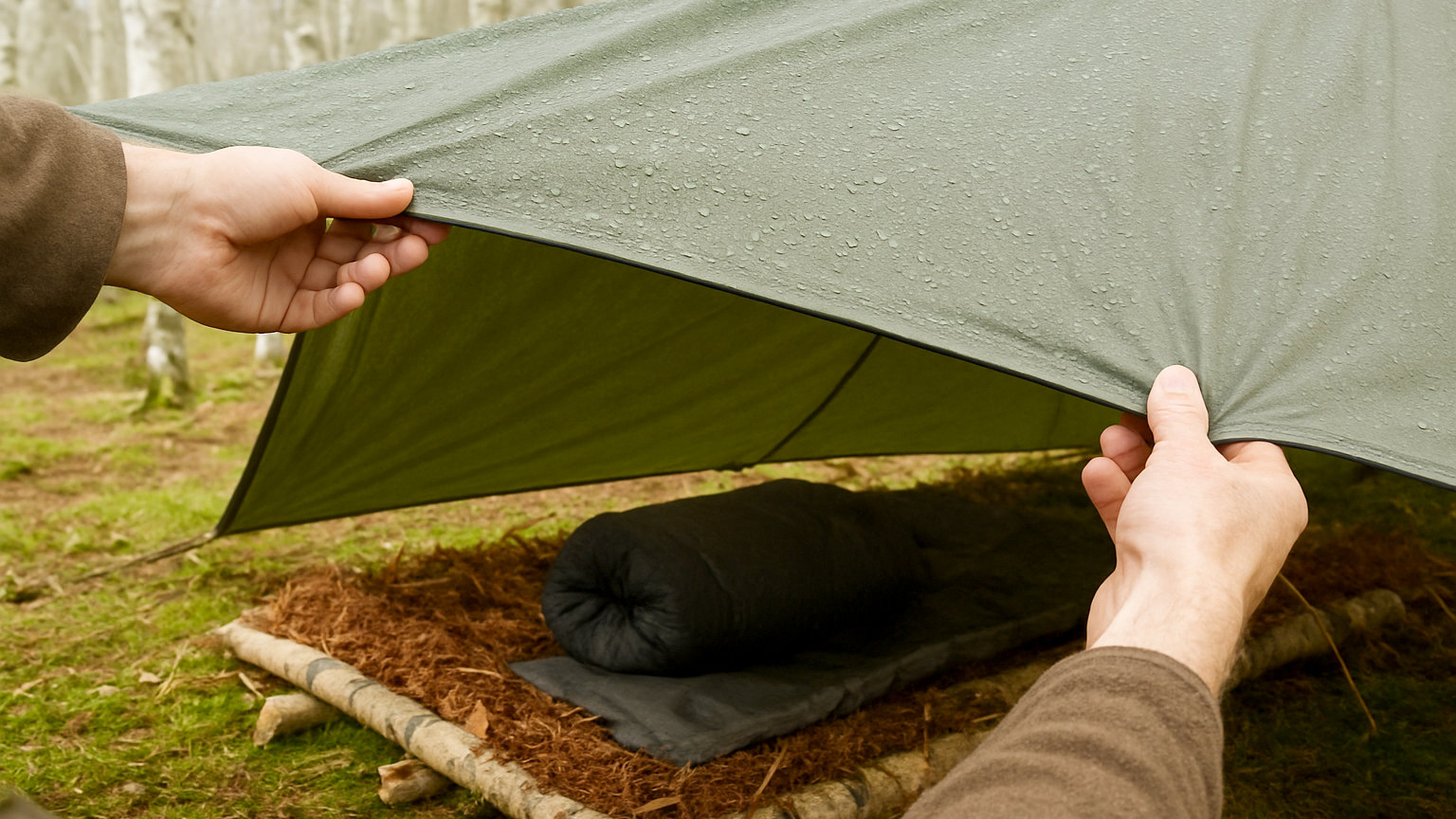
Frequently, yes. A sleeping adult releases roughly half a litre of moisture overnight through breathing and perspiration. In an enclosed shelter with cold surfaces, that moisture condenses on the inside of a tarp, a survival bag or a glazed snow wall and then drips back onto you. The giveaway is water on the inside of the roof when it has not rained. The fix is ventilation, deliberately allowing airflow so moist air leaves before it condenses, which feels wrong when you are trying to trap heat but is nearly always correct.
Or is it coming from below?
Also common, and often confused with condensation. Ground moisture wicks upward into bedding through the night, particularly on clay, in hollows and after rain. The giveaway is dampness concentrated beneath you rather than above. The remedy is a vapour barrier such as a survival bag, a groundsheet or a sheet of bark laid beneath the bedding, plus more depth of dry material. Adding ventilation does nothing for this, which is why identifying the source first matters.
- Water on the roof interior with no rain suggests condensation
- Damp concentrated underneath suggests ground moisture
- Cold despite dryness usually means excessive internal volume
- Cold spots at hip and shoulder mean insufficient bedding depth
- Draughts at floor level mean the entrance needs plugging
Is the shelter simply too big?
This is the most common cause of a dry but cold shelter. Your body produces around a hundred watts at rest, comparable to an old filament bulb, and that is the entire heating system. A space you can sit up in contains far more air than a hundred watts can warm, so it stays close to ambient temperature. The correct internal volume is barely larger than your body, and shrinking an oversized shelter by stuffing the extra space with debris is a fast and effective fix.
How do you tell condensation from a leak?
By pattern. A leak produces water at specific points, usually along seams, at contact points where fabric touches the frame, or wherever thatch is thin, and it worsens during rain. Condensation appears evenly across the whole cold surface and is often worst on a clear cold night with no rain at all. Touching a tarp from inside during rain draws water through by capillary action, which is why a sagging tarp in contact with bedding produces what looks like a leak.
Why does wet clothing make everything worse?
Because insulation works by trapping still air, and water displaces that air while conducting heat roughly twenty five times faster. Damp clothing can lose most of its insulating value, so a person who worked up a sweat building the shelter may be colder inside it than someone who did nothing. Change into dry layers before settling, keep a dry set reserved for sleeping only, and stop working before you overheat.
What should you fix first?
Bedding depth, then internal volume, then ventilation. Bedding gives the largest immediate return, volume reduction is quick and free, and ventilation costs nothing but a small opening. Only after those three should you worry about improving the roof, which is the part most people instinctively work on first and the part that contributes least to warmth.
Does a fire help or make it worse?
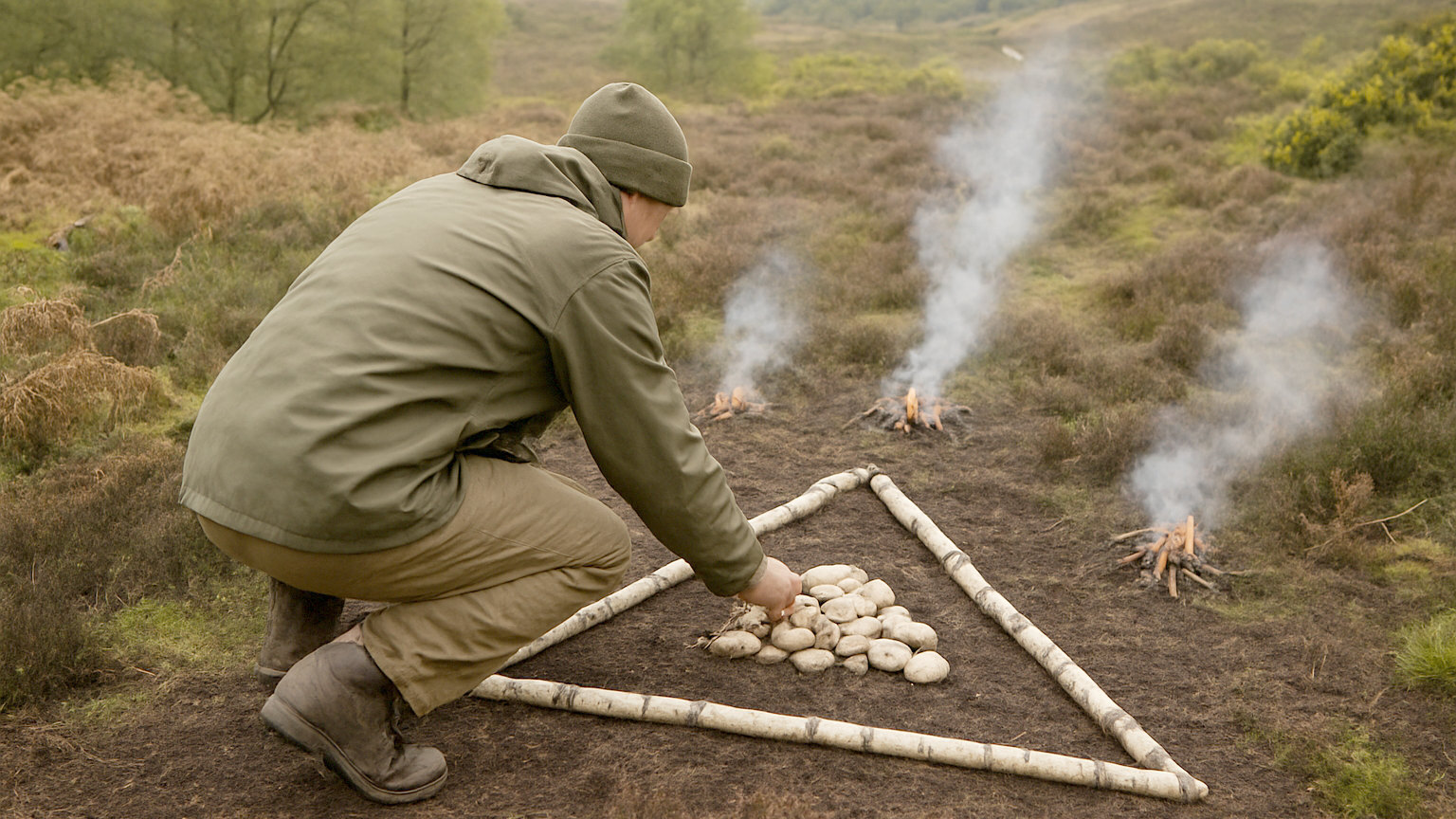
Both, depending on placement. A fire in front of an open shelter such as a lean to adds genuine warmth and dries the air and your clothing. A fire inside or too close to an enclosed shelter is dangerous, fills the space with smoke, and creates a draught that pulls cold air in at floor level to replace the hot air rising out. If you are using a fire for warmth, build the shelter to suit it with an open face, rather than trying to add a fire to a structure designed to be sealed.
Dry underneath, small inside, and slightly ventilated is the combination that works, and it is rarely the one people build unprompted.