A tarp is the most versatile shelter available for its weight, and the versatility is the difficulty. The same square of fabric can be pitched a dozen ways, and the right one depends on wind direction, rainfall, what you can tie to and how much shelter you need against how much ventilation.
When should you use an A-frame?
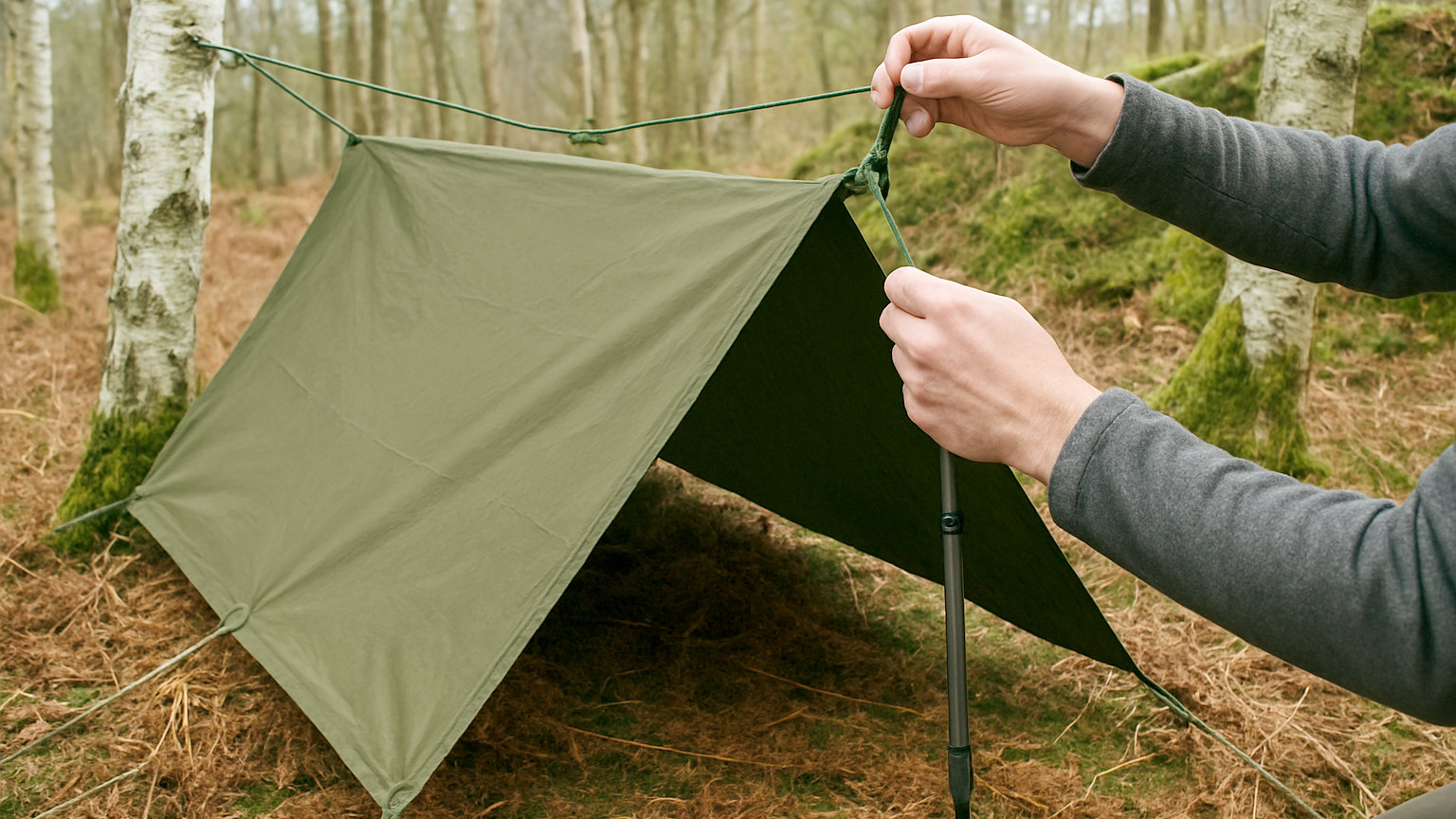
When rain is the main threat and wind direction is uncertain. Run a ridge line between two trees, drape the tarp over it, and stake out all four corners to form a tent shape open at both ends. It sheds water from any direction, gives good headroom for its footprint, and is quick to pitch. The weakness is the open ends, which let wind funnel straight through, so it is a poor choice in exposed conditions without closing one end down.
What is a lean to best for?
Wind from a known direction, and pairing with a fire. Stake one edge to the ground on the windward side and raise the opposite edge on a ridge line, producing a single sloping wall with an open front. The sloping back blocks wind and rain while the open face lets you sit up, work, and benefit from a fire built a safe distance in front, with the tarp reflecting some heat back. It is the classic bushcraft configuration and it fails badly if the wind shifts.
- A-frame, good all round rain protection, poor in wind
- Lean to, excellent with a known wind direction and a fire
- Plough point, one corner staked low, sheds wind well on open ground
- Diamond or arrowhead, minimal pitch for one person in a hurry
- Flat pitch, sun shade only, offers nothing against wind
What do you do with no trees?
The plough point, sometimes called the flying diamond. Peg three corners of the tarp to the ground and raise the fourth on a single pole, a walking pole or a rock cairn, with the raised corner facing away from the wind. It needs only one high anchor and produces a low wedge that sheds wind extremely well. On completely open moor or beach this is often the only workable configuration, and it pitches in under two minutes once practised.
How high should you pitch it?
Lower than feels comfortable. Every centimetre of height increases the volume you must warm and the surface the wind can push against. In fair weather a high pitch gives welcome space and ventilation. In wind and driving rain, drop the ridge line to knee or waist height, bring the edges close to the ground, and accept the cramped result. A tarp pitched high in a gale will flog itself to destruction or tear out its anchors.
What is the most common mistake?
Neglecting the ground. A tarp addresses rain and wind and does nothing about conduction, so pitching one over bare wet earth and lying down produces a cold night despite a technically correct shelter. Always pair a tarp with a groundsheet, a sleeping mat, or a thick layer of gathered bracken and leaves. The second most common mistake is pitching with insufficient tension, which lets water pool in the fabric until it sags, drips and eventually collapses.
How much cordage do you need?
Less than most people carry, but the right kind. A ridge line of four to five metres and six shorter guy lines of two metres each covers nearly every configuration. Learn two knots and you can pitch anything: a taut line hitch for adjustable guys and a simple bowline or truckers hitch for the ridge. Practising in the garden until each pitch takes two minutes is time far better spent than reading about further variations.
How do you stop it flapping all night?
Tension, and enough of it to remove every slack panel. A loose tarp in wind will flog itself noisily, work its pegs free and eventually tear at a tie out point. Pull the ridge line genuinely taut with a truckers hitch, then tension each corner away from the centre rather than straight down, so the fabric is stretched in two directions. If it is still moving, the pitch is too high and dropping the ridge will do more than any amount of retensioning.
Learn the lean to and the plough point properly, and between them they cover almost every situation a tarp is the right answer for.