Most shelter problems cost you a poor night. A small number of siting errors cost considerably more than that, and they share a quality of being easy to overlook because the danger is not present at the moment you choose.
What is a widowmaker?
A dead or broken branch held in the canopy, or a leaning or partially uprooted tree, waiting for wind or rain to bring it down. They fall without sound or warning, they fall at night, and a branch of even modest size arriving from fifteen metres up is lethal. Look upward through the canopy across the whole area you intend to occupy, not just directly above the shelter, and treat any doubt as a reason to move. Standing dead trees, ivy laden trees and anything with a lifted root plate are all reasons to keep walking.
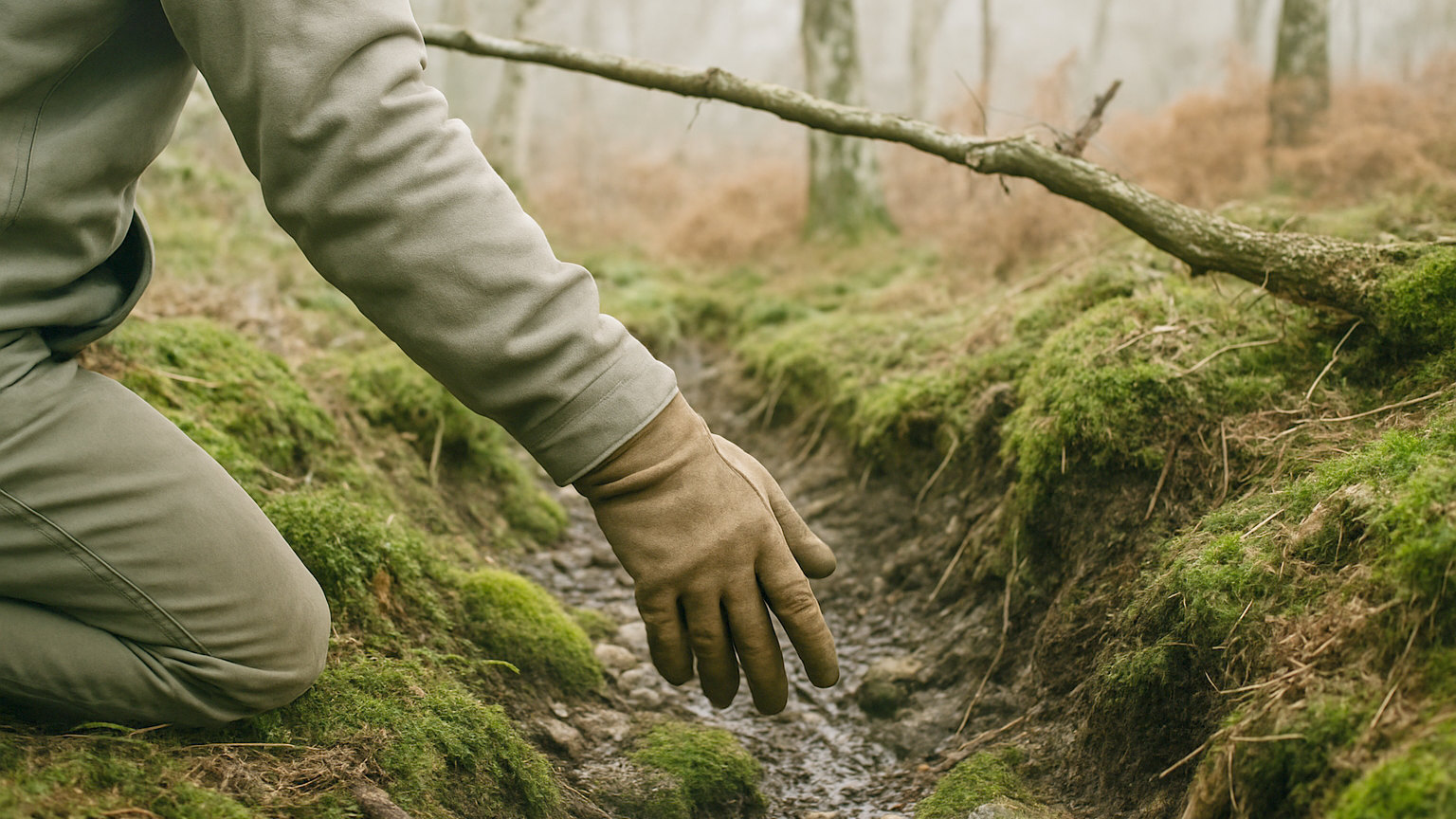
Why are dry stream beds dangerous?
Because they are dry temporarily. A gully or wadi is dry ground that water uses when there is water to move, and rainfall many kilometres upstream can send a flow through it while the sky above you stays clear. The signs are unmistakable once known: rounded stones, scoured banks, debris lodged in vegetation above your head height, and an absence of established plants. Flash floods have killed campers in Britain as well as in obviously arid regions.
- Beneath dead branches, leaning trees or lifted root plates
- In dry stream beds, gullies and drainage channels
- In valley bottoms and hollows where cold air collects
- On exposed ridges, summits and cols where wind accelerates
- Beneath cornices, loaded slopes or anything that could slide
- Below loose rock, scree or unstable cliff faces
- On animal trails, near nests, setts or wasp activity
Why avoid the bottom of a valley?
Cold air is denser and flows downhill, pooling in the lowest available ground overnight. The temperature difference between a valley floor and a slope thirty metres above can exceed five degrees on a clear still night, and mist and heavy dew collect there too, dampening everything. The most comfortable position is generally part way up a slope, out of the cold sink but below the exposed ridge line.
What about snow and mountain terrain?
Additional hazards apply. Avoid camping below cornices, which collapse without warning, and avoid the run out zones of avalanche prone slopes, meaning anything above about thirty degrees and the ground beneath it. Avoid gullies in winter, since they are the natural path for anything sliding. Look for signs of previous slides such as flattened vegetation and debris fans, and treat recent heavy snowfall or rapid warming as a strong reason to move to safer ground.
Does wildlife matter in Britain?
Less than elsewhere, but not nothing. Wasp and hornet nests are the most likely problem and are easily missed until disturbed. Ant nests make a site unusable. Badger setts and their well worn paths are worth avoiding, since badgers are strong, nocturnal and unimpressed by shelters on their route. Ticks are the more significant risk, so avoid bedding down in bracken and long grass where deer are present, and check yourself afterwards.
How do you check a site quickly?
Look up, look down, look around, in that order. Up for dead wood and unstable ground above. Down for drainage, dampness and what the ground and vegetation are telling you. Around for wind exposure, escape routes and anything that could move. Two minutes of deliberate observation catches nearly everything on this list.
What about coastal and riverside sites?
Both catch people out through timing rather than appearance. On the coast, check the tide tables and look for the strand line of seaweed and debris, which marks how far the water reaches, then camp well above it and be aware that spring tides run considerably higher than the line you can see. Beside rivers, remember that levels respond to rainfall in the catchment hours after the rain has stopped locally, so a river that is low and benign at dusk can be substantially higher by dawn without a drop falling on you.
A poor site makes for a bad night. A dangerous one makes for a rescue, and the difference is usually visible if you take the time to look.