Exposure kills faster than hunger or thirst in almost any British condition, and it does so quietly. A person losing heat steadily makes poor decisions long before they collapse, which is why shelter sits at the top of the survival priorities alongside first aid.
What is a shelter actually for?
Four jobs, in order of importance. It must stop conductive heat loss into the ground, which is the fastest route by which body heat disappears. It must block wind, because moving air strips warmth from exposed skin many times faster than still air. It must keep rain off, since wet clothing loses most of its insulating value. And it must trap the heat your body produces in a space small enough for that heat to make a difference. A structure that does only the last of these is a roof, not a shelter.
Why does the ground matter more than the roof?
Because conduction moves heat away from you roughly twenty five times faster than still air does. Lying directly on cold wet soil is the single most effective way to lose body heat that exists in the outdoors, and no amount of overhead cover compensates for it. The first material you gather should therefore go underneath you, not above you. Aim for at least twenty centimetres of compressed dry material, which usually means gathering three or four times that depth loose and letting it settle.
- Choose the site before you gather anything
- Build the bed first, thicker than seems necessary
- Keep the internal volume small, barely larger than your body
- Thatch from the bottom upward so each layer sheds onto the one below
- Add a doorway plug of debris to close the entrance behind you
How do you choose a site?
Look up first, for dead branches and unstable trees, which are known as widowmakers for good reason and kill people every year. Then look at the ground: avoid hollows and valley floors where cold air pools overnight, avoid anything that could channel water in heavy rain, and avoid animal trails and wasp or ant activity. Seek natural advantage such as a fallen trunk to build against, a rock face that reflects heat, or dense evergreen cover that has kept the ground beneath it dry. Being close to water, firewood and building material saves enormous effort.
What is the simplest structure that works?
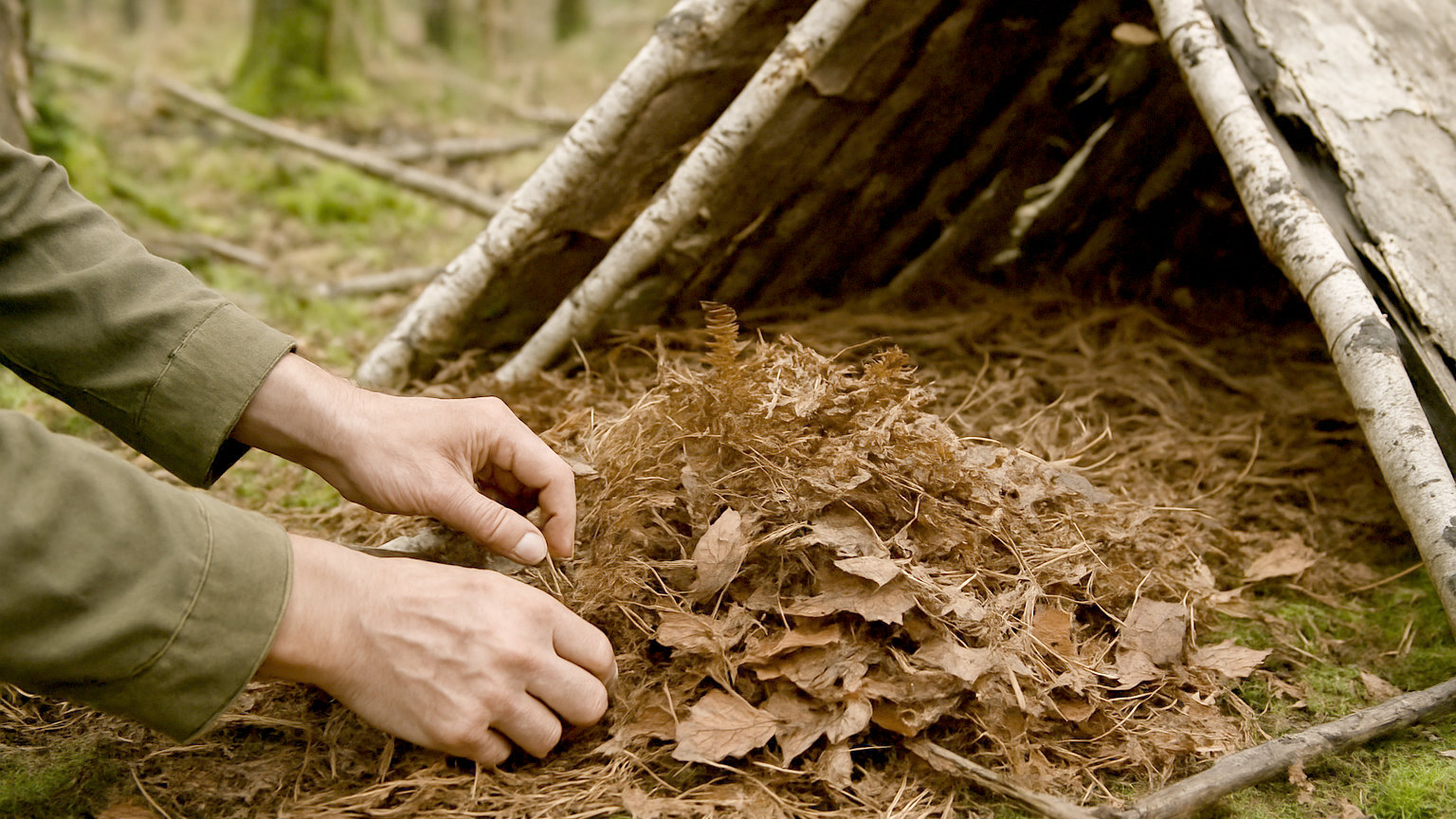
The debris hut. Lean one long ridge pole from a stump or forked branch down to the ground, lay shorter ribs against it on both sides to form a low triangular frame, then pile leaf litter, bracken, moss and grass over the whole thing to a depth of at least sixty centimetres. Fill the interior with the same material for bedding. It looks like a heap of leaves and it works because the trapped air within all that debris is an excellent insulator, exactly as loft insulation is.
Why should the shelter be so small?
Because your body is the heat source and there is no other. A shelter you can sit up in requires you to warm a volume of air far larger than your output can manage, so it stays cold. The correct size is uncomfortably tight: long enough to lie in, wide enough to turn over, and high enough to raise your head slightly. Every extra centimetre of internal space is air you must heat and cannot.
How long should you allow?
Longer than you expect, which is the argument for starting early rather than at dusk. A basic debris hut takes a fit person two to three hours to build properly, most of that spent gathering material, and it takes far longer in the dark or when cold has already reduced your dexterity. If daylight is short, build something cruder and add to it, rather than aiming for a finished structure you will not complete.
Insulate underneath, keep it small, build it early, and a pile of leaves becomes genuinely survivable accommodation.