Snow is a remarkably good insulator, holding enormous quantities of trapped air, and a well built snow shelter can sit thirty degrees above the outside temperature. It is also heavy, collapses without warning and produces wet clothing, which makes it a technique to understand thoroughly before relying on it.
What is a quinzhee and why build one?
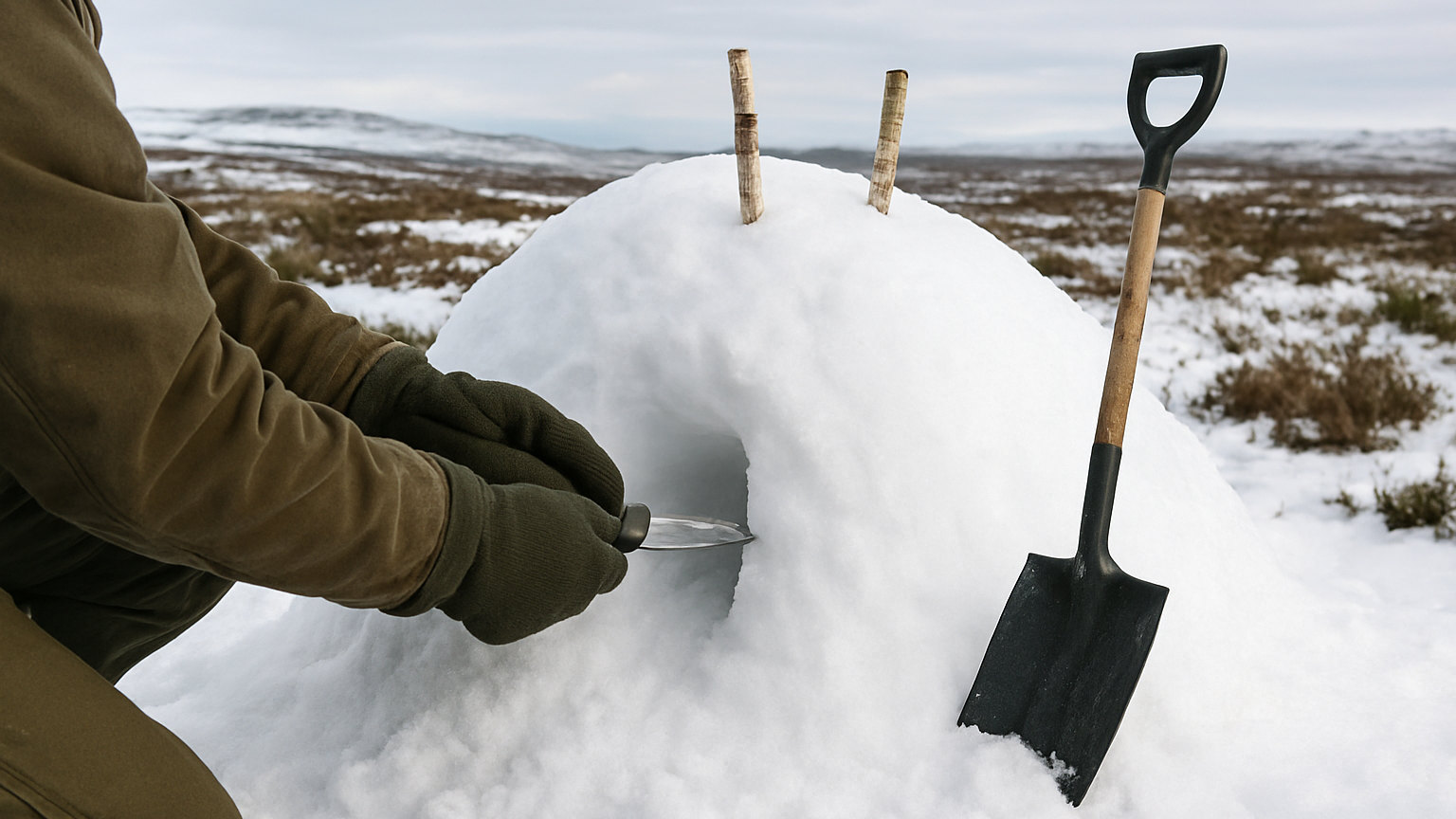
A quinzhee is a mound of piled snow, allowed to settle, then hollowed out from one side. Unlike a snow cave it does not need a deep drift, so it works anywhere with enough snow to pile up, which makes it the most widely applicable snow shelter. Pile snow into a dome roughly two metres high and three across, then leave it strictly alone for at least ninety minutes while sintering occurs, the process by which disturbed snow crystals bond and the mass gains structural strength.
How thick should the walls be?
Around thirty centimetres, and measuring this from inside is the difficulty. The standard solution is to push sticks of that length into the mound from the outside before hollowing, spaced across the dome. When you are digging from within and reach the end of a stick, you stop. Walls thinner than this risk collapse, and walls much thicker waste both effort and insulating benefit, since the improvement flattens off quickly.
- Pile the snow and leave it to sinter for ninety minutes or more
- Push depth sticks in to gauge wall thickness from inside
- Dig the entrance low and the sleeping platform higher
- Make at least one ventilation hole, kept clear all night
- Keep a digging tool inside with you at all times
- Smooth the interior ceiling so meltwater runs down rather than drips
Why is ventilation not optional?
Because snow is far less permeable than it looks, particularly once the interior surface glazes with ice from your body heat. Carbon dioxide accumulates, and people have died in well built snow shelters from asphyxiation without ever realising anything was wrong. Make at least one hole of around ten centimetres through the roof, ideally two, keep a pole or stick in place to clear them, and check them if snowfall continues. A candle is a useful indicator, since a flame that will not stay lit is telling you something important.
What is a snow trench and when is it better?
A trench is simply a body sized slot dug into the snow, roofed with skis, poles, branches or blocks and covered with snow. It takes twenty to thirty minutes rather than several hours and requires far less snow depth than a cave. In an emergency at the end of the day, with cold advancing and light going, a trench is almost always the right choice over a quinzhee, because a finished simple shelter beats an unfinished good one.
Why does the entrance need to be low?
Cold air sinks. If the entrance is below the sleeping platform, cold air settles into the entrance passage and warmer air is trapped in the raised chamber where you are. This single arrangement can account for several degrees. Block the entrance with a pack or a snow block once inside, leaving the ventilation holes to do the air exchange.
How do you avoid getting soaked?
Wear a waterproof shell, work slowly and deliberately, and remove insulating layers before you start. Digging is hard physical work, sweat wets your clothing from the inside, and wet insulation in sub zero conditions is genuinely dangerous. Being slightly cold while working and dry afterwards is far better than being warm while digging and damp all night.
What should you keep inside with you?
A digging tool, without exception, because a collapse or a drifted entrance leaves you needing to dig out rather than in. Beyond that, keep a marker such as a bright pole or a ski upright outside so the shelter is visible to searchers and to you, since a snow shelter disappears completely in fresh snowfall. Bring your pack inside to block the entrance and to keep it from being buried. Keep a light within reach, and if you have a candle, remember it doubles as a ventilation check as well as a surprisingly effective heat source in a small chamber.
Build a trench if time is short and a quinzhee if it is not, and never skip the ventilation holes no matter how tired you are.