Mapping apps are genuinely excellent, considerably easier than paper, and used sensibly they make navigation safer. The problem is not the technology. It is that every one of its failure modes tends to occur in the same conditions, and those are the conditions in which navigation matters most.
What happens to batteries in the cold?
They lose capacity sharply. Lithium ion cells suffer reduced chemical activity below about five degrees, and a phone showing sixty percent in a warm pocket can shut down within minutes of being exposed to a cold wind. This is temporary rather than permanent damage, and warming the device usually restores much of the charge, but a phone that has switched off on a hillside is useless at the exact moment you needed it. Keeping it in an inside pocket against your body largely prevents this.
Does the screen work when wet?
Poorly. Capacitive touchscreens are confused by water on the surface, registering phantom touches or nothing at all, and driving rain makes them close to unusable. Gloves compound the problem. This is a specific and frequently underestimated failure, because it happens in exactly the weather where you need to check position more often, and it does not require anything to break.
- Cold reduces battery capacity dramatically and suddenly
- Wet screens become unreliable or unusable
- Screens are hard to read in bright sun and destroy night vision
- Dropped phones break, and they are dropped on rough ground
- Downloaded maps still fail if the app updates or misbehaves
Does GPS need a signal?
Not for position, which is a common misunderstanding. GPS receives satellite signals directly and works without any mobile network, so your position dot functions in a valley with no bars. What does need network is downloading map tiles, so the failure mode is knowing exactly where you are on a blank screen. Downloading offline maps for your area in advance removes this entirely and takes two minutes at home.
How accurate is phone GPS?
Usually five to ten metres in the open, which is better than most people navigate by paper. Accuracy degrades in steep valleys, under dense tree cover and against cliffs where signals reflect or are blocked, sometimes showing errors of tens of metres. The position dot rarely indicates its own uncertainty, so it can appear confidently wrong, which is more dangerous than obviously vague.
What should you carry alongside?
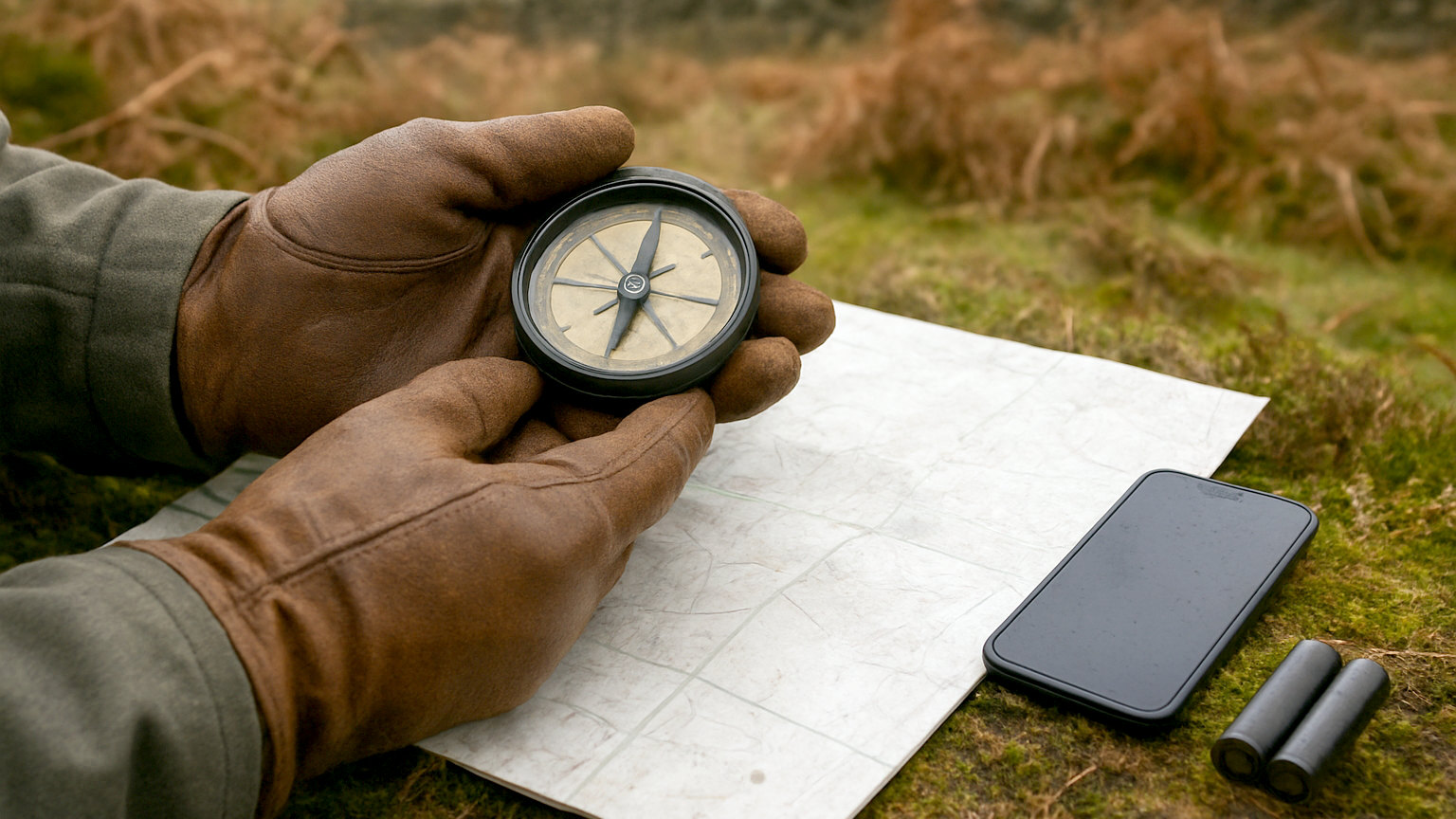
A paper map of the area and a baseplate compass, together weighing under two hundred grams, plus a power bank and cable. The map and compass have no failure mode that arrives suddenly. The power bank turns a dead phone into a working one, which matters because your phone is also how you call for help. Keep the paper map somewhere accessible and waterproof rather than at the bottom of the pack.
How should you actually use the phone?
As a position check and a record, with the paper map as your primary picture. Navigate by map and compass, glance at the phone to confirm, and you get the reliability of one and the precision of the other. This habit also keeps your paper skills alive, which matters because a skill you never use is not available when you suddenly need it.
What about calling for help?
Save the battery for it. Put the phone in flight mode or low power mode when not needed, since searching for signal is a major drain. Register for emergency SMS by texting the word register to 999 before you go, which allows a text to reach the emergency services where a call will not connect. Knowing your grid reference or having the OS Locate or what3words apps installed speeds up a rescue considerably.
What about dedicated GPS units?
They solve some of these problems and not others. Handheld units take replaceable AA batteries, which can be swapped in the field and perform better in cold than sealed lithium packs, and they use physical buttons that work with gloves and in rain. They are also built to be dropped. What they do not solve is the underlying dependence on a battery powered device, so the same argument for carrying a paper backup applies equally.
Use the phone, do not depend on it, and carry the two hundred grams that keep working when it stops.