A bearing tells you which way to go and nothing about when to stop. Pacing and timing supply the missing half, and together with a compass bearing they allow accurate navigation across ground where you can see almost nothing.
What is a pace count?
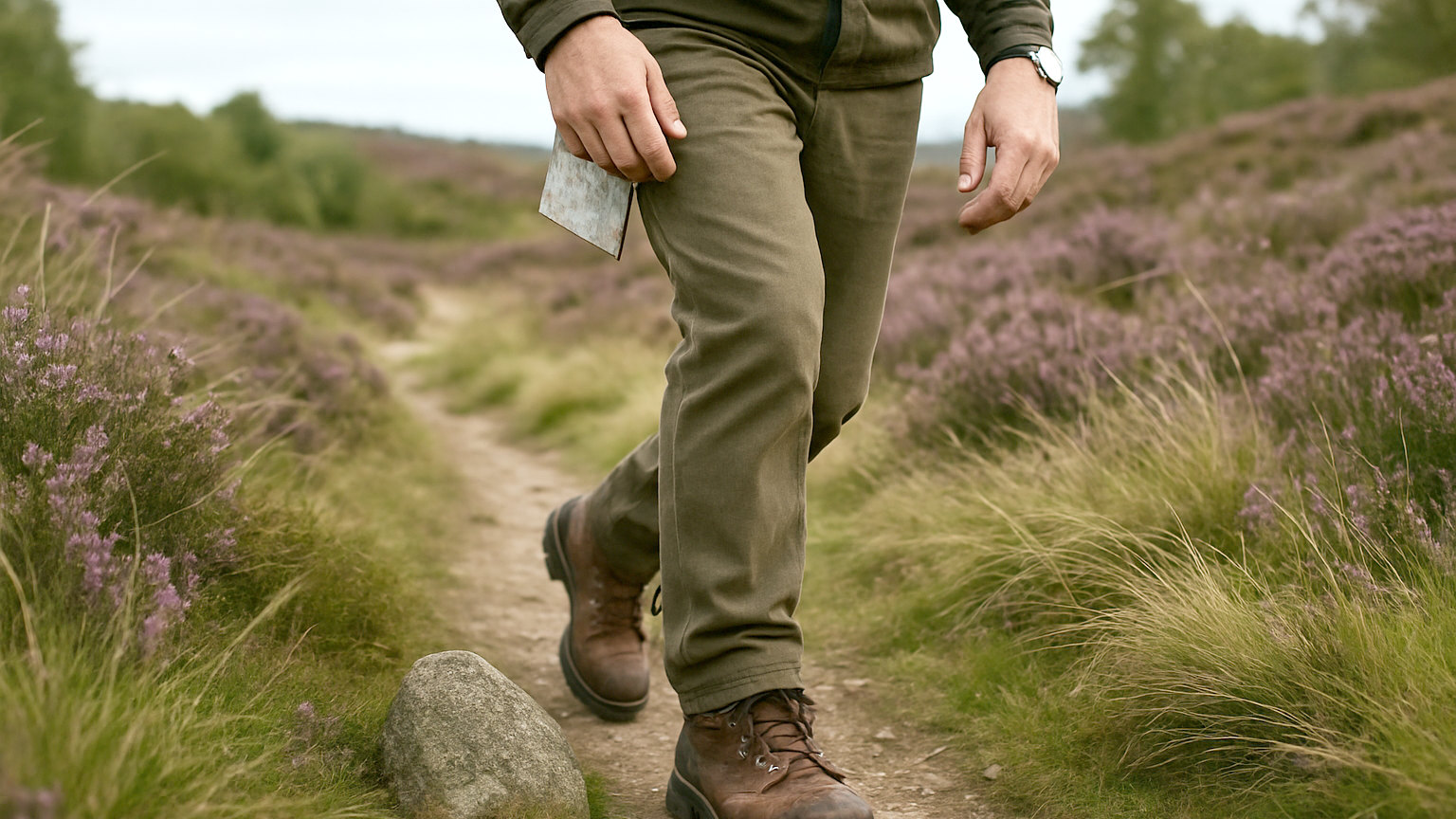
The number of double paces you personally take to cover one hundred metres. A double pace is counted every time the same foot lands, which halves the counting and reduces errors. For most adults the figure falls between sixty and seventy on level ground, but it is individual and must be measured rather than assumed. Walk a measured hundred metres several times, average the result, and write the number on your compass or map case.
How does terrain change it?
Considerably, and this is where people go wrong. Uphill shortens your stride and increases the count, sometimes by ten or more. Downhill lengthens it and reduces the count. Deep heather, bog, snow, scree and strong wind all shorten stride. Carrying a heavy pack shortens it further. Experienced navigators carry two or three counts for different conditions, or simply apply a rough adjustment and accept the resulting uncertainty.
- Count double paces, one per landing of the same foot
- Measure your own count over a known hundred metres
- Increase the count uphill, in deep vegetation and in snow
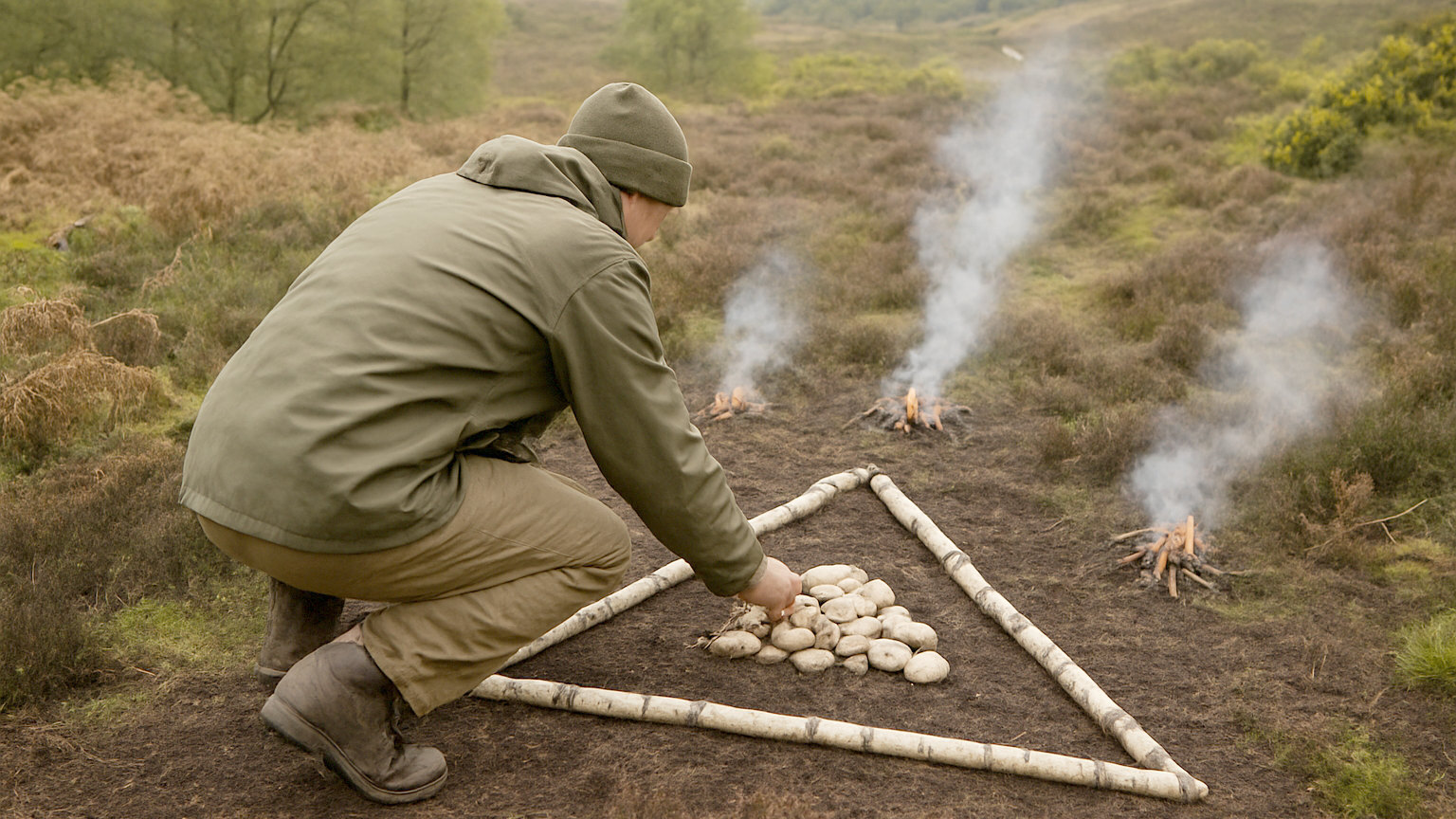
- Use a tally of pebbles or a ranger bead cord to track hundreds
- Reset the count at every leg of a route, never accumulate
How do you keep track over distance?
Not in your head, because conversation, wind and effort all destroy a running total. Use ranger beads, a knotted cord where you slide one bead per hundred metres, or move a small stone from one pocket to another. Both methods survive interruption. Break the route into short legs of a few hundred metres between identifiable points rather than pacing a full kilometre, since errors compound and a shorter leg limits how far wrong you can be.
What is Naismith rule?
A simple formula for estimating journey time on foot: allow one hour for every five kilometres of horizontal distance, plus one minute for every ten metres of ascent. A four kilometre walk with three hundred metres of climb therefore takes roughly forty eight minutes plus thirty minutes, so about one hour twenty. It assumes reasonable fitness, good conditions and no stops, so it is a baseline rather than a promise.
How should you adjust it?
Downward for almost everything real. Rough ground, poor visibility, heavy packs, groups, tiredness and navigation stops all slow progress, and many walkers work on four kilometres per hour rather than five. Add time for descent on steep ground, which Naismith ignores but which is slow and hard on the legs. The practical approach is to apply the rule, then add a proportion based on how your group actually performs, learned by comparing estimates with reality on easy days.
When does timing beat pacing?
Over longer distances and on rough ground where counting becomes tedious and error prone. Timing needs only a watch and a known speed, and it works while you are concentrating on footing. Pacing is more accurate over short distances and is the better tool for the final few hundred metres onto a small target. Most navigators use both, timing between features and pacing for the last leg.
Why does this matter if you have GPS?
Because it costs nothing and fails at nothing. It also keeps you engaged with the ground rather than the screen, which means you notice when something does not match. Anyone who has paced two hundred metres to a wall that should have been there and found nothing knows immediately that something is wrong, which is information a position dot does not give you.
Measure your pace count once, write it down, and you have a distance measuring tool that works in cloud, at night and on a dead battery.