Berries are among the most approachable wild foods and among the most commonly misidentified, particularly by children. A handful of species are genuinely straightforward, and the rest deserve real caution.
Is there a reliable colour rule?
No, and the widely repeated versions are actively dangerous. The rule that red means danger fails because rosehips, rowan and hawthorn are all red and usable, while deadly nightshade and elderberries are black. The rule that white and yellow are toxic is closer to true and still unreliable. Every species must be known individually, and any rule offering a shortcut around that is a rule to distrust.
Which are the safe starting points?
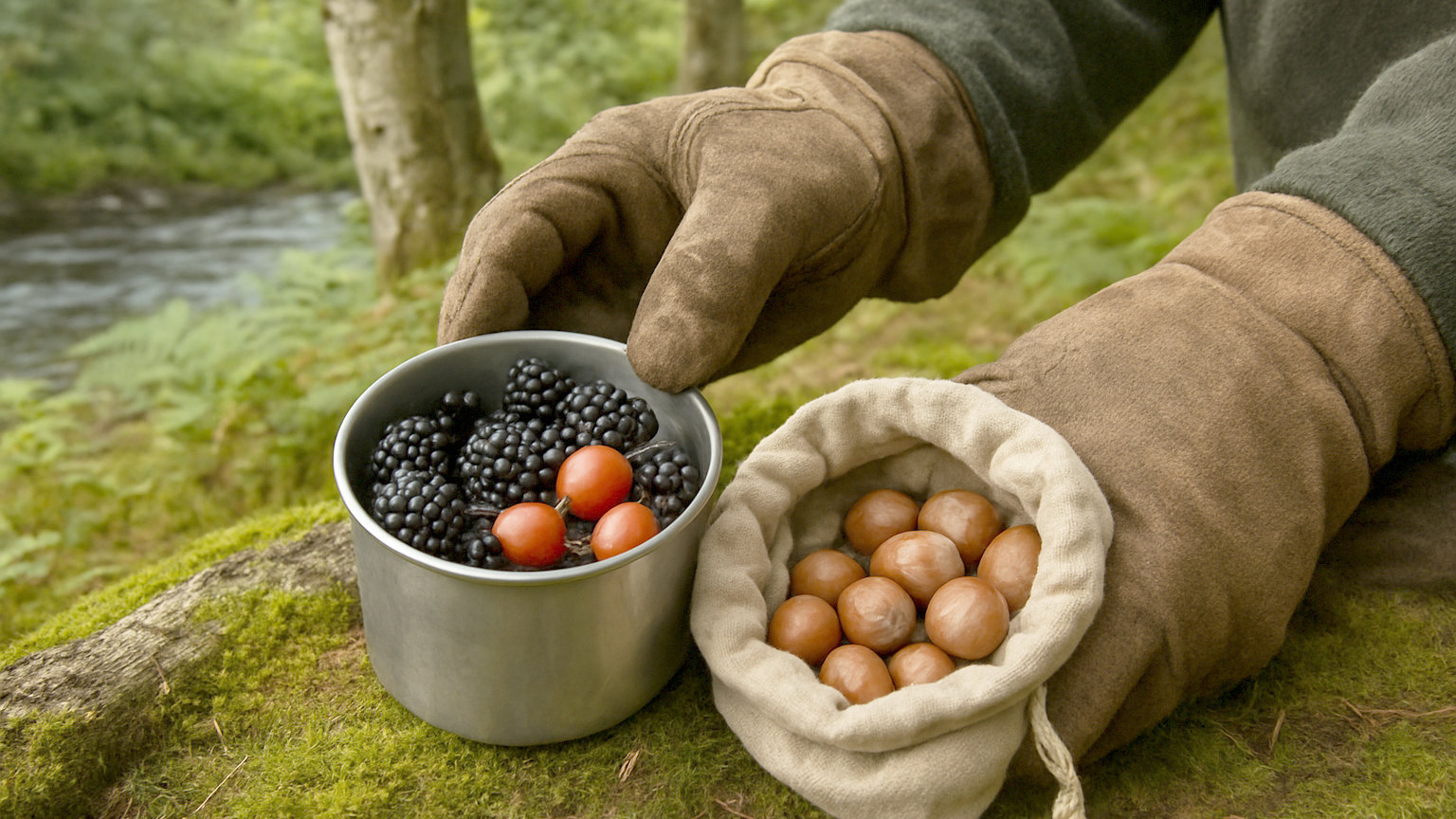
Blackberries above all, being abundant, unmistakable and free of dangerous lookalikes. Wild raspberries and wild strawberries are equally recognisable where they occur. Bilberries, found on upland heath and moorland, are small, dark blue and excellent. These four can be learned in an afternoon and gathered with confidence, which makes them the sensible foundation for anyone starting out.
- Blackberry, raspberry, wild strawberry and bilberry, safe raw
- Elderberry, sloe, rowan, haw and rosehip, only after cooking
- Deadly nightshade, glossy black, extremely toxic
- Woody nightshade, red and egg shaped, toxic
- Yew arils, red and fleshy with a highly toxic seed
- Lords and ladies, dense spike of orange red berries, toxic
- Spindle and black bryony, both toxic
Which need cooking before eating?
Several of the most common. Elderberries cause vomiting and diarrhoea raw and are fine cooked. Rowan berries are harsh and mildly toxic raw, and make good jelly cooked. Haws from hawthorn are edible raw but dry and unrewarding, and better cooked. Sloes are astringent enough to be unpleasant raw and are traditionally used for flavouring after frost. Rosehips must be strained to remove the irritant hairs around the seeds.
Which is the most dangerous?
Deadly nightshade, without question. The berries are glossy, black, about the size of a cherry and, unusually for a toxic plant, sweet tasting, which removes the natural deterrent. A very small number can kill a child. It grows on chalky soil, in woodland edges and on disturbed ground, with dull purple bell shaped flowers earlier in the year. Anyone foraging with children should be able to recognise it on sight.
How do you tell elderberry from anything harmful?
By working from the whole plant rather than the fruit. Elder is a shrub or small tree with compound leaves of five to seven leaflets, and the berries hang in broad flat topped clusters on distinctly red stalks. Learning it in flower during May and June, when the creamy flat flower heads are unmistakable, and then returning to the same plant in autumn is the most reliable approach and removes almost all doubt.
What about berries and children?
Teach the rule that nothing goes in the mouth without an adult confirming it, and teach recognition of deadly nightshade specifically. Most serious berry poisonings in Britain involve young children eating something attractive in a garden or hedgerow. Yew is particularly worth pointing out, since it is common in churchyards and gardens and the red arils look appealing.
What should you do if someone eats an unknown berry?
Contact 111 for advice, or 999 if there are severe symptoms such as breathing difficulty, drowsiness, seizures or collapse. Keep a sample or photograph of the plant, including leaves and how the berries are arranged, since that guides treatment. Do not induce vomiting. Note the time and quantity, and seek advice even if the person seems well, because some effects are delayed.
Why pick blackberries before late autumn?
Folklore holds that blackberries should not be picked after Michaelmas at the end of September, and there is a practical basis behind the superstition. Later in the season, wetter weather and falling temperatures encourage moulds and fungal growth on the fruit, and berries become watery and sour as the plant winds down. Rather than a fixed date, judge by the fruit: firm, glossy and sweet is worth picking, while dull, soft or visibly mouldy is not.
Learn four safe berries thoroughly, learn deadly nightshade and yew on sight, and cook anything on the second list without exception.