Autumn is the only season in which British foraging delivers meaningful energy. Nuts and fruit contain real calories, most are straightforward to identify, and the harvest is abundant enough to be worth planning around.
What is the most rewarding autumn harvest?
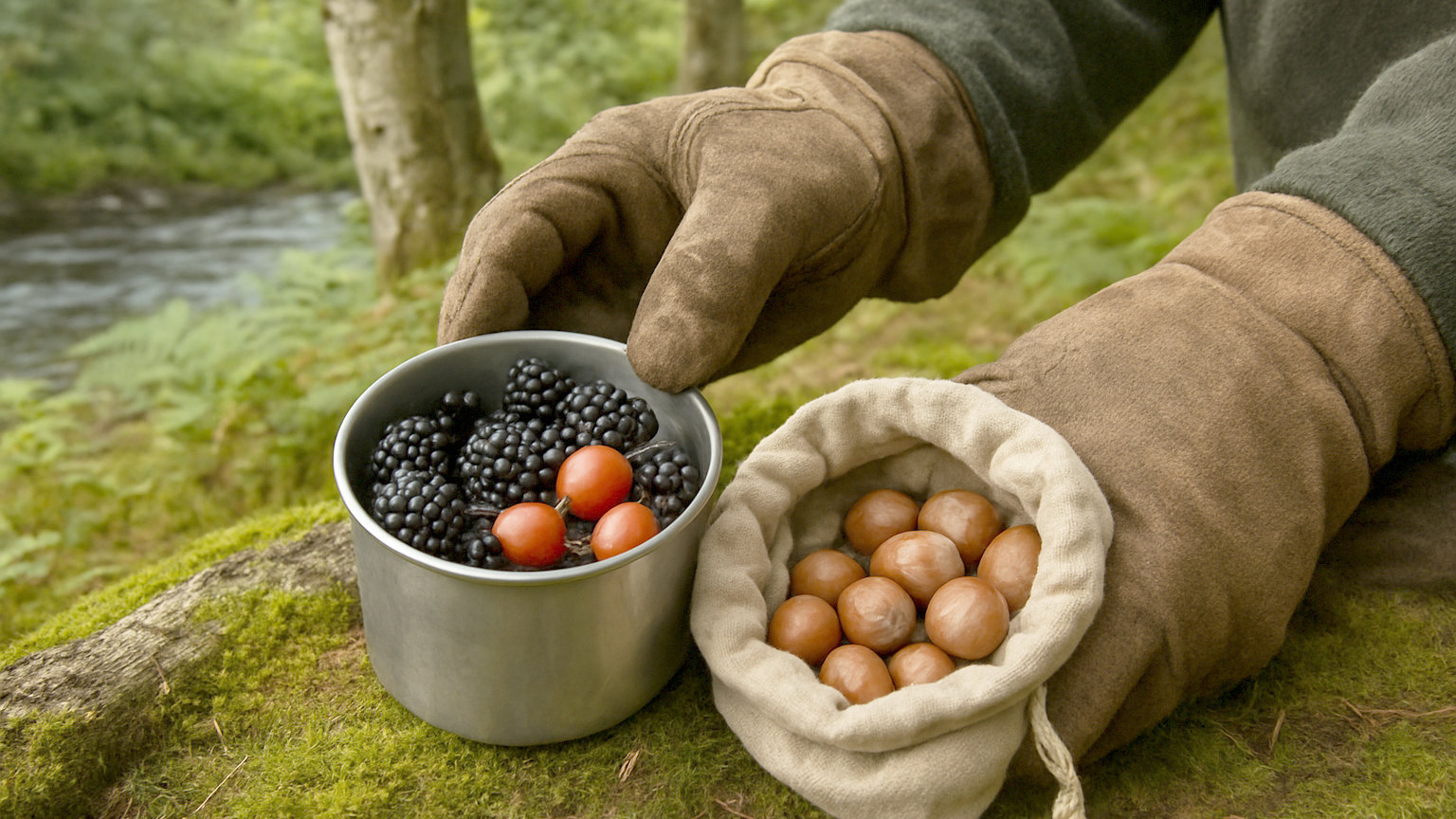
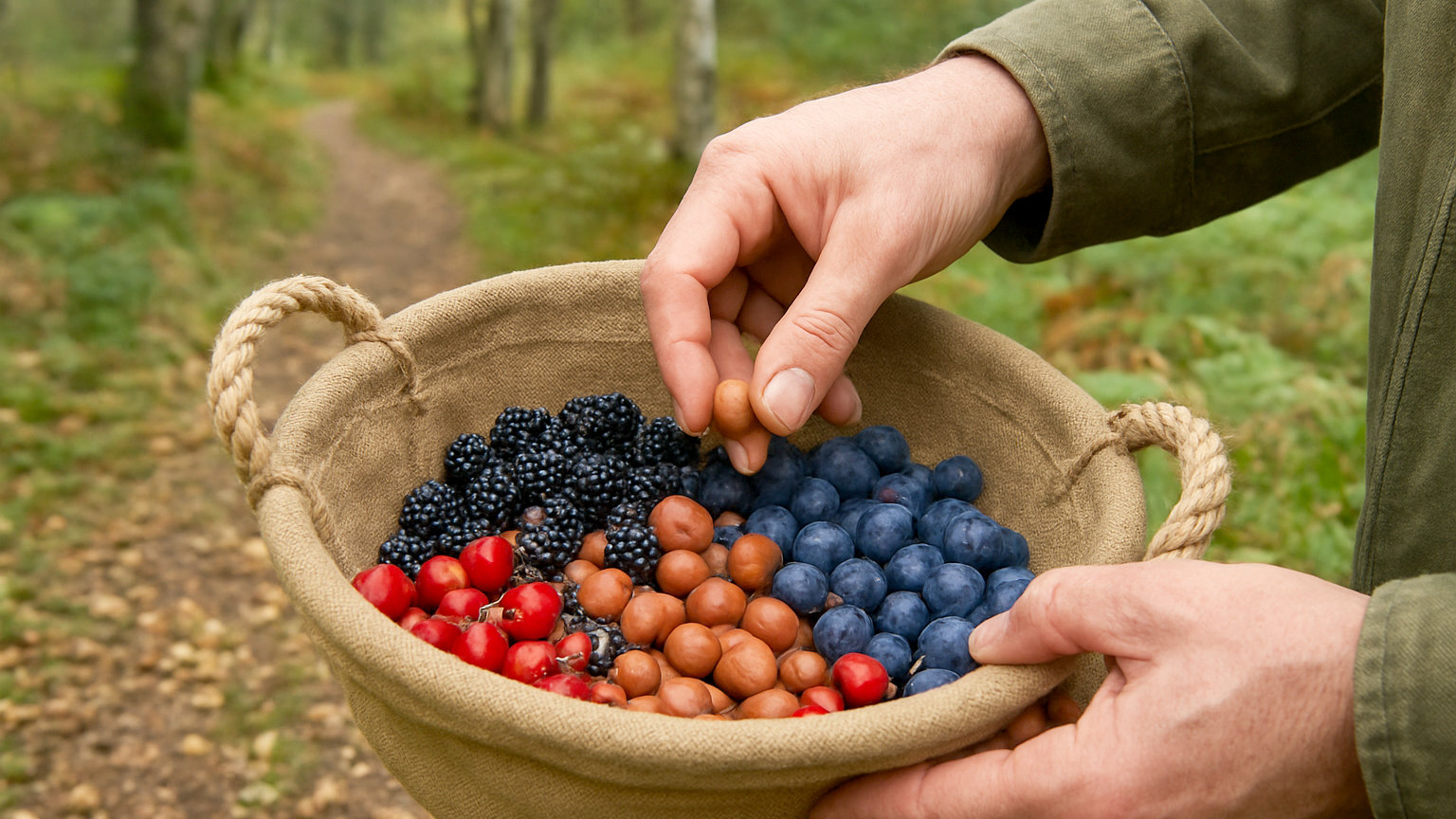
Blackberries, which are abundant, unmistakable and available from late July through October. There is no dangerous lookalike, they need no processing, and they are among the very few wild foods that can be gathered in quantity quickly. Pick away from busy roads and above dog height, and take the plumper berries at the tip of each cluster first, which ripen earliest and taste best.
Are nuts worth gathering?
More than anything else, energetically. Hazelnuts, sweet chestnuts, walnuts and beech mast all contain substantial fat and protein, which almost nothing else in the British countryside offers. Hazelnuts ripen in September and are easy to identify by their leaf and husk. Sweet chestnuts, distinguishable from inedible horse chestnuts by their long thin spines and pointed nuts, are excellent roasted. The competition from squirrels is fierce, so timing matters considerably.
- Blackberries, from late summer into October
- Hazelnuts and sweet chestnuts, September onward
- Elderberries, always cooked, never raw
- Rosehips, after the first frost, for syrup
- Sloes from blackthorn, bitter raw, used for flavouring
- Crab apples, hawthorn haws and rowan berries, all cooked
Why must elderberries be cooked?
Because raw elderberries, along with the leaves, bark and stems, contain compounds that release cyanide and cause nausea, vomiting and diarrhoea. Cooking destroys them. Strip the berries from the stalks, discard every trace of green stem, and cook thoroughly before use. Cooked elderberries make excellent cordial and preserves, and this is a good example of a common wild food that is safe only with correct preparation.
What are rosehips good for?
Vitamin C, in remarkable quantity, several times that of citrus by weight. They are best picked after the first frost, which softens them. The important preparation detail is straining, because the seeds are surrounded by fine irritant hairs that cause considerable digestive discomfort if swallowed. Rosehip syrup made properly is worth the trouble and was produced at national scale in Britain during wartime for exactly this reason.
Which autumn berries should you avoid?
Deadly nightshade, glossy black and dangerously sweet, which has killed children. Woody nightshade, with red egg shaped berries. Yew, whose red arils surround a highly toxic seed. Lords and ladies, an unmistakable spike of orange red berries. Black bryony and spindle. The rule sometimes taught that red berries are safe is simply false, and each species must be known individually.
What about mushrooms?
Autumn is peak fungus season and it is the area of foraging where beginners should be most cautious. The margin between excellent eating and fatal poisoning is narrower than anywhere else, and several deadly species resemble common edible ones. Anyone wanting to forage fungi should learn with an experienced guide over several seasons rather than from books or apps, and should start by learning the deadly species thoroughly.
How should you preserve what you gather?
Autumn gluts arrive faster than they can be eaten. Freezing works for most berries and is the simplest option. Drying suits rosehips, haws and mushrooms and needs only warmth and airflow. Making cordials, jellies and preserves converts a short season into something usable through winter, which is the traditional purpose of the whole exercise and the reason autumn foraging fits well with wider preparedness.
How do you tell sweet from horse chestnuts?
By the husk and the nut, and the distinction matters because horse chestnuts are mildly toxic and thoroughly unpleasant. Sweet chestnut husks are covered in dense fine spines like a hedgehog and split to reveal two or three flattened nuts with a pointed tip and a small tassel. Horse chestnut cases have sparse thick blunt spikes and contain a single round glossy conker with no point. The leaves differ too, sweet chestnut being long and toothed while horse chestnut has the familiar fan of leaflets.
Concentrate on blackberries and nuts for calories, cook elderberries without exception, and treat fungi as a separate discipline requiring separate training.