The British coast offers some of the most abundant and accessible wild food available, along with two specific hazards that have nothing to do with identification: water quality and the tide.
Why is seaweed a good place to start?
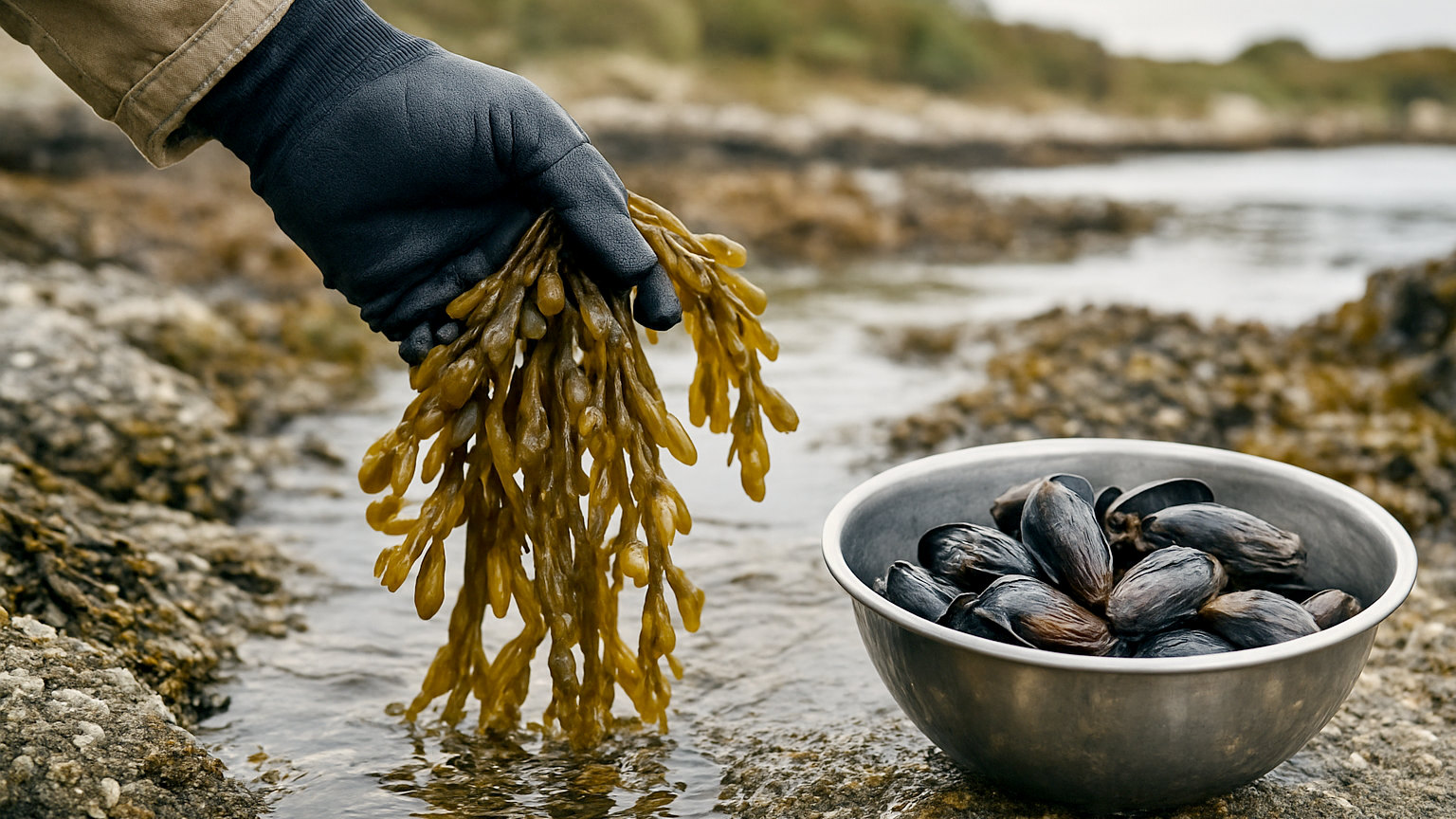
Because there are no deadly seaweeds in British waters. Some are unpalatable and some are tough, and none will kill you, which makes it almost unique among wild food categories. Common species such as kelp, dulse, sea lettuce, laver and bladderwrack are all usable. The identification stakes are therefore low, and the main considerations are which species tastes good and where it was growing.
How should you harvest seaweed?
Cut it from the growing plant rather than collecting anything loose on the beach, since detached weed begins decomposing quickly and may have travelled from anywhere. Use scissors and take the upper portion, leaving the holdfast and enough of the frond for it to regrow. Harvest from clean flowing water away from outfalls, harbours and river mouths, and rinse thoroughly in clean seawater. Avoid areas near sewage discharge points, which are mapped by the relevant environment agency.
- Cut attached seaweed rather than collecting beach cast material
- Harvest away from harbours, outfalls and river mouths
- Check water quality classifications before collecting shellfish
- Avoid bivalves entirely during algal bloom warnings
- Check tide times and identify your escape route first
- Never collect from a shore you have not checked for access rights
Why are shellfish riskier?
Because filter feeders concentrate whatever is in the water. Mussels, cockles, oysters and clams filter large volumes and accumulate bacteria, viruses and naturally occurring algal biotoxins. Those biotoxins cause paralytic, diarrhetic and amnesic shellfish poisoning, none of which is destroyed by cooking and some of which can be fatal. The shellfish itself looks and smells entirely normal, so there is no way to detect the problem before eating.
How do you reduce that risk?
By checking rather than judging. Local authorities and the Food Standards Agency classify commercial shellfish waters, and that information indicates general water quality in an area. Avoid collecting after heavy rain, when runoff and sewage overflow contaminate coastal water, and avoid any period when algal bloom warnings are in force. Many experienced coastal foragers avoid bivalves altogether and concentrate on seaweeds and on species that are less prone to accumulation.
What else grows on the shore?
Several excellent plants. Sea beet, the wild ancestor of chard and beetroot, grows along the strandline and is one of the best wild greens in Britain. Marsh samphire appears on saltmarsh in summer. Sea kale, rock samphire and sea purslane all occur, though sea kale is scarce and legally protected in places. As with any foraging, identification still matters, and the carrot family is represented on the coast by rock samphire and by less desirable relatives.
What are the physical dangers?
Tidal cut off is the serious one. Foragers concentrate on the ground in front of them, work outward as the tide falls, and lose track of the water behind them. Check the tide tables before going, note the time of low water, set an alarm, and identify your route back before you start. Slippery rock, unstable ledges and being caught by waves on exposed shores account for the remainder.
Do you need permission?
Often yes, and the position varies. Much of the foreshore is owned by the Crown Estate, and collecting for personal use is generally tolerated, but many areas are managed as nature reserves or Sites of Special Scientific Interest with byelaws restricting collection. Some shellfish beds are privately leased. Check locally before harvesting anything, particularly in quantity.
What should you know about razor clams and lugworm?
Chiefly that the methods used to collect them are frequently restricted. Pouring salt to bring razor clams to the surface is prohibited in many areas and can be an offence, and bait digging is regulated on numerous shores because of the damage it causes to habitat and to feeding birds. Local byelaws vary considerably along the coast, and several popular stretches have specific restrictions in force. Check with the local authority or inshore fisheries authority before collecting rather than afterwards.
Seaweed and shore plants are a good place to start, bivalves deserve real caution, and the tide deserves more attention than either.