Ramsons, usually called wild garlic, is abundant, delicious and one of the most popular wild foods in Britain. It is also involved in a steady trickle of poisoning cases every spring, because three toxic plants share its habitat and season. This is background for proper study, not an identification key.
What are you actually looking for?
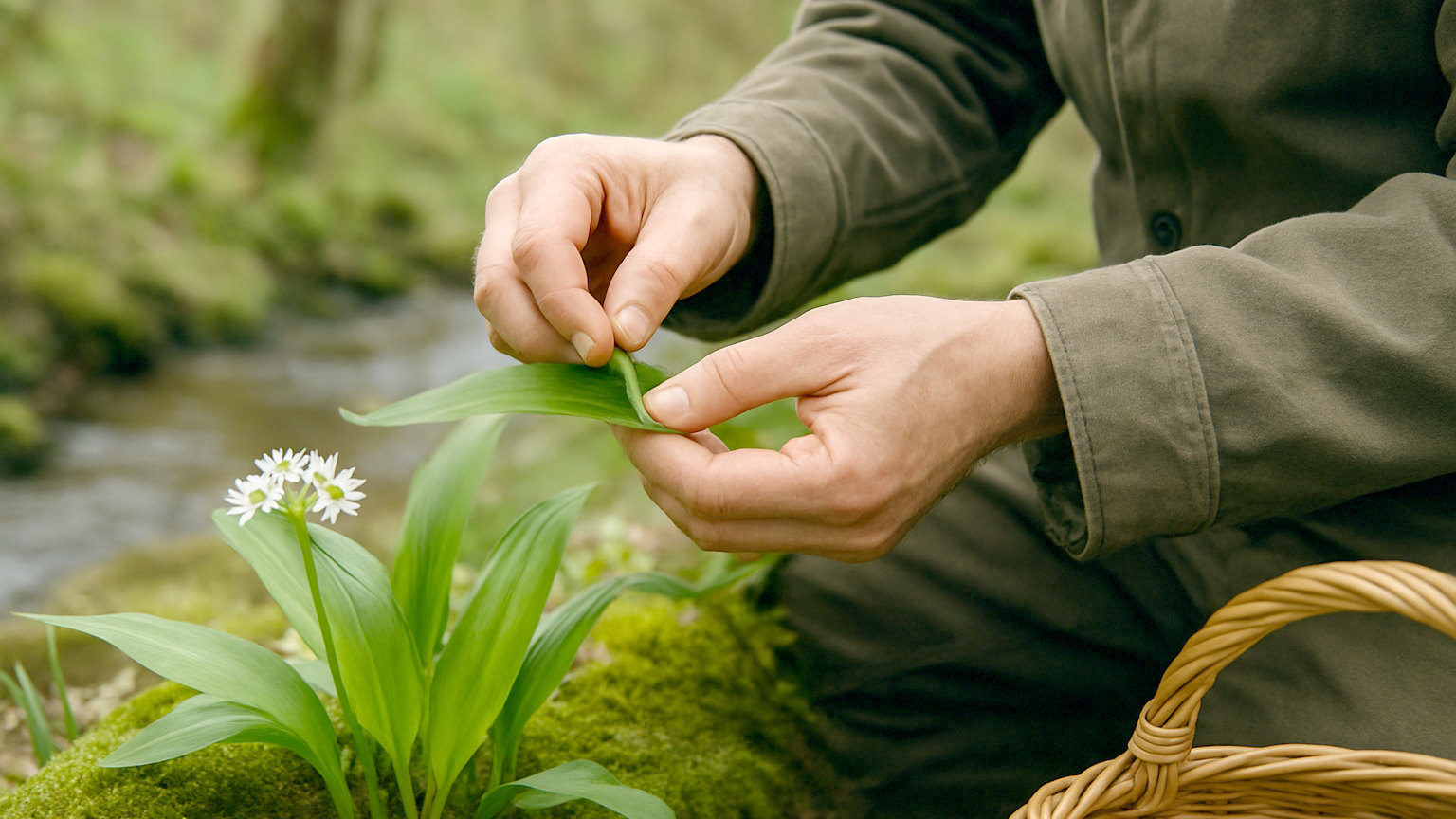
Broad, pointed, oval leaves emerging singly from the ground on their own stalk, in damp deciduous woodland, usually in large carpets. From April the plants produce distinctive spherical clusters of small white star shaped flowers. The whole plant smells strongly and unmistakably of garlic when crushed. It typically appears from late February and dies back by early summer.
Which plants is it confused with?
Three, all seriously toxic. Lords and ladies has arrow shaped leaves, often with dark blotches, and causes immediate severe burning and swelling of the mouth and throat. Lily of the valley has paired leaves emerging from a single sheath and is cardiotoxic. Autumn crocus, which despite the name produces leaves in spring, is highly poisonous and has caused fatalities in people who mistook it for ramsons. All three grow in similar woodland and all three overlap in season.
- Crush each individual leaf and smell it in your own hand
- Check the leaf shape, since lords and ladies is arrow shaped
- Check how leaves emerge, singly rather than paired from a sheath
- Pick one leaf at a time rather than grabbing a handful
- Do not rely on the smell of the patch as a whole
- If any leaf in your hand is not clearly garlic scented, discard everything
Why is the smell test not enough on its own?
Because a patch of ramsons scents the air and everything in it. A toxic leaf growing among wild garlic, or picked up in a handful with wild garlic, will smell of garlic simply from contact, and hands that have already crushed ramsons will make anything smell right. This is the mechanism behind most poisoning cases: the forager did smell the leaves, and the smell came from the wrong source. Crush each leaf individually with clean hands to make the test meaningful.
What is the most dangerous mistake?
Grabbing handfuls. Ramsons grow densely and the temptation is to gather by the fistful, which is precisely how a lily of the valley or autumn crocus leaf ends up in the bag unexamined. Picking leaf by leaf feels slow and is the entire safety margin. It also produces a cleaner harvest with less grass and debris.
Does it get safer later in the season?
Considerably, once flowering begins. The spherical white flower heads of ramsons are unmistakable and none of the toxic lookalikes resembles them, so a patch in full flower can be identified with confidence. Beginners are well advised to find and mark a patch when it is flowering, then return to that known location in subsequent years when the leaves first emerge.
What can you do with it?
Leaves work raw in salads, wilted like spinach, blended into pesto or preserved in oil. The flowers are edible and decorative. The unopened flower buds can be pickled and are excellent. The bulbs are also edible, and digging them up is both damaging to the colony and unlawful without the landowner permission, so leaves and flowers are the sensible harvest.
How should you pick sustainably?
A few leaves from many plants rather than stripping any one, and never more than a small proportion of a patch. Ramsons spread slowly and a heavily harvested colony takes years to recover. Take only what you will use within a few days, since the leaves wilt quickly and lose their flavour, and leave flowering plants to set seed.
Is few flowered leek the same thing?
No, and it is worth knowing about. Few flowered leek is a non native relative that has spread aggressively through British woodland, producing narrower leaves, drooping white flowers and small bulbils. It is edible and smells of garlic, so mistaking it for ramsons is not dangerous. It is, however, an invasive species that displaces native woodland flora, and it is an offence to plant it or cause it to grow in the wild. Foraging it enthusiastically is one of the few situations where taking more rather than less is welcomed.
Pick one leaf at a time, crush and smell each in a clean hand, and learn the three toxic lookalikes before you pick anything at all.