Foraging in Britain is enjoyable, legal in most places and genuinely useful. It is also the survival skill with the highest potential to injure or kill someone who gets it wrong, and almost every serious case comes down to the same handful of errors.
What is the single most important rule?
If you are not completely certain, do not eat it. Not fairly sure, not confident, not it matches the picture. Certainty means you can name the species, you know its poisonous lookalikes, and you have checked the features that distinguish them. Anything short of that is a guess, and the consequences of guessing range from an unpleasant evening to organ failure. Nothing you can forage is worth eating on a maybe.
Why is learning a few species better than many?
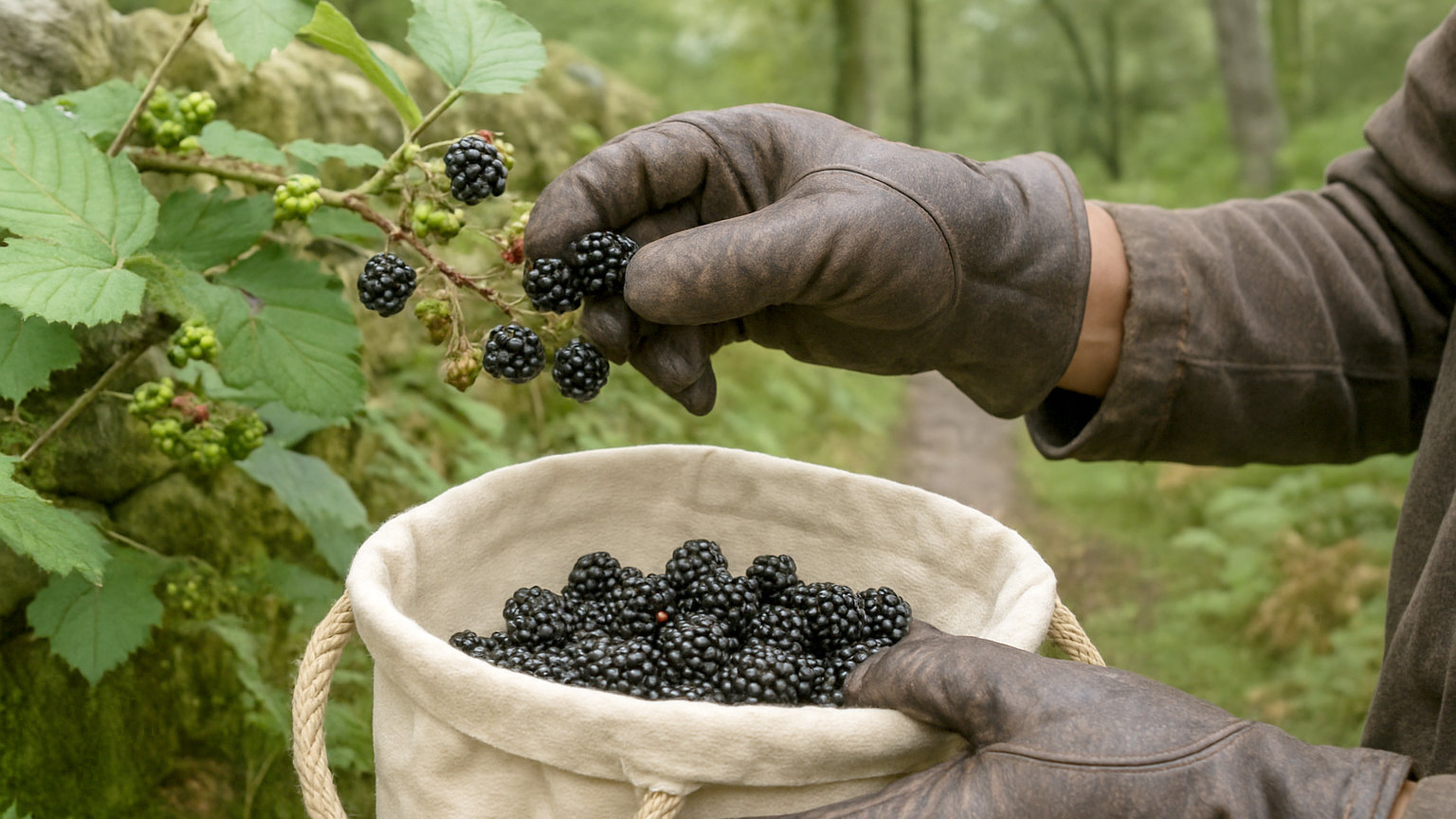
Because depth beats breadth for safety. Knowing five plants thoroughly, including every dangerous species they could be confused with, is far safer than half recognising fifty. Experienced foragers typically work from a small confident core and add species slowly, one at a time, over seasons. Start with things that have no dangerous lookalikes at all, such as blackberries, nettles, elderflower and rosehips, and build outward from there.
- If in any doubt, leave it alone entirely
- Learn the dangerous species before the edible ones
- Use several identification features, never a single one
- Cross check with at least two reliable regional guides
- Never eat anything identified only from an app or a photograph
- Try a small quantity of anything new, even when correctly identified
Why learn the poisonous plants first?
Because it inverts the risk. Someone who can reliably recognise hemlock water dropwort, hemlock, monkshood, deadly nightshade and lords and ladies has eliminated the plants most likely to kill them, and can then forage the remainder with far more confidence. Learning what to avoid is a smaller task than learning what to eat, and it protects you even when you misidentify something harmless.
Are identification apps reliable?
Not reliably enough to eat from. They are genuinely useful for narrowing possibilities and for learning, and they misidentify often enough that no serious forager treats their output as confirmation. Photographs lose scale, smell, texture, stem cross section and habitat, all of which matter. Use an app to generate a candidate, then confirm it properly against a good regional field guide and, ideally, against someone who knows the species.
Why try a small amount first?
Because individual reactions vary even to correctly identified edible species. Some people react badly to plants most tolerate perfectly well, and allergies to wild foods are not rare. Having established identity beyond doubt, eat a small portion, wait several hours, and only then eat more. This does not protect against misidentification and should never be confused with a test of edibility.
How should you actually learn?
With a person, ideally. A day with a knowledgeable forager teaches more than a season of reading, because identification is a sensory skill involving smell, texture and habitat that photographs convey poorly. Local wildlife trusts, foraging courses and botanical societies all run walks. Failing that, work through one species at a time with two field guides, and return to the same plant across a full year to see it at every stage.
What should you never forage?
Anything from beside busy roads, industrial land, sprayed field margins, or at dog height along popular paths. Anything from land where you do not have permission, or from sites protected as reserves or Sites of Special Scientific Interest. And, for anyone without substantial experience, fungi, which have the narrowest margin between excellent eating and fatal poisoning of anything in the British countryside.
Does cooking make anything safe?
Sometimes, and never as a general rule. Cooking destroys the compounds that make elderberries and rowan unpleasant, and it neutralises the sting in nettles. It does nothing whatever to the amatoxins in a death cap, which survive cooking, drying and freezing intact, and it does not help with most alkaloid plant poisons either. Cooking is a preparation step for specific species where the requirement is known, not a safety net for anything you are unsure about.
Learn the dangerous species, forage a small confident list, and treat any uncertainty as a decisive answer rather than a problem to reason around.