Foraging needs remarkably little equipment, and the temptation to buy a specialist kit is worth resisting. The things that make a difference are mostly about carrying the harvest well and identifying it properly.
What should you carry the harvest in?
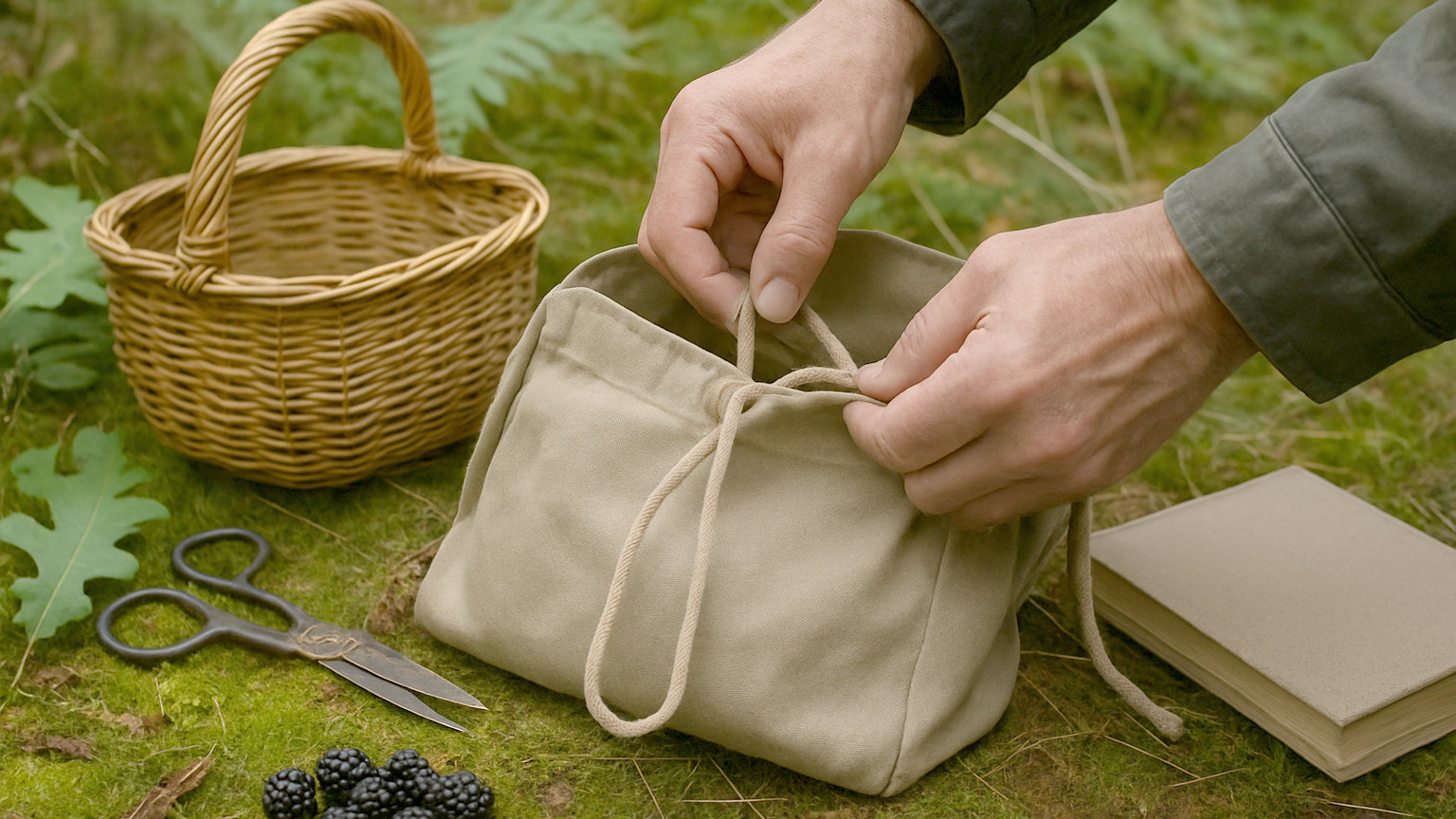
A basket or a cloth bag, not a plastic one. Wild greens and fungi sweat in plastic and deteriorate within an hour, arriving home limp and sometimes slimy. An open basket allows air circulation and, for fungi, lets spores fall through as you walk. Paper bags work well for keeping different species separate, which matters both for identification and so that one misidentified specimen does not contaminate the rest.
Is a knife necessary?
Useful rather than essential, and it comes with legal considerations. A small folding knife with a blade under three inches that is not lock knife can generally be carried without needing to justify it. Anything larger, or any locking or fixed blade, requires good reason in a public place, and foraging on land where you have permission is a good reason while general possession is not. Scissors are frequently more useful than a knife for cutting herbs and seaweed cleanly.
- A basket or cloth bag, never plastic
- Paper bags for keeping species separate
- Scissors or a small folding knife
- Two regional field guides for cross checking
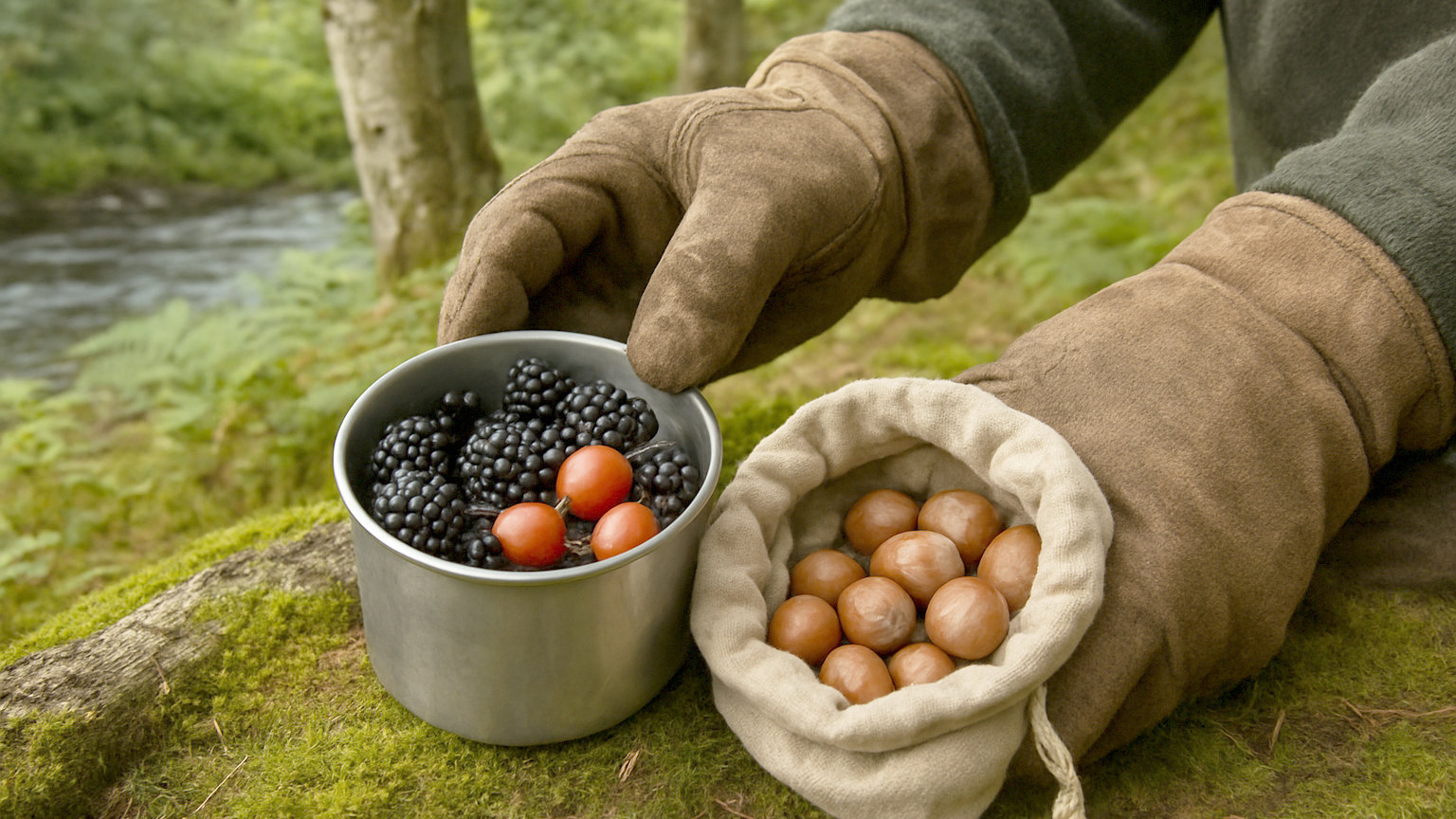
- Gloves for nettles, brambles and unknown plants
- A brush for cleaning fungi in the field
Which field guides are worth having?
At least two covering your region, from established publishers, ideally one arranged by species and one arranged by habitat or season. Cross checking between guides catches errors and builds understanding, since each will emphasise different distinguishing features. Regional matters, because a guide written for continental Europe or North America will include species that do not occur here and omit ones that do. A dedicated guide for fungi is separate and essential if you intend to go in that direction.
Do you need an app?
They help with learning and should never confirm an identification. Photograph what you find, use the app to generate candidates, then verify properly against your guides and against the features the photograph cannot show. A notebook or a photo record of what you found, where and when is genuinely valuable over time, since foraging is largely about knowing your own patch through the seasons.
What should you wear?
Long sleeves, long trousers and boots, chiefly for brambles, nettles and ticks. Tick borne illness is a real and increasing risk in Britain, particularly in bracken and long grass where deer are present, so tuck trousers into socks, use repellent, and check yourself afterwards. Gloves are worth carrying for nettles and for handling plants you are not certain about, since a few species cause skin reactions on contact.
What about processing at home?
A colander, a salad spinner and space to spread things out cover most needs. Wild greens carry more grit, insects and debris than shop produce and benefit from soaking and thorough rinsing. A dehydrator or simply a warm airing cupboard handles drying. Beyond that, ordinary kitchen equipment does everything required, and the specialist gear sold for foraging is largely unnecessary.
What matters most?
Knowledge, by a wide margin. The forager with two good guides, a cloth bag and five species learned properly is far better equipped than one with a full kit and an app. Spending money on a course rather than on equipment produces a much better return, because the constraint on safe foraging is always identification rather than tools.
How should you store what you bring home?
Quickly and separately. Wild greens and fungi deteriorate far faster than shop produce, since they arrive warm, handled and often damp. Spread them out rather than leaving them heaped in a bag, refrigerate greens loosely wrapped in a damp cloth, and keep fungi in paper in a cool place. Keep anything you are still uncertain about physically apart from the rest, and label it, so that a doubtful specimen cannot end up in a pan alongside things you are confident of.
A basket, scissors, two field guides and long sleeves cover everything. Put the rest of the budget toward learning from someone who knows.