Getting a flame is the easy part. Keeping it is where most fires fail, usually within the first sixty seconds, and usually for a reason that was decided before anyone struck a spark. Diagnosing which reason applies saves your remaining tinder.
Is your kindling simply too big?
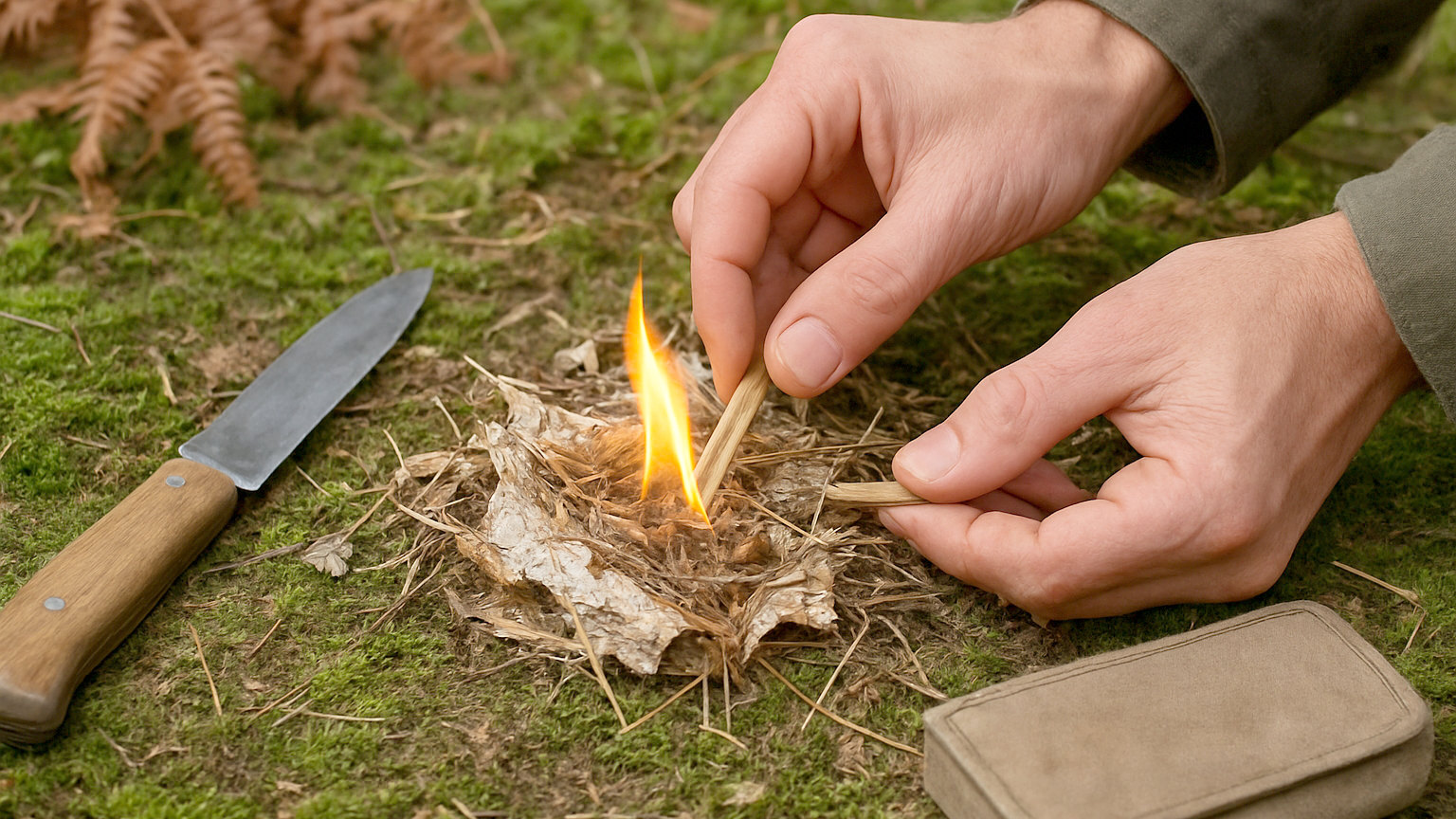
This is the most common fault by a wide margin. People go from tinder straight to finger thick sticks, and the flame cannot generate enough heat to raise that much wood to ignition temperature. You need a genuine ladder of sizes. Start with material as fine as a match, then double the thickness at each stage. Matchstick, then pencil, then thumb, then wrist. Skipping a rung kills more fires than damp weather does.
Have you starved it of air?
Fire needs oxygen drawn in at the base and heat rising through the fuel above. Piling wood on top of a struggling flame does both jobs badly, smothering it and blocking the draw. If your fire is smoking heavily and producing little flame, it is almost certainly short of air. Lift the structure slightly, open a gap on the windward side, and blow steadily at the base rather than into the middle. Long slow breaths work, sharp puffs scatter embers.
Is the ground taking your heat?
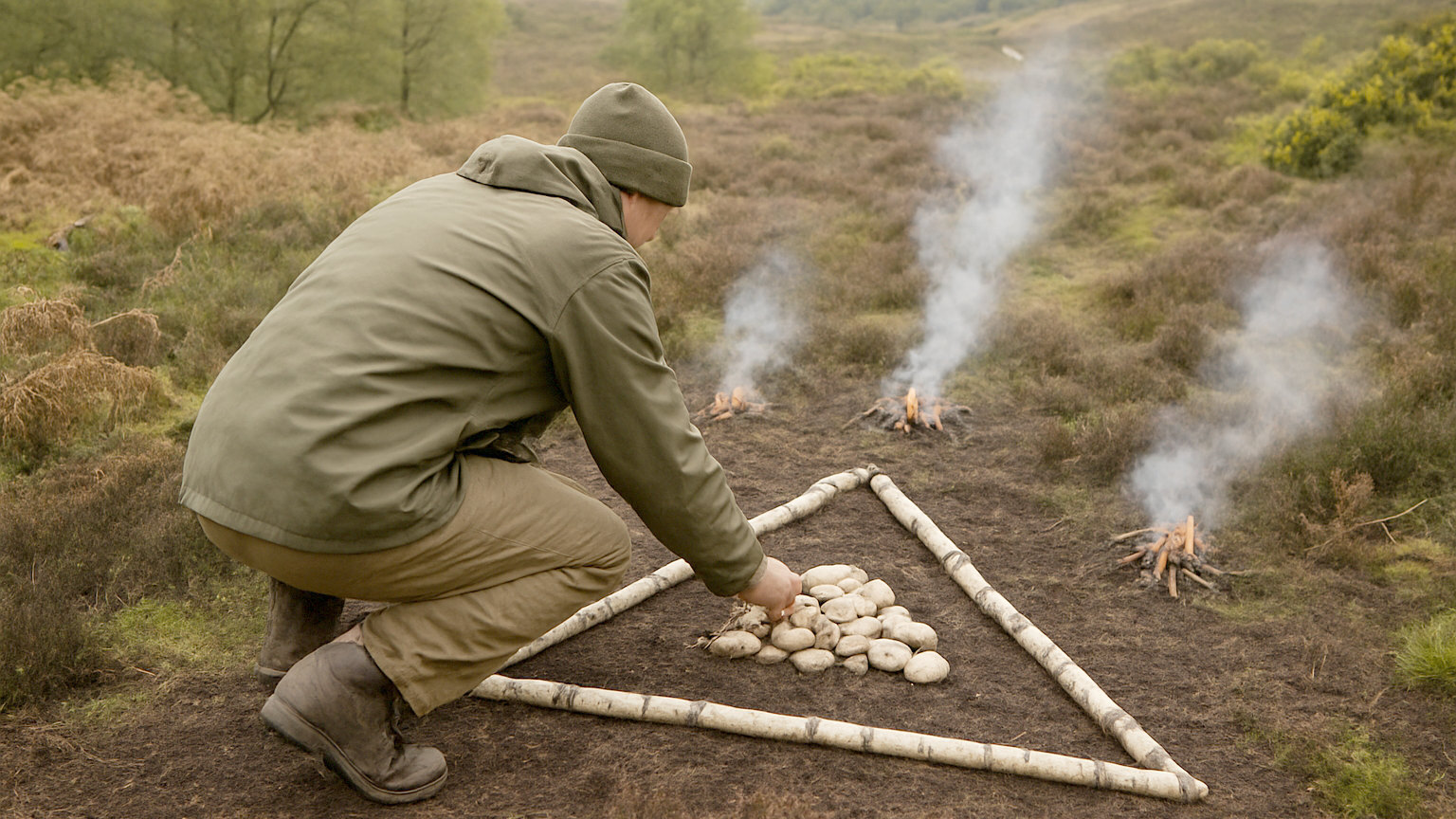
Cold wet ground is an enormous heat sink and it will quietly absorb everything a young fire produces. On saturated soil, snow or a peat moor, a fire built directly on the ground rarely survives. Build a platform first from dead branches laid side by side, a slab of bark, flat stones that are not river stones, or a bed of green wood. Raising the fire even a few centimetres out of the moisture routinely makes the difference between a fire that takes and one that does not.
- Kindling jumps too quickly from fine to thick
- Fuel piled on before the flame is established
- Fire built directly on wet or frozen ground
- Wood collected from the ground rather than standing dead
- Wind blowing heat away from the fuel above the flame
- Not enough material prepared before ignition
Where did your wood come from?
Wood lying on the ground has been absorbing moisture from the soil, often for months, and will be wet through even when the surface feels dry. Standing dead wood, still attached to a tree or leaning clear of the ground, is dramatically drier. Snap test it: dry wood breaks with a sharp crack, damp wood bends or tears with a dull sound. If all you have is damp wood, split it. The interior is nearly always dry, and splitting also exposes more surface area to the flame.
Did you prepare enough before lighting?
A fire in its first two minutes needs a continuous supply of correctly sized fuel within arms reach. If you are still snapping twigs while your tinder burns out, the fire will die and you will have learnt nothing except that it is frustrating. Gather three times what you think you need, sort it into piles by thickness, keep it off the ground, and only then reach for your ignition source. Preparation is roughly ninety percent of successful fire lighting.
Is the weather beating you rather than your technique?
Sometimes it genuinely is. Driving rain, sustained wind and week old soaked fuel are real obstacles, not excuses. Build a windbreak, split everything to reach dry heartwood, and use prepared tinder rather than anything gathered. Accept it will take longer than a fine day and plan for that rather than rushing and failing repeatedly.
How do you diagnose it while it is happening?
Watch the smoke and the flame colour, because both report on what the fire needs. Thick grey or white smoke with little flame means moisture is being driven off and the fuel is too wet or too large for the heat available. Add finer dry material rather than more air. Yellow flame with dark smoke suggests incomplete combustion from restricted airflow, so open the structure at the base. A clean, bright, almost transparent flame with little smoke means the fire is burning efficiently and will take the next size up. Learning to read these three signals turns troubleshooting from guesswork into something closer to a checklist.
Work through the list in order, because the fixes are cheap and the diagnosis is nearly always kindling size or ground moisture rather than anything exotic.