Almost every fire that fails does so at a transition, not at ignition. Understanding what each stage is for, and how big it should be, removes most of the guesswork and most of the frustration.
What is tinder meant to do?
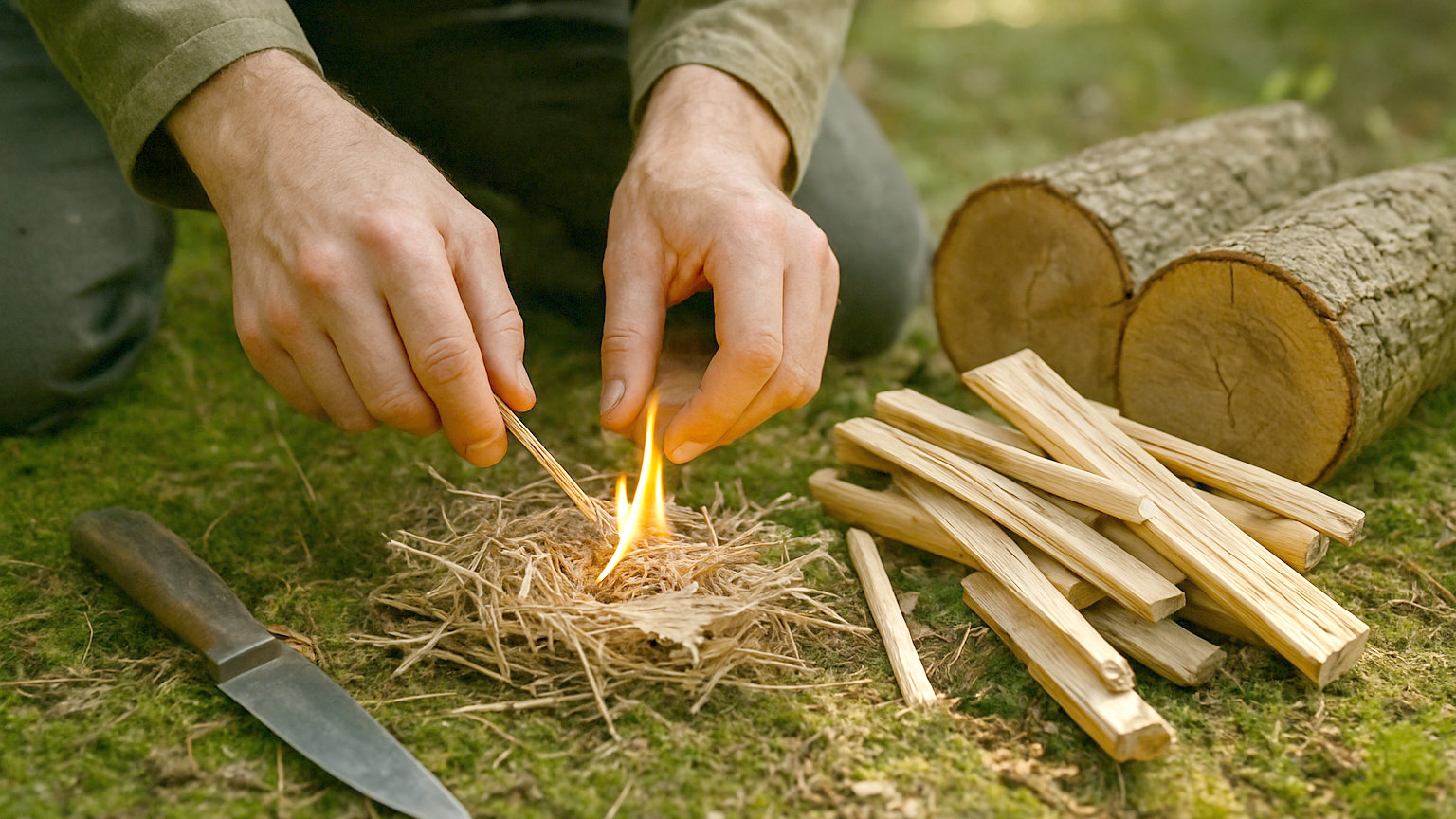
Tinder converts a very small amount of energy into open flame. A spark, an ember or a match head produces heat in a tiny area for a fraction of a second, so tinder must catch almost instantly. That demands fine, dry, fibrous material with an enormous surface area relative to its mass. Cotton wool, birch bark, dry grass worked into a nest, thistle down, char cloth and shredded inner bark all qualify. Tinder burns fast and briefly, and its only job is to reach the next stage.
How fine does kindling need to be?
Finer than most people prepare. The first kindling should be no thicker than a matchstick, and there should be a lot of it. From there you work upwards in stages, roughly doubling thickness each time: matchstick, pencil, thumb, wrist. Each stage should be established and burning confidently before you add the next. Skipping a stage is the most common cause of a fire dying two minutes after it caught, because the flame simply cannot raise that much wood to ignition temperature.
- Tinder, fine as hair, catches from a spark and burns for seconds
- First kindling, matchstick thickness, catches from tinder flame
- Second kindling, pencil thickness, builds real heat
- Third kindling, thumb thickness, establishes the fire
- Fuel, wrist thickness and above, sustains and produces coals
What counts as fuel and when should it go on?
Fuel is anything wrist thickness or larger, and it goes on only once you have a bed of glowing embers rather than just flame. Adding fuel too early smothers the fire and drops the temperature below what the smaller material needs. The test is simple: if you can see red embers beneath the flame and feel sustained radiant heat, the fire will take a larger piece. If it is still all flame and no coals, wait and add more kindling instead.
How much of each do you need?
More than instinct suggests, particularly for kindling. A useful rule is two double handfuls of tinder, an armful of matchstick and pencil grade kindling, and as much thicker material as the fire will need for its intended life. Gather all of it before ignition and sort it into separate piles by size. Fumbling for the next size while the fire is dying is the classic beginner mistake, and it wastes tinder that may be irreplaceable.
What are feather sticks and when do they help?
A feather stick is a piece of dry wood shaved into thin curls that remain attached at one end. It effectively converts a single piece of kindling into both tinder and kindling at once, exposing dry inner wood with a large surface area. In wet conditions this is invaluable, because you can split a soaked branch, reach dry heartwood, and turn it into something that catches from a flame. Making a good one takes practice with a sharp knife and a controlled cut.
What is the most common sizing mistake?
Gathering plenty of thumb thickness kindling and almost nothing finer. It happens because thicker sticks are quicker to collect and feel more like real firewood, whereas matchstick grade material takes patience to gather in quantity. The result is a fire that catches, burns brightly for thirty seconds and then stalls with a heap of unburnt sticks sitting on dead tinder. If you find yourself in that position repeatedly, the fix is almost always to spend twice as long collecting the finest grade before you light anything.
Does wood type matter at each stage?
Less than dryness, but it matters. Resinous softwoods such as pine and spruce light readily and burn fast, making them excellent kindling and poor overnight fuel. Dense hardwoods such as oak, ash, beech and hornbeam are difficult to light but burn long and produce good coals, making them ideal fuel and frustrating kindling. Ash is unusual in burning reasonably well even when not fully seasoned, which is why it has a good reputation.
Grade your material properly before you strike a spark and the fire largely builds itself, which is exactly how it should feel.