Fire on snow is a different problem to fire in the rain. The ground is not merely wet, it will melt, sink your fire and quench it from below. Fuel is buried, daylight is short and your hands lose dexterity long before you notice.
Why can you not build directly on snow?
Heat from the fire melts the snow beneath it, the fire sinks into the hollow it creates, meltwater collects around the base, and the fire drowns. Even on frozen ground rather than snow, the surface layer thaws and turns to mud. In deep snow a fire can sink well over a metre before going out, taking your fuel with it. The platform is not optional in these conditions, it is the whole technique.
How do you build a platform?
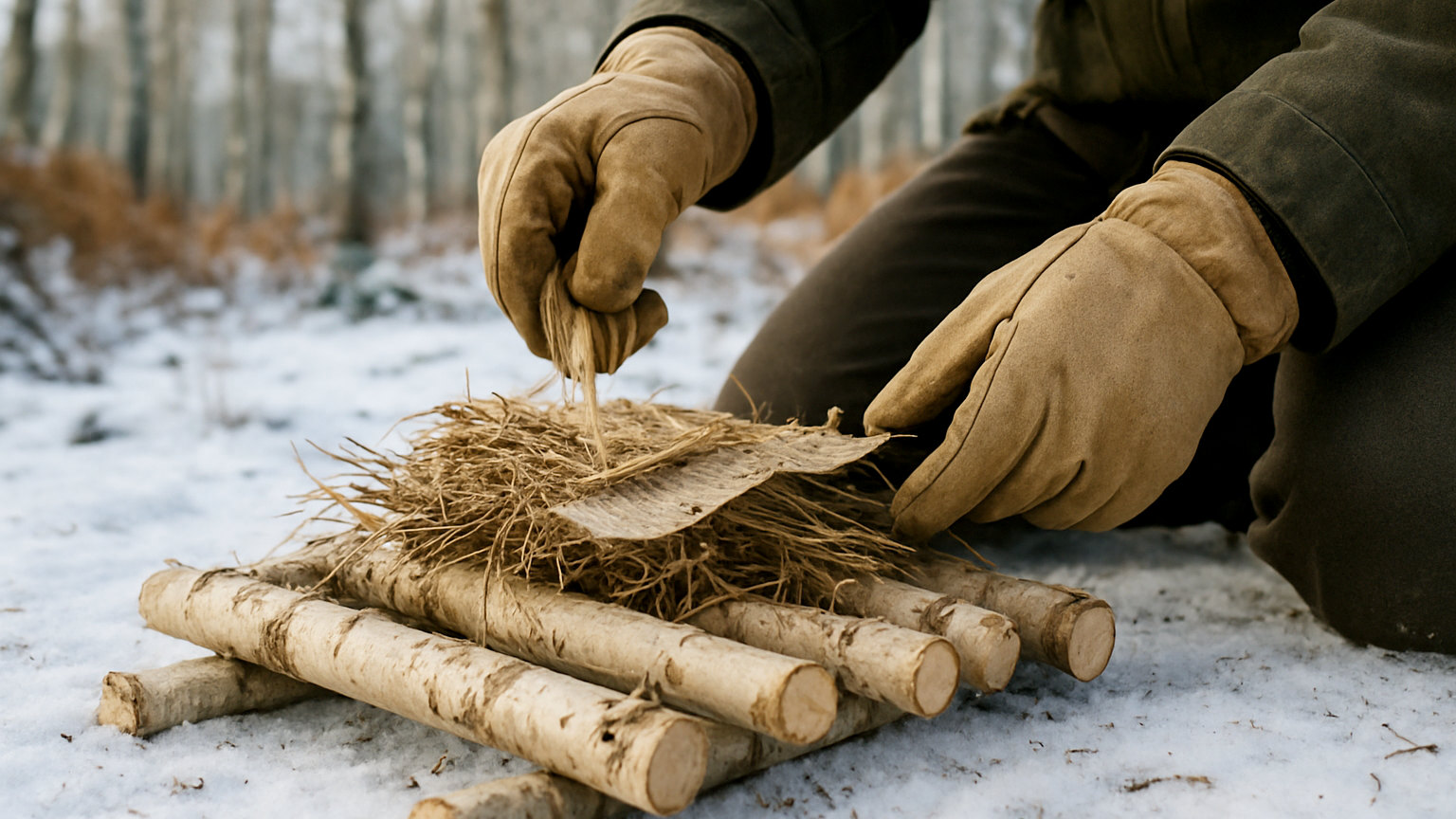
Lay a base of green or dead logs side by side, tightly packed, spanning an area larger than the intended fire. Two layers laid at right angles is better than one. Green wood is preferable here because it burns slowly and holds the structure together. On top of that, add a layer of bark, flat stones that have not come from a river, or more wood. The aim is to keep the fire fully clear of snow and to insulate it from what lies beneath for long enough to establish a bed of coals.
- Stamp or dig down to firm snow before starting
- Lay two crossed layers of green logs as a raft
- Add bark or split wood as a working surface
- Build a windbreak on the upwind side from snow or packs
- Keep spare fuel raised off the snow on a second platform
Where is dry fuel in winter?
Above the snow line, always. Standing dead trees, dead branches still attached to trunks, and the dry lower limbs of conifers under canopy cover. Anything lying under snow is saturated and effectively useless. Birch bark remains excellent because its oils burn regardless of surface moisture. Fatwood from old pine stumps is superb and often accessible in winter when the ground vegetation has died back. Split everything, because the interiors will be far drier than the outside.
How do you manage cold hands?
This is the part people underestimate, and it is often the real reason a winter fire fails. Fine motor control degrades sharply once hands are cold, and shivering makes precise work close to impossible. Do all the fiddly preparation, splitting kindling, arranging the lay, opening the tinder tin, while your hands still work. Keep tinder and lighter inside a jacket pocket against your body so they are warm when needed. Wear thin liner gloves so you are never working bare handed against metal. If your hands have already gone, warm them under your armpits before attempting anything delicate.
Does ignition itself change in the cold?
Lighters do. Butane vaporises poorly below about freezing, so a standard lighter may produce gas but no reliable flame. Keeping it in an inside pocket largely solves this. A ferro rod is unaffected by temperature entirely, which is a substantial part of why it belongs in winter kit. Matches work but are hard to handle with gloves and cold fingers. Prepared tinder matters more than ever, because gathering fine natural tinder from under snow is not realistic.
What should the fire actually be for?
Be clear about this, because in deep winter a fire is often not the best answer. Shelter and insulation preserve body heat far more efficiently than an open fire, which heats one side of you while the other loses heat to the sky. If the goal is warmth, prioritise getting out of the wind, off the ground and into dry insulation first. A fire earns its place for drying clothing, melting snow for water, cooking and morale, all of which matter, but none of which outrank being properly insulated.
Build the platform, prepare everything while your hands still work, and winter fire becomes a methodical job rather than a fight.