Rain does not make fire impossible. It makes it a process rather than an event. Everything that normally takes two minutes takes twenty, and the order in which you do things becomes far less forgiving of shortcuts.
Where do you find dry fuel when everything is wet?
Stop looking at the ground. Anything lying on soil has been wicking moisture up into itself and will be wet through regardless of how it feels on the surface. The dry material is standing up. Dead branches still attached to a trunk, snapped rather than sawn, are the priority. The lower dead limbs of conifers, sheltered by the canopy above them, stay usable in surprisingly heavy rain. Hollow stumps, the undersides of fallen trunks and the lee of large boulders are all worth checking.
Why does splitting wood matter so much?
Rain wets the outside of wood. It penetrates slowly and rarely reaches the heart of a decent sized piece within a few days. Split a wet log and the inner faces will usually be dry to the touch. That dry heartwood, shaved down into feather sticks or split repeatedly into fine slivers, becomes your kindling. This single technique does more for wet weather fire lighting than any product you can buy, and it needs nothing beyond a knife and something to baton it through the wood.
How do you keep the fire out of the water?
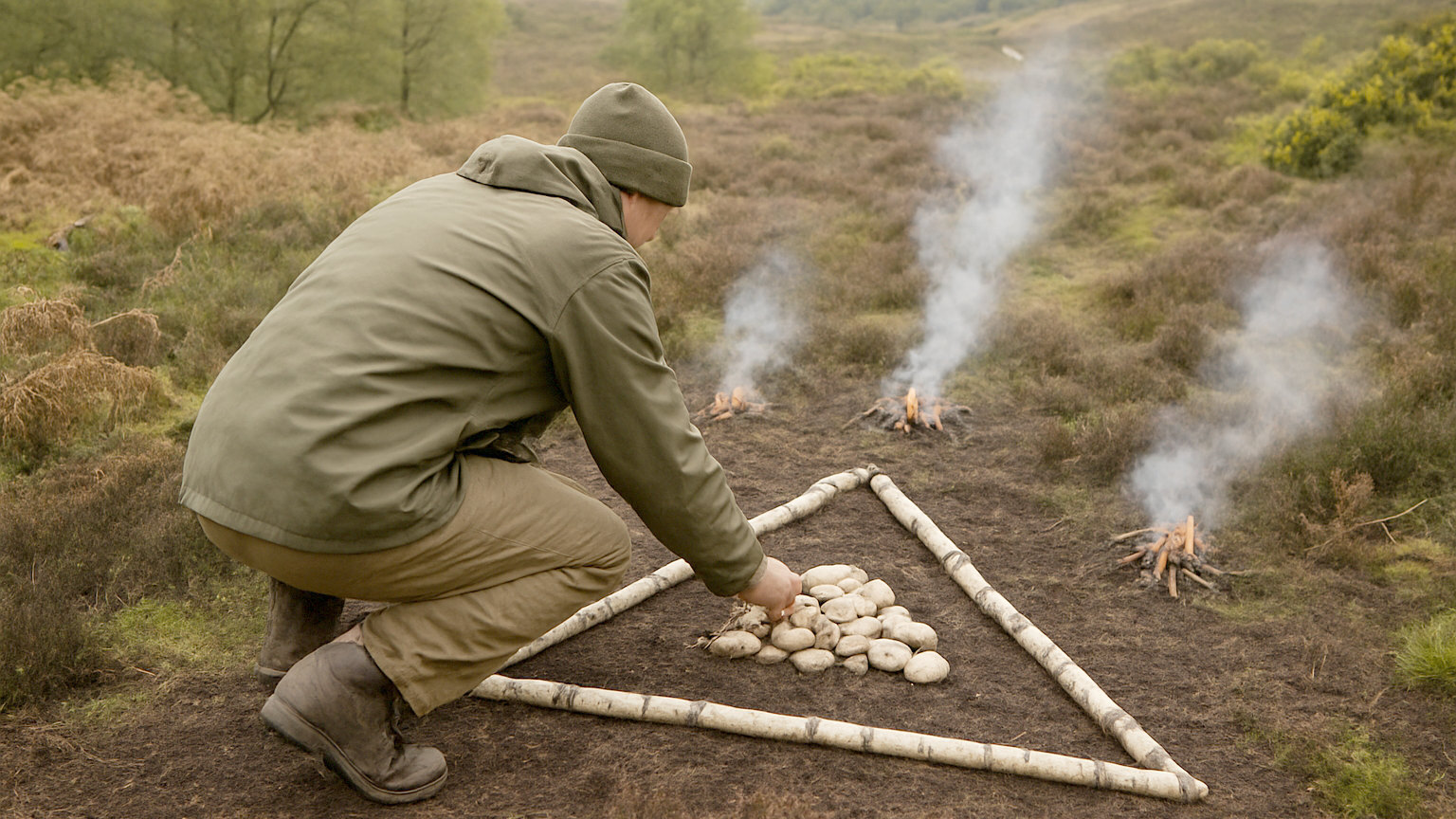
Build a platform. Lay dead branches side by side, or use bark slabs, flat dry stones, or a raft of green wood if nothing else is available. The aim is to lift the fire clear of standing water and to stop the ground absorbing heat that should be drying your fuel. On snow or waterlogged ground this is not optional, and a platform two or three layers thick is not excessive.
- Find standing dead wood, never wood off the ground
- Split everything to reach dry heartwood and make feather sticks
- Build a platform to lift the fire clear of water
- Rig a tarp or use natural cover to keep rain off the working area
- Use prepared tinder rather than anything gathered wet
- Gather far more fuel than usual before striking a spark
Do you need shelter over the fire?
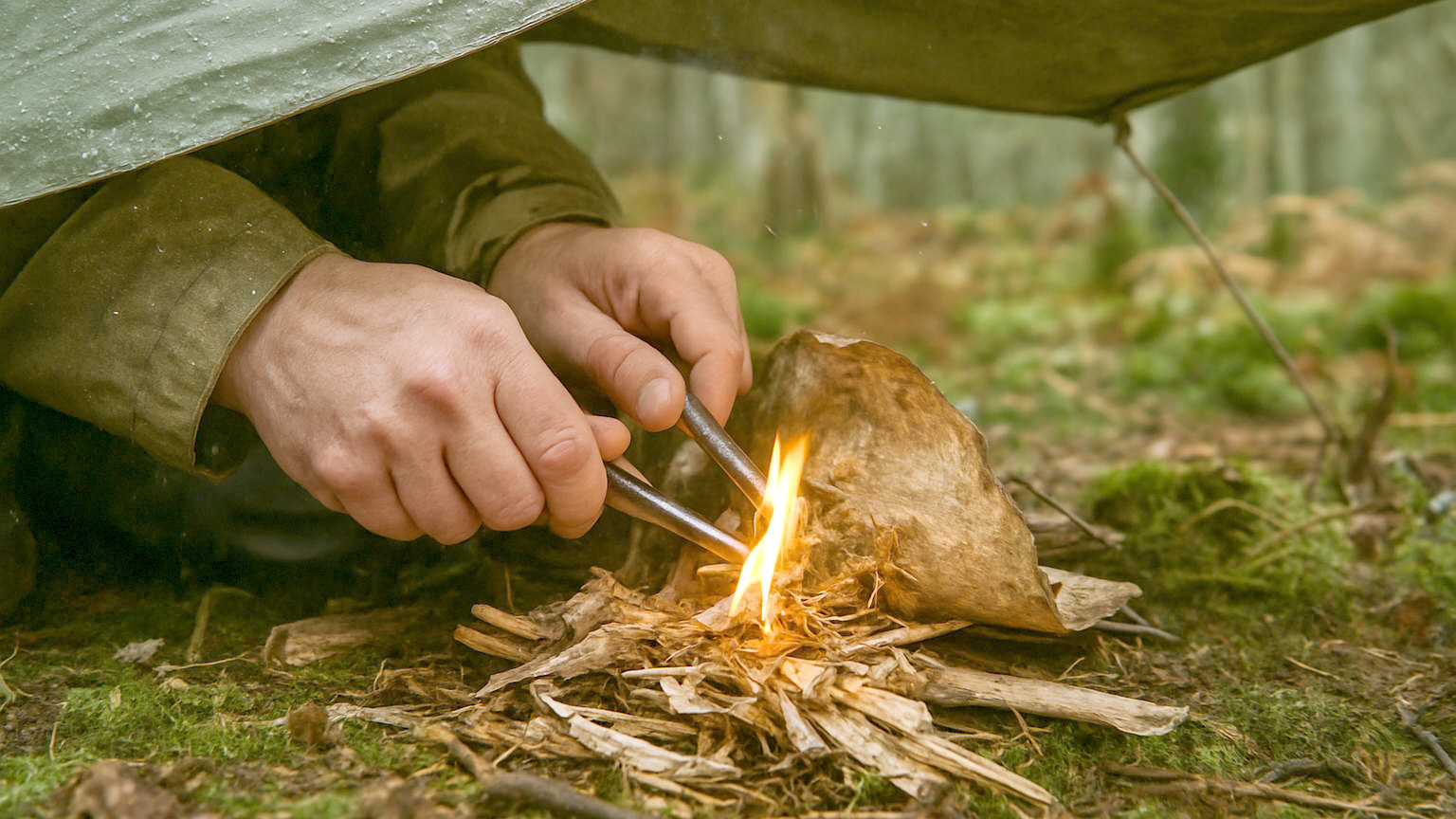
You need shelter over yourself and over the fire during its first few minutes. A tarp rigged high enough to be safe, an overhanging rock, or dense evergreen cover all work. Be careful with tarps: pitch them well above the flame, never directly over a fire you intend to build up, and be aware that heat rises fast and synthetic fabric melts faster. Once the fire is established and producing real heat, it will shrug off light rain on its own and you can remove the cover.
What tinder should you rely on?
Carried tinder, every time. Cotton wool worked through with petroleum jelly lights from a ferro rod spark even after immersion, burns for several minutes and costs almost nothing. Birch bark is the best natural option, because the oils in the outer bark burn while wet. Fatwood, the resin saturated heartwood found in old pine stumps, is superb and worth collecting whenever you find it. Trying to gather fine grass tinder in the rain is a route to frustration.
How does the sequence differ from a dry day?
Preparation expands and ignition stays the same. Gather three times the fuel. Split and grade all of it before you start. Keep the prepared kindling under cover or inside your jacket. Build the platform, build the lean to or teepee, position everything within reach, and only then take out your ferro rod. Once the flame is going, feed it steadily with the finest material and resist the urge to pile on larger wood too early, because in the wet a smothered fire will not recover.
Done in that order, rain becomes an inconvenience that costs you twenty minutes rather than a reason to go without a fire.