Tinder is the single point of failure in most failed fires. Sparks are easy and fuel is everywhere, but the material that bridges the two has to catch from almost no energy at all. In a British winter, after a week of rain, that material is not lying around waiting to be picked up.
What makes something good tinder?
Three qualities matter. It must be dry, it must be fine enough that a spark can raise a large surface area to ignition temperature at once, and it must hold together long enough to pass flame to kindling. Fibrous, fluffy, oily or resinous materials tick these boxes. Anything dense, green, or thicker than a matchstick does not, regardless of how dry it feels.
Where do you find dry tinder in a soaked landscape?
Rain wets surfaces, not interiors. The standing dead material is what you want, never the material on the ground. Look for dead twigs still attached to the underside of conifer branches, sheltered by the canopy above. Split any dead standing wood and the heart of it will be dry. Look under overhangs, inside hollow stumps, in the lee of large trunks, and under dense evergreen cover where rain barely penetrates.
Which natural tinders work best in Britain?
Birch bark is the standout. The papery outer layer contains oils that burn even when the bark itself is wet, and it is abundant across most of the country. Peel only the loose curls from dead or fallen birches rather than stripping living trees, which damages them badly. Beyond birch, look for cramp balls, the hard black fungus on ash, which takes a spark like charcoal and smoulders for a long time. Old man beard, dry bracken, thistle and rosebay willowherb down, and the fine dead grass at the base of a tussock all work if you can find them dry.
- Birch bark curls, the most forgiving natural tinder in wet conditions
- Cramp balls, split open, which hold an ember reliably
- Dead conifer twigs from beneath the canopy, snapped not cut
- Fatwood, the resin soaked heartwood found in old pine stumps and knots
- The dry inner fibres of dead bramble, nettle or willowherb stems
What should you carry rather than gather?
Gathering tinder in the wet is a skill worth having and a poor thing to rely on when cold and tired. Cotton wool balls worked through with petroleum jelly are the standard answer and remain hard to beat. They cost almost nothing, weigh almost nothing, burn for two to four minutes each, and light from a ferro rod spark even after being dunked in a puddle. Store them in a small screw top tin. Commercial alternatives such as waxed wood shavings and rubberised fire starters work well too, and a stub of candle is useful for extending flame into stubborn kindling.
How do you build a tinder bundle that actually catches?
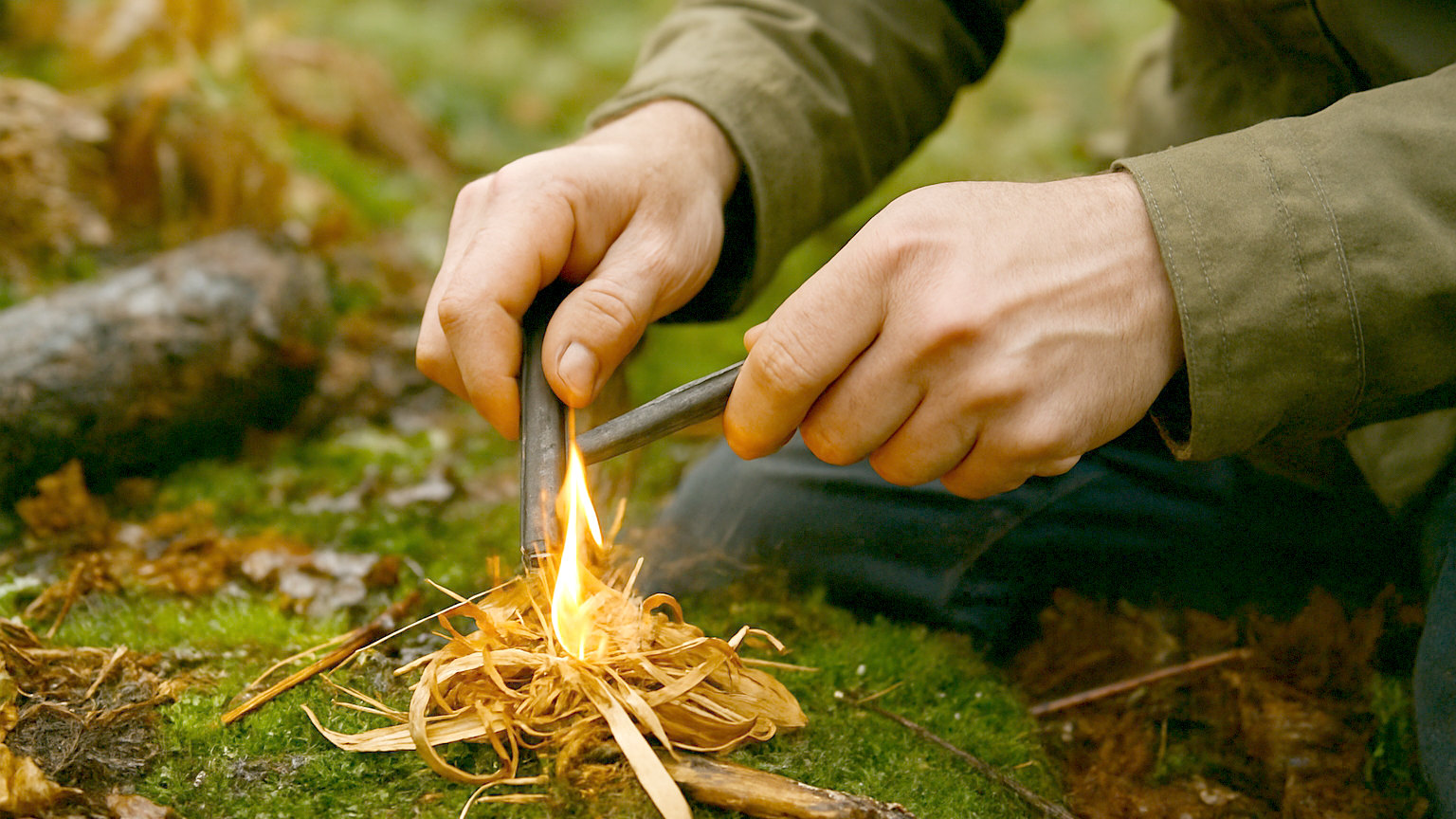
Work the material between your palms until it is fine and airy, then shape it into a loose nest with the finest fibres at the centre. Density is the enemy of ignition and the friend of sustained burning, so keep the middle wispy. Drop your ember or direct your sparks into that centre, fold the nest gently around it, and blow long and steady from below. Short sharp puffs scatter the ember. When it flames, place it under prepared kindling rather than dropping kindling onto it.
Why does preparation matter more than technique?
Almost every failed fire fails because someone tried to gather kindling after the tinder was already alight. Collect three times more fine kindling than seems reasonable, grade it from matchstick to pencil to thumb thickness, keep it off wet ground on a platform of bark or dead branches, and only then reach for your ferro rod. The fire lighting itself takes ten seconds. The preparation takes twenty minutes, and it is the part that decides the outcome.
Carry prepared tinder, learn to recognise birch bark and standing dead wood, and the wet stops being the problem it appears to be from a warm kitchen.